Category Archives: sociology

Research Colloquium at Université Paris-Nanterre

This winter term, I will be spending some time with my anthropology colleagues at Paris-Nanterre as part of the Laboratoire d’Ethnologie et de Sociologie comparative (LESC), part of the Centre National de la Recherche Scientifique (CNRS).

One part of my research stay is devoted to working on my current project: “Towards an anthropology of statelessness”. I will be speaking at the Department’s Colloquium in December (see plan below). I will also be teaching a course in legal anthropology … more about this one later.

The colloquium is free and open to the public, everyone is welcome.

“Rethinking community in Myanmar. Practices of We-Formation among Muslims and Hindus in Urban Yangon” (NIAS Press 2023) has arrived!

‘Community’, I argue in my new anthropological monograph, was actively turned into a category for administrative purposes during the time of British imperial rule. It has been put to work to divide people into ethno-religious selves and others ever since.

Rather than bestowing on community some sort of positivist reality or deconstructing the category until nothing is left, my aim in this book is to shift the angle of approach: I acknowledge that community (for reasons that can usually be traced historically) feels real to and is meaningful for individuals. Their experiences and their struggles to engage with community are no less real. Through their own classificatory practices, my interlocutors — Muslims and Hindus in urban Yangon — demonstrate that they reason and reflect on symbols and meanings in their own culture as much as anthropologists do. But my approach goes beyond a social constructivist concern over how terms such as community are used, and also beyond a representational approach in which actors are subjected to culture as a system of meaning.

When I talk about the work of community (drawing on Nancy 2015), I reflect on the ways in which individuals accommodate ‘community’ in their acts of reasoning, meaning-making and symbolization. The way my interlocutors in Yangon see and talk about themselves has a historical context that begins in nineteenth-century England, encompasses British colonial India and later Burma itself, and extends into presentday
Myanmar. I then widen the emic perspective of my interlocutors and offer a novel way of describing how a we that does not neatly map onto or overlap with a homogeneous social group is generated in various situations.

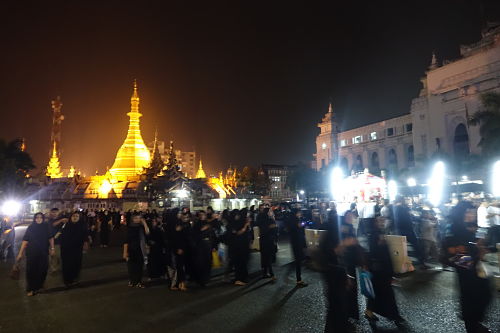
What I call we-formation encompasses individual and intersubjective routines that can easily be overlooked, as well as more spectacular forms such as the intercorporeal aspects of the ritual march I described earlier. Attending to such sometimes minute moments of co-existence or tacit cooperation is difficult, but doing so can help us understand how community continues to have such an impact on the everyday lives of our interlocutors, not to mention on our own analytical ways of thinking about sociality.

By focusing on individuals and their bodily practices and experiences, as well as on discourses that do not explicitly invoke community but still centre around a we, we-formation sensitizes us to how a sense of we can emerge .

You can purchase the book on the publisher’s website: NIAS Press.

“Sprechstunde” – neues Interview

Die Interviewreihe “Sprechstunde” der Universität Konstanz stellt ProfessorInnen aller Fachbereiche persönlich vor – als WissenschaftlerIn und als Lehrperson. Hier gebe ich Auskunft über meine Professur, meine Forschungen in Zentral- und Südostasien, mein neues Forschungsprojekt zu Staatenlosigkeit in Europa, sowie über unseren interdisziplinären Masterstudiengang “Ethnologie und Soziologie”, der einzigartig in Deutschland ist.

“Deutsch” in Gänsefüßchen – Artikel in der TAZ

In Deutschland hat jede/r vierte Deutsche Migrationshintergrund. Wenn die Polizei bei Tatverdächtigen denselbigen gesondert erforscht, lohnt es sich zu fragen, wozu diese Information eigentlich dient. Wenn daran konkrete Präventions- und Integrationsmaßnahmen geknüpft sein sollen, wie dies im Fall von Stuttgart und auch Frankfurt von Polizei und Regierung artikuliert wurde, nachdem es in den Innenstädten zu gewalttätigen Ausschreitungen gekommen war, dann kann man weiter fragen warum diese Maßnahmen bereits als Argument in die Debatte gebracht werden bevor die “Hintergründe” der meist jugendlichen Tatverdächtigen überhaupt ermittelt sind. Wenn dann die Polizei Videoüberwachung und Alkoholkonsumverbot im öffentlichen Raum ins Spiel bringt, muss man sogar fragen, ob das Einschränken von Rechten eine sinnvolle Integrationsmaßnahme ist.

Für die TAZ habe ich einen kritischen Gastkommentar verfasst, in dem ich argumentiere, dass “Präventions- und Integrationsarbeit […] auch in den politischen Institutionen selbst stattfinden [muß]. Das Gewaltmonopol eines demokratischen ­Staates kann nur dann nach­haltig von allen respektiert werden, wenn Prävention und Integration mehr sind als Kontrollinstrumente des Staates.” Wenn jedoch der Eindruck entsteht, “dass dem Migrationshintergrund ein besonderes oder isoliertes Interesse entgegengebracht wird, so ist nachvollziehbar, warum in den Medien seither über „Stammbaumforschung“ debattiert und der Polizei struktureller Rassismus vorgeworfen wird, auch wenn die Ermittlung ja erst im Nachgang der Tat erfolgte.”

Hier geht es zum Volltext aus der TAZ.

Anthropology and existentialism. Back to the individual?

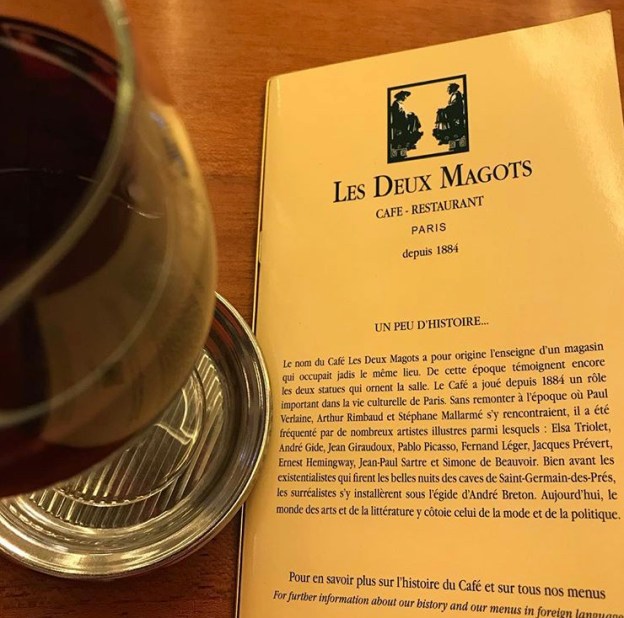
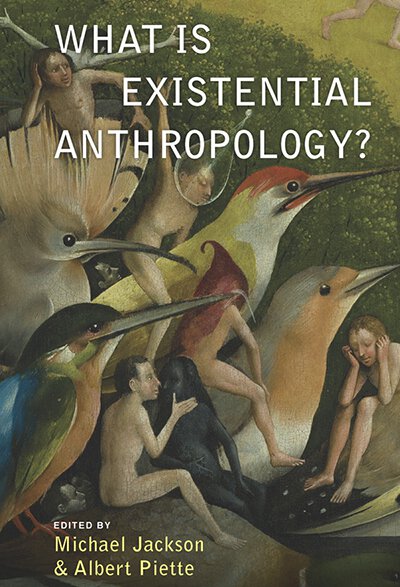
Next to a BA-level course on Indigeneity and Law, I will be teaching in our Master’s Program “Anthropology and Sociology” a thematic course on anthropology and existentialism. After having spent a couple of months in France (Paris, in particular) this year and last year, living in direct vicinity to Sartre’s and De Beauvoir’s former “writing ground” (Café Le Flore, Café Les Deux Magots) in St. Germain, I became more and more interested in combining anthropological reasoning with existential philosophy. Next to Sartre, De Beauvoir and other French intellectuals of the mid-20th century, I encountered the work of Albert Piette (who teaches at Uni Nanterre in Paris) whom I only knew as Michael Jackson’s “sidekick” from “What is existential anthropology?” (Berghahn 2015). I slowly read through his oeuvre, most of it only available in French, but some of it already translated into English by now. His creative way of approaching an anthropo-centric anthropology via what he calls ‘phenomenography’ is as innovative as it is radical. He argues against ethnomethodology, against social interactionism and against every other theory that privileges collectivity rather than individuality.

Since the best way to truly understand theory is to teach it, I am looking forward to my seminar where the question “What role does the individual actually play in anthropology?” will stand at the center of our inquiry. We will see that this question needs to be answered differently depending on what decade and what anthropological tradition we are talking about. We will be reading classical  anthropological literature (Malinowski, Benedict, Geertz, Obeyesekere, Rosaldo, Rapport, Lutz and Abu-Lughod) in order to understand how often the individual rather stood in anthropology’s way on the path towards ‘society’, ‘structure’ or ‘systems of meaning’. We will counter these views not only with recent existential anthropological literature, but also with literature from neighbouring disciplines such as philosophy (the old French classics) and existential psychoanalysis (Chodorow, Yalom).

Last but not least I hope to generate  insights into the nature of the relationships we develop with our key interlocutors during field research: Does a stronger focus on the individual’s existence require a change in the way we approach our ‘field’ and collect our ‘data’? How do we reflect on our own role as individuals in the field?

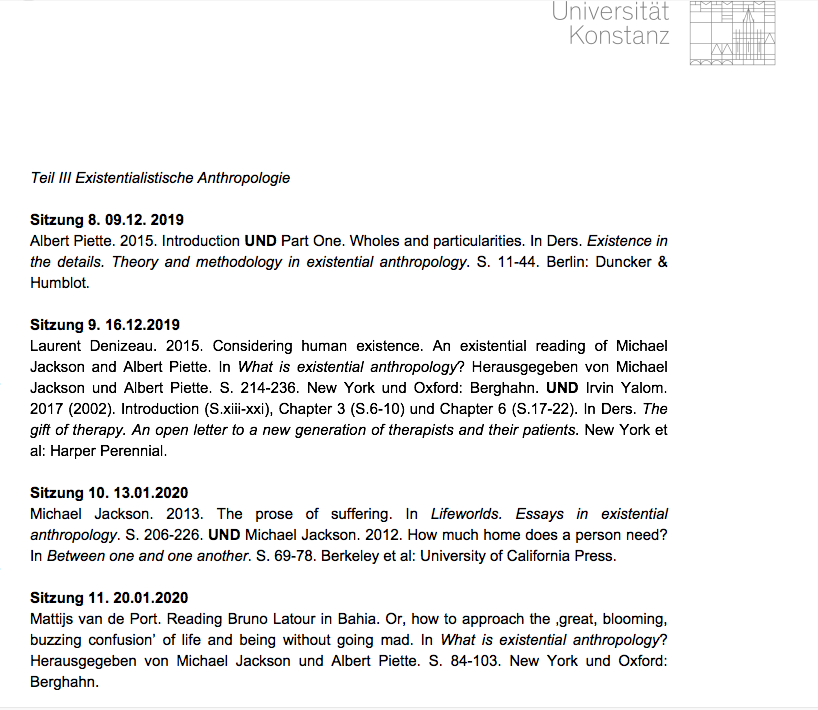
Here is the syllabus to the seminar:

Upcoming term 2019/20: Teaching on Indigeneity and Law

This winter term I will be teaching a course on indigeneity and law for our BA-students at the University of Konstanz.

While in the colonial era the alleged “backwardness” of  “natives” or even  “savages” was taken as an opportunity to deny them their right to their land, today “indigeneity” is a term used by indigenous people themselves in order to assert their rights (to land, natural resources, cultural self-determination, etc.).

In this seminar, we explore the nexus of indigenity and law by reading anthropological texts on indigeneity (and related concepts such as ethnicity). On the other hand, we learn about legal sources for such claims-making through which the rights of indigenous peoples get articulated in recent decades (for example UN resolutions, current court decisions, …).

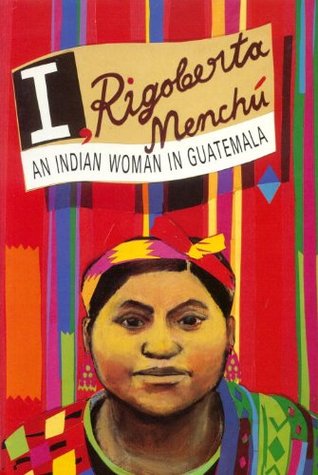
We will also read two different types of (auto-) ethnographic texts: on the one hand the life story of a Guatemalan indigenous woman, Rigoberta Menchú (Burgos / Menchú 1984) and on the other the recent monograph of the indigenous anthropologist Audra Simpson (2014) “Mohawk Interruptus. Political life across the borders of settler states “to the Kahnawà: ke (Haudenosaunee / Iroquois Confederation) in Quebec.

The aim of the seminar is to be able to trace  historical and current connections between processes of Othering and those of Self-culturalization in the name of “indigeneity” from an anthropological perspective, as well as to understand the central role of law in doing so.

Here is the syllabus of the seminar.

Keynote on “Little and Grand Narratives in Central Asia”

Keynote speech “Little and Grand Narratives in Central Asia”

Held at the Conference “Central Asian Studies Inside Out. Challenging Grand Narratives”, organized by l’EHESS and ZMO (Berlin). March 28, 2019. Paris.

In this keynote speech, I engaged with the conference topic of “challenging” and even “disturbing” “Grand Narratives” through an investigation of the tradition of orality and the usage of oral history in Central Asia. These are two interlinked endeavours, as oral tradition has been investigated “as history” (Vansina) and oral history understood as “the voice from the past” (Thompson). Anthropologists (of Central Asia) investigate tradition as “a site of necessary engagement that aggregates people, … informs policy, public debates, law, and representation, and is – despite its often enough strategic inception – affectively powerful” (Beyer and Finke forth. in Central Asian Survey). Examples from Central Asia show how “oral tradition”, especially when mediated by state and media apparatus, can take on “grand narrative” qualities. Moreover, in contrast to how oral history has been treated in the past, namely as history “from below”, of “the everyday” and by “the little guys” (Graeber), thus as “little narrative”, as I call it, it is worth exploring in what ways this method of ethnographic and historical inquiry has the capacity to yield “grand” results.


Teaching on Conflict Resolution

In addition to a course on statelessness at our BA-level, I am also teaching a course on conflict resolution for our MA-students this summer term. Both courses fall under the subdiscipline of legal anthropology, which is my specialization. I am looking forward to exploring legal anthropological and legal sociological approaches to this important topic. We’ll start out by laying the theoretical ground, differentiating between conflicts and disputes, between adjudication and settlement, and between the various institutions that can be addressed for actors intending to file complaints and grievances.

In the seminar, we will also have a guest lecturer, who is the current acting Ombudsman (*woman, that is) of the University of Konstanz. Together with her, we will explore  the different possibilities the university provides in terms of mediation and solving disputes and conflicts.

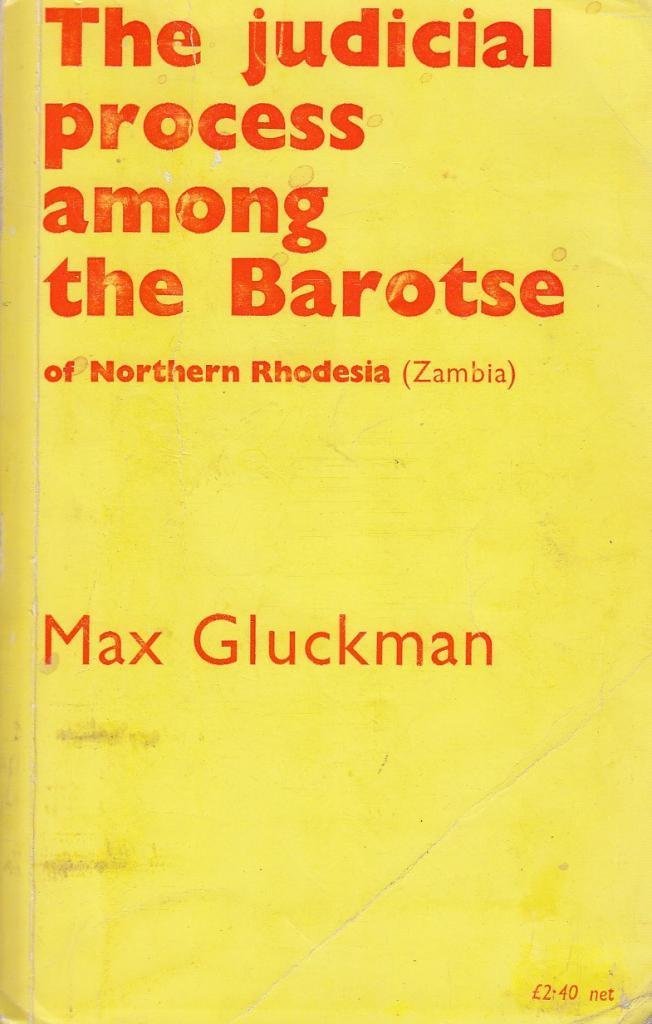
The first part of the seminar is focused on classical publications on conflict and dispute resolution that drew on ethnographic data gathered in a colonial context (Gluckman, Gulliver). After a critique of this type of literature (Spittler), we will read and discuss a case study on a village in Bavaria (Todd) to turn the ethnographic gaze onto ourselves.

We will then familiarize ourselves with the important concept of “harmony ideology” (Nader) within the context of “alternative dispute resolution” (ADR).

Laura Nader

Through a series of more recent publications, we will approach conflict and dispute resolution in the contemporary era, starting with sharia councils in the UK (Billaud), neotraditional courts of elders in Kyrgyzstan (Beyer), and the particular set-up of international bodies such as “special courts” aimed at conflict resolution in Sierra Leone (Anders).

Here is the syllabus of the seminar.

Making sense of …

Communal sense. The making of ethno-religious selves and others in Myanmar

I am going to present my ongoing work on Myanmar at the Institute of Advanced Study at the University of Konstanz on December 6, 2018 at 5pm (Bischofsvilla, Otto-Adam Str. 5).

In my presentation I will give an overview of my book manuscript which is based on ethnographic data I collected over several long stretches of fieldwork between 2013 and 2018. The focus of my book lies on critically reinvestigating the category of ‘community’ in light of new material from Southeast Asian Myanmar. My study is geographically situated in Yangon, a fast expanding metropolis and the home of various ethno-religious minorities whose ancestors built the city when they were shipped across the Bay of Bengal by the British colonial forces in the 19th century. My informants, who are Hindus and Muslims, are often referred to as “Indians” in the literature or simply “Blacks” by the local Burmese population, but in their self-understanding, they are the true founders of Yangon. My interest lies in understanding how, in a local context of imperialism and ethno-religious nationalism, these people organize themselves as ‘members’ of groups that perform and are recognized by others as ‘communities’.

My theoretical aim in this book, and my contribution to wider anthropological and sociological debates, is to develop an alternative angle towards the category of ‘community’ that focuses on how and when exactly a collective ‘We’ emerges. In the social sciences the process of we-making has so far been analysed only as a by-product of the process by which ‘Theys’ are created (Appadurai 2006: 50). The concept of communal sense, which I am putting forward in my book, focuses instead on the successful establishing of community as an effect of we-intentionality (Walther 1923) which become ethnographically observable in moments of communitas, in the articulation of common sense and in the material anchoring of common goods.