Die Universität Konstanz hat einen kurzen Film zu meinem aktuellen Forschungsprojekt zum Thema “Staatenlosigkeit” gedreht.
Der Film kann auf dem youtube-Kanal der Universität Konstanz angeschaut werden.


Die Universität Konstanz hat einen kurzen Film zu meinem aktuellen Forschungsprojekt zum Thema “Staatenlosigkeit” gedreht.
Der Film kann auf dem youtube-Kanal der Universität Konstanz angeschaut werden.
This is a peer-reviewed journal article that developed out of two years of Cartel work within the Lacan Circle of Australia (Melbourne). I presented the topic in 2021 and worked on this publication in which I combine psychoanalytical theory with an anthropological outlook on contemporary politics.
In this article I explore the psychoanalytical underpinnings of the recent purchase of the original manuscript of Marquis de Sade’s 120 Days of Sodom by the French state from the perspective of Jacques Lacan’s concept of perversion. I argue that in declaring de Sade’s book national heritage, the French state has tried to empty the text of its transgressive characteristics and reduced it to a fetish object. By placing the textual artefact inside the National Library of France, where it remains inaccessible, it has installed this object at the centre of the State in an effort to prop itself up while at the same time trying to veil a void. While this case is spectacular, we can abstract from it a distinguishing characteristic of the 21st century: the installation of fetish objects in an increasingly deserted symbolic order as well as the reappearance of the Name-of-the-Father in the imaginary order where the State acts as if it was the progenitor. This article aims to demonstrate the usefulness of Lacan’s teaching on perversion for a critical psychoanalysis that is “in the world”.
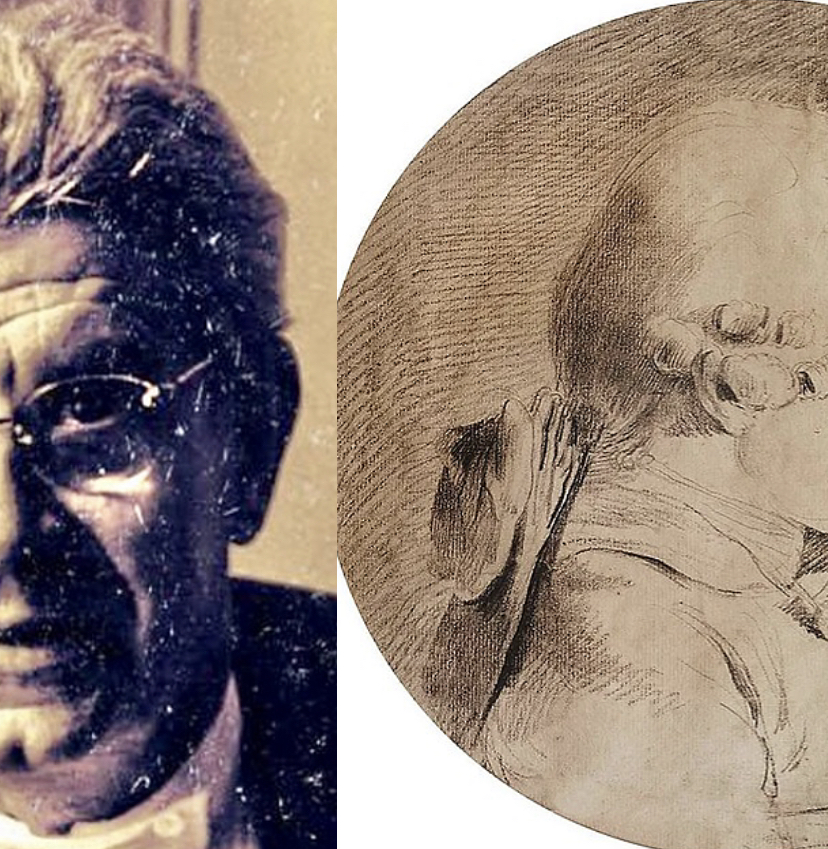
The article is accessible through open access on the website of the European Journal of Psychoanalysis.
I am currently beginning new work in a Cartel on “Brave Waste World” that is devoted to studying Lacan’s teachings in regard to the concepts of waste, the exiled and the world. The topic of my Cartel contribution is “Waste of the world. On statelessness.”
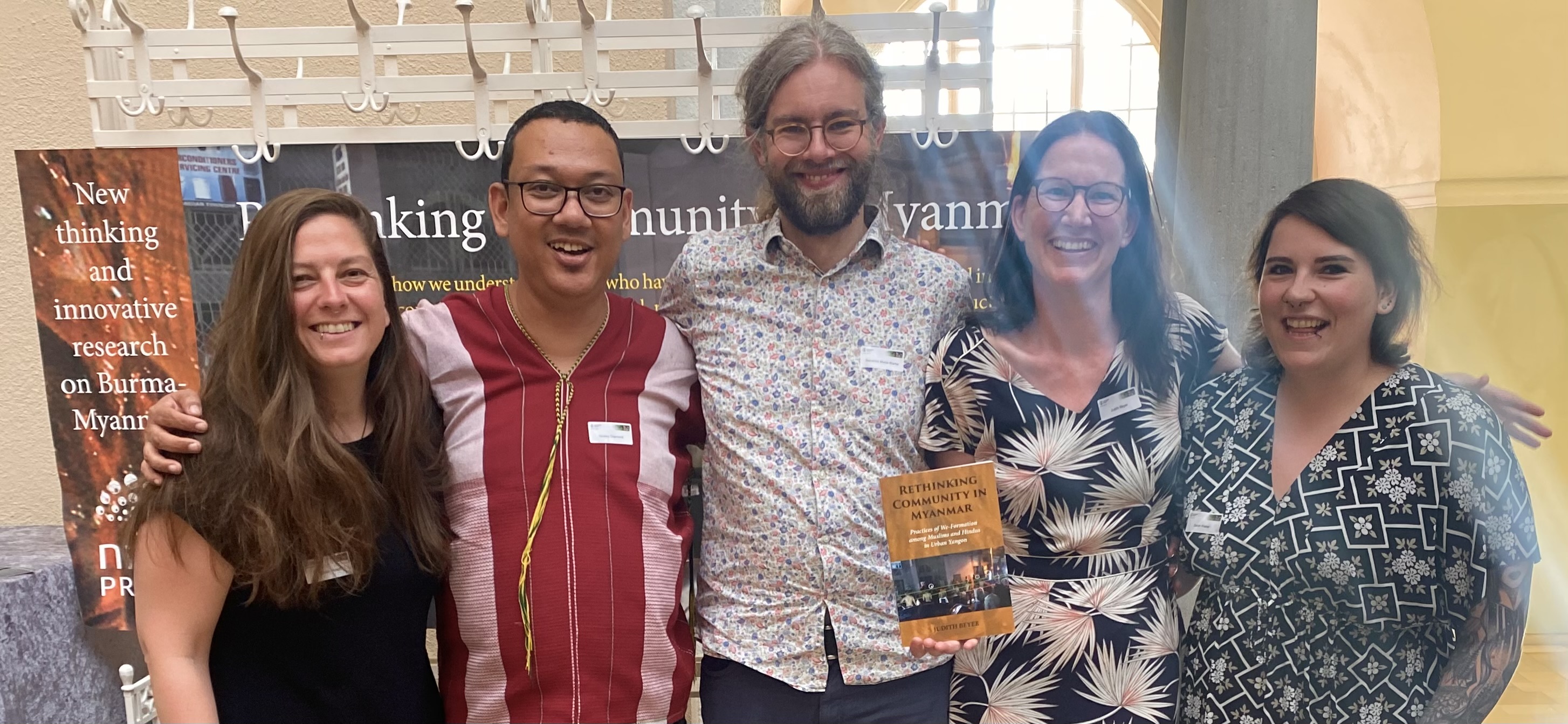
At the 15th International Burma Studies Conference, hosted at the University of Zurich, (9-11 June 2023), I launched my book Rethinking Community in Myanmar. Practices of We-Formation Among Muslims and Hindus in Urban Yangon.
Informal book launch in good company — while missing many from Myanmar
I wanted to celebrate the publication of my monograph: 10 years in the making if I count from the first days of fieldwork in 2012-2013. Good anthropological monographs take time and they are never the result of one indiviual only, even though writing can be a solitary process, particularly towards the end. I wanted to use the occasion of having over 200 Myanmar specialists gathering in one place, to say “Thank you” publicly to all the important people who could not be present in Zurich, but also to those who were able to share a glass of wine with me that day.
I set out by thanking my Muslim and Hindu interlocutors in Myanmar — there can neither be an anthropology nor an ethnography without the people ‘in’ (paraphrasing Tim Ingold). I owe them everything and I am glad that there will be an open access version of my book coming out towards the end of this year that will allow at least some of my interlocutors to download the book in Myanmar — I cannot bring it to them at the moment; not so much because it would be dangerous for me (it might be), but because I simply cannot take the risk of putting them into danger once I have left the country or their houses …
I then thanked my four research assistants — my KRA (Kachin Research Army) — and I explained to the audience of Burma/Myanmar experts that I profited enormously from them having conversations with my interlocutors about what it means to be a member of a minority in a majority Buddhist country. Listening in — as I am currently developing also in another context — is a methodologically fruitful approach to conduct fieldwork or carry out digital ethnography where fieldwork is not possible, because it decenters the anthropologist. What I am interested in mostly is “free-flowing talk” where my interlocutors do not try to guess what it is I want from them (in terms of what they might be expected to tell me), but where I can simply follow them having conversations with one another. Since all of my research assistants were Christian Kachin women, it was not religion they shared with my interlocutors (who were Muslims and Hindus), but the experience of being ‘slotted in’ as members of ‘communities’.
I also thanked my colleagues in Myanmar who had been professors of Anthropology at the University of Yangon prior to the attempted military coup in February 2021. Thanks to them, my PhD students received research visa, thanks to them, I had the opportunity of teaching and learning from young anthropology students, and thanks to them I learned a lot about the history of the discipline in Myanmar and about the history of the University of Yangon. I truly hope that one day they will be able to return to their professional jobs — which they cherished a lot, and to their students whom they loved.
None of these people could be with my family, my PhD students, and the other Myanmar scholars that day.
Thanking those who were there
I was happy to be surrounded by many friends, who had helped in different ways to bring this book to fruition: many of my colleagues had read draft chapters, some had written reviews or are going to write them. Alicia Turner gave some introductory words — she knows the book very well as she has written the most constructive and helpful review that made the final product so much better!
The managing editor of NIAS Press, Gerald Jackson, had come from Copenhagen to Zurich with his research assistant Julia Heinle and with a lot of amazing books on Southeast Asia and on Myanmar in tow. He took my book project on board and steered it smoothly through the production process in not even two years from the submission date!
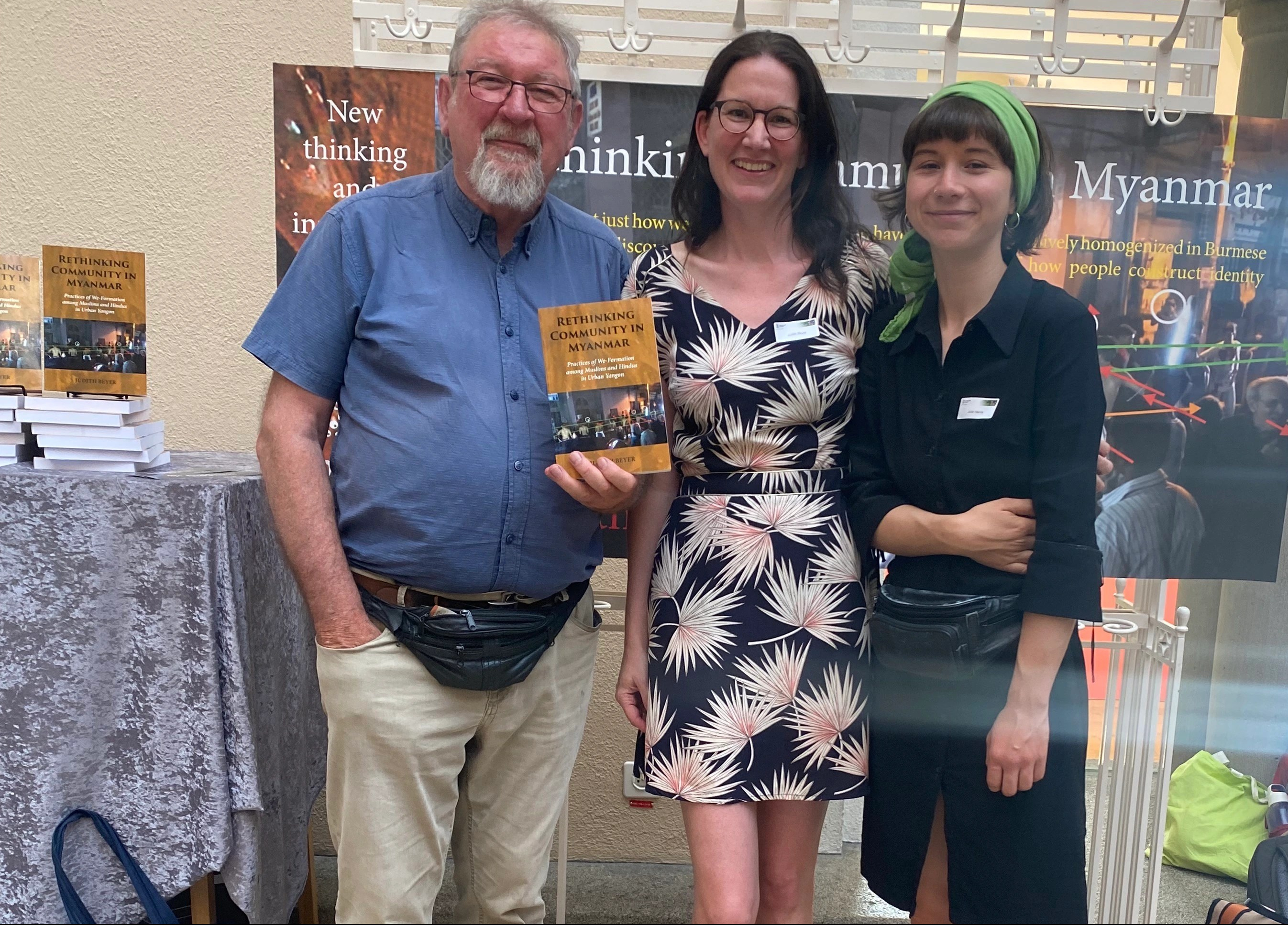
My PhD students who are working on Myanmar, were all present, too. We discussed my material just as much as we discussed theirs. They all completed long-term ethnographic fieldwork in or on Myanmar and I can’t wait to see their own books!
And — last but not least — my family — who accompanied me from 2012 onwards and carried out their own research projects in Yangon: on the politics of cultural heritage in one case and on what it means to go to a local school in Chinatown in Yangon in the other case.
Thank you to everyone who was there that evening — be it in spirit or in the flesh — I am very grateful for the support I have received in the last decade. I hope the book will be useful to many.

In this invited lecture, I will discuss my concept of “we-formation” in regard to three different topics: First, as anthropological theory and methodology; Second, as a way to make sense of the resistance against the attempted military coup and third in regard to the possibility of a public anthropology of cooperation in these trying times.
First, I will explore the concept in regard to its theoretical and methodological innovativeness, taking an example from my Yangon ethnography as illustration. We-formation, I argue in my book Rethinking community in Myanmar. Practices of we-formation among Muslims and Hindus in urban Yangon, “springs from an individual’s pre-reflexive self-consciousness whereby the self is not (yet) taken as an intentional object” (8). The concept encompasses individual and intersubjective routines that can easily be overlooked” (20), as welll as more spectacular forms of intercorporeal co-existence and tacit cooperation.
By focusing on individuals and their bodily practices and experiences, as well as on discourses that do not explicitly invoke community but still centre around a we, we-formation sensitizes us to how a sense of we can emerge (Beyer 2023: 20).
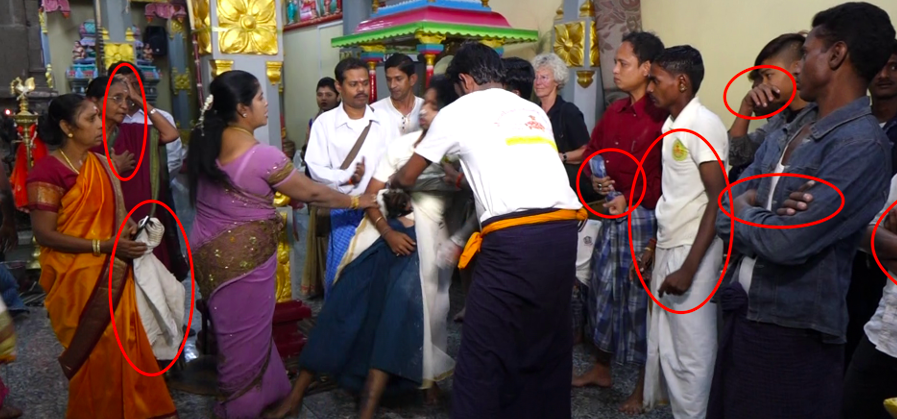
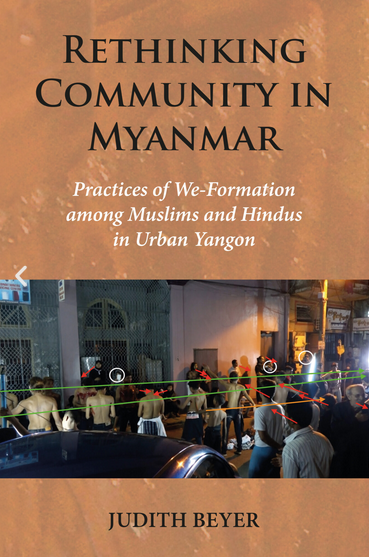

Second, I will put my theoretical and methodological analysis of we-formation to work and offer an interpretation of why exactly the attempted military coup of 1 February 2021 is likely to fail (given that the so-called ‘international community’ does not continue making the situation worse). In the conclusion of my book I argue that the “generals’ illegal power grab has not only ended two decades of quasi-democratic rule, it has also united the population in novel ways. As an unintended consequence, it has opened up possibilities of we-formation and enabled new debates about the meaning of community beyond ethno-religious identity” (250).
Third, I will discuss how (not) to cooperate with Myanmar today. Focusing on what is already happening within the country and amongst Burmese activists in exile, but also what researchers of Myanmar from the Global North can do within their own countries of origin to make sure the resistance does not lose momentum. In this third aspect, I take we-formation out of its intercorporeal and pre-reflexive context in which I came to develop the concept during my fieldwork in Yangon and employ it to stress a type of informed anthropological action that, however, does not rely on having a common enemy or on gathering in a new form of ‘community’ that has become reflexive of itself. Rather, it aims at encouraging everyone to think of one’s own indidivual strengths, capabilities and possibilities and put them to work to support those fighting for a free Myanmar.
You can purchase my book on the publisher’s website: NIAS Press.
Here’s the full programme of the Groupe Recherche Birmanie for the spring term 2023:


‘Community’, I argue in my new anthropological monograph, was actively turned into a category for administrative purposes during the time of British imperial rule. It has been put to work to divide people into ethno-religious selves and others ever since.
Rather than bestowing on community some sort of positivist reality or deconstructing the category until nothing is left, my aim in this book is to shift the angle of approach: I acknowledge that community (for reasons that can usually be traced historically) feels real to and is meaningful for individuals. Their experiences and their struggles to engage with community are no less real. Through their own classificatory practices, my interlocutors — Muslims and Hindus in urban Yangon — demonstrate that they reason and reflect on symbols and meanings in their own culture as much as anthropologists do. But my approach goes beyond a social constructivist concern over how terms such as community are used, and also beyond a representational approach in which actors are subjected to culture as a system of meaning.
When I talk about the work of community (drawing on Nancy 2015), I reflect on the ways in which individuals accommodate ‘community’ in their acts of reasoning, meaning-making and symbolization. The way my interlocutors in Yangon see and talk about themselves has a historical context that begins in nineteenth-century England, encompasses British colonial India and later Burma itself, and extends into presentday
Myanmar. I then widen the emic perspective of my interlocutors and offer a novel way of describing how a we that does not neatly map onto or overlap with a homogeneous social group is generated in various situations.
What I call we-formation encompasses individual and intersubjective routines that can easily be overlooked, as well as more spectacular forms such as the intercorporeal aspects of the ritual march I described earlier. Attending to such sometimes minute moments of co-existence or tacit cooperation is difficult, but doing so can help us understand how community continues to have such an impact on the everyday lives of our interlocutors, not to mention on our own analytical ways of thinking about sociality.
By focusing on individuals and their bodily practices and experiences, as well as on discourses that do not explicitly invoke community but still centre around a we, we-formation sensitizes us to how a sense of we can emerge .
You can purchase the book on the publisher’s website: NIAS Press.
I published a new blog post for the Critical Statelessness Studies (CSS) Blog Series of the University of Melbourne.
I describe and analyse a central characteristic of many ‘expert activists’ working in the field of statelessness: they struggle with what I call a ‘practitioner-scholar dilemma’. Despite the fact that they often do cross disciplinary boundaries and fields of practice in combining scholarly and activist work, they position themselves on one side of an imagined divide. Drawing on Gramsci, I argue that the ‘practitioner-scholar dilemma’ originates in the way the state system structures the very possibilities of engagement with the issue of statelessness. I credit one newly emerging group of expert activists with the possibility to overcome this dilemma…
The article is accessible online on the CSS Blog serie’s website.
I published a new research article in Dialectical Anthropology as part of a (still forthcoming) special issue on Antonio Gramsci’s concept of “common sense”, co-edited by Jelena Tošić and Andreas Streinzer. The special issue will also feature an afterword by anthropologist Prof. Kate Crehan, an established Gramsci scholar and an important guiding voice during the virtual workshop that Jelena and Andreas organized and afterwards when we circulated our draft papers.
In the article, I follow a group of professionals in their efforts to address the problem of statelessness in Europe. My interlocutors divide the members of their group into “practitioners,” on the one hand, and “scholars” on the other. Relating this emic dichotomization to Antonio Gramsci’s dialectical take on common sense, I argue against a theoretical reductionism that regards expertise and activism as two essentially different and mostly separate endeavors, and put forward the concept of the “expert activist.” Unpacking what I call the “practitioner–scholar dilemma,” I show that in their effort to end statelessness, “practitioners” take a reformist route that aims at realizing citizenship for the stateless, while “scholars” are open to a more revolutionary path that contemplates the denaturalization and even the eradication of the state. By drawing on Gramsci, I suggest that the impasse the group encounters in their work might relate more to the structural constraints imposed by the state within or against which they operate than to the problem of statelessness they are trying to solve.
My article contributes to a body of emergent work in anthropology that explores the intersection of scholarly expertise and activism. It is also the first article that I am writing on the topic of statelessness, drawing on my new fieldwork data that includes written observations, photographs, the recording and subsequent transcription of free-flowing conversations, oral presentations and speeches, journal entries, and textual documents, all obtained from participating in workshops, conferences, and policy briefings in various European settings such as universities in the UK, museums, and event spaces in The Hague and at the European Youth Centre and the Council of Europe in Strasbourg.
My ethnographic research is ongoing and involves in-person and online attendance at thematic webinars on the topic of statelessness, in annual stakeholder meetings, and the launching of new reports and other publications.
I am particularly interested in receiving feedback from the people I have been working with as I continue researching the topic of expert activism and statelessness in Europe.
The article is currently accessible through open access on the journal’s website.

Zum 01. April 2022 ist eine Stelle als Akademische:r Mitarbeiter:in (w/m/d) für 3,5 Jahre bei mir in der Arbeitsgruppe „Ethnologie mit Schwerpunkt politische Anthropologie“ an der Universität Konstanz ausgeschrieben.
I am offering a research position at my Working Group “Social and Political Anthropology,” at the University of Konstanz for a period of three and a half years, starting April 01, 2022.
Alle Informationen / more information.
Ich freue mich auf Eure / Ihre Bewerbungen / I am looking forward to your applications!
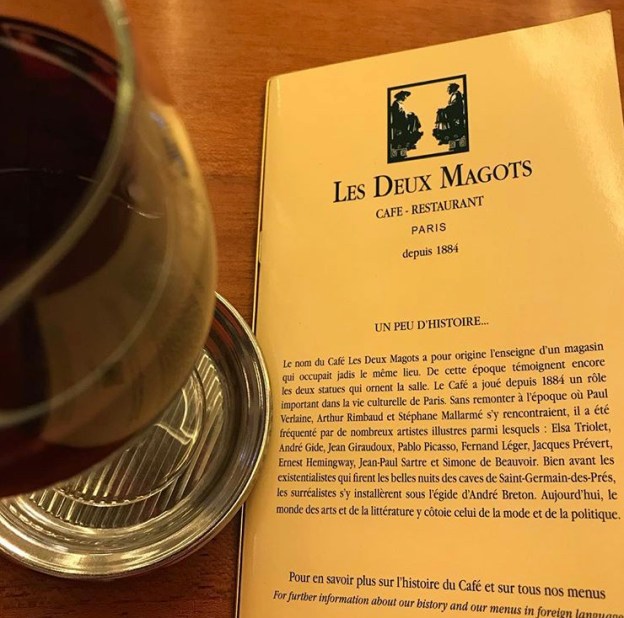
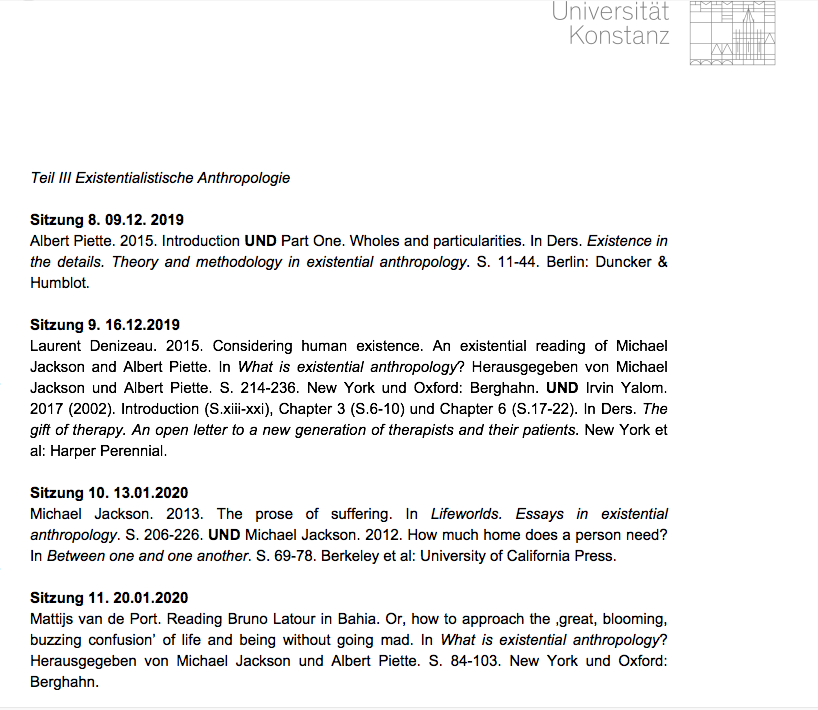
Next to a BA-level course on Indigeneity and Law, I will be teaching in our Master’s Program “Anthropology and Sociology” a thematic course on anthropology and existentialism. After having spent a couple of months in France (Paris, in particular) this year and last year, living in direct vicinity to Sartre’s and De Beauvoir’s former “writing ground” (Café Le Flore, Café Les Deux Magots) in St. Germain, I became more and more interested in combining anthropological reasoning with existential philosophy. Next to Sartre, De Beauvoir and other French intellectuals of the mid-20th century, I encountered the work of Albert Piette (who teaches at Uni Nanterre in Paris) whom I only knew as Michael Jackson’s “sidekick” from “What is existential anthropology?” (Berghahn 2015). 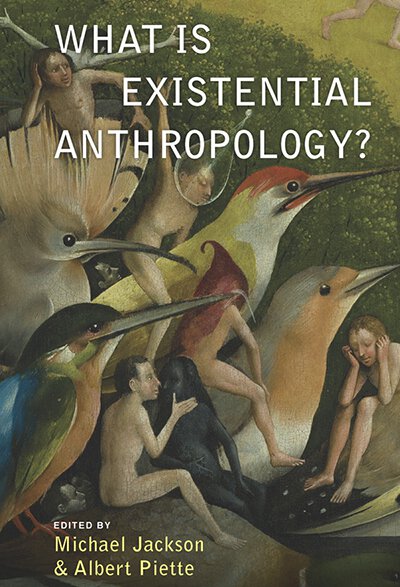 I slowly read through his oeuvre, most of it only available in French, but some of it already translated into English by now. His creative way of approaching an anthropo-centric anthropology via what he calls ‘phenomenography’ is as innovative as it is radical. He argues against ethnomethodology, against social interactionism and against every other theory that privileges collectivity rather than individuality.
Since the best way to truly understand theory is to teach it, I am looking forward to my seminar where the question “What role does the individual actually play in anthropology?” will stand at the center of our inquiry. We will see that this question needs to be answered differently depending on what decade and what anthropological tradition we are talking about. We will be reading classical anthropological literature (Malinowski, Benedict, Geertz, Obeyesekere, Rosaldo, Rapport, Lutz and Abu-Lughod) in order to understand how often the individual rather stood in anthropology’s way on the path towards ‘society’, ‘structure’ or ‘systems of meaning’. We will counter these views not only with recent existential anthropological literature, but also with literature from neighbouring disciplines such as philosophy (the old French classics) and existential psychoanalysis (Chodorow, Yalom).
Last but not least I hope to generate insights into the nature of the relationships we develop with our key interlocutors during field research: Does a stronger focus on the individual’s existence require a change in the way we approach our ‘field’ and collect our ‘data’? How do we reflect on our own role as individuals in the field?
Here is the syllabus to the seminar:



This winter term I will be teaching a course on indigeneity and law for our BA-students at the University of Konstanz.
While in the colonial era the alleged “backwardness” of “natives” or even “savages” was taken as an opportunity to deny them their right to their land, today “indigeneity” is a term used by indigenous people themselves in order to assert their rights (to land, natural resources, cultural self-determination, etc.).
In this seminar, we explore the nexus of indigenity and law by reading anthropological texts on indigeneity (and related concepts such as ethnicity). On the other hand, we learn about legal sources for such claims-making through which the rights of indigenous peoples get articulated in recent decades (for example UN resolutions, current court decisions, …).

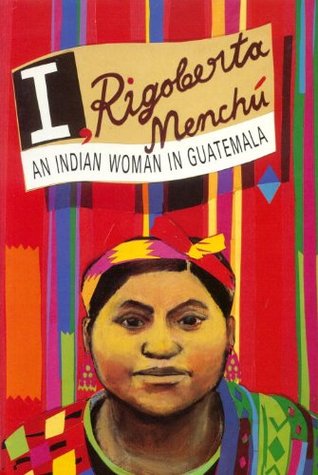 We will also read two different types of (auto-) ethnographic texts: on the one hand the life story of a Guatemalan indigenous woman, Rigoberta Menchú (Burgos / Menchú 1984) and on the other the recent monograph of the indigenous anthropologist Audra Simpson (2014) “Mohawk Interruptus. Political life across the borders of settler states “to the Kahnawà: ke (Haudenosaunee / Iroquois Confederation) in Quebec.
The aim of the seminar is to be able to trace historical and current connections between processes of Othering and those of Self-culturalization in the name of “indigeneity” from an anthropological perspective, as well as to understand the central role of law in doing so.
Here is the syllabus of the seminar.


 judith beyer