In this article, I interrogate the process how evidence is established in asylum procedure by engaging with anthropological and socio-legal literature on evidence and credibility assessments. Drawing on ethnomethodology, I analyse asylum interviews and show in what ways evidence can be understood as the result of an asymmetrical co-construction. As a result of this procedure, the individual applicant disappears and a ‘case’ is established.
Anthropologists who write country of origin reports based on such ‘case material’ for tribunals and courts can highlight the asymmetries in evidence-making and question the very categorisations through which the state operates. The article contributes to ongoing debates on the role of anthropologists and their knowledge as experts in court.
2024 has been the deadliest year for migrants trying to cross the Channel in small boats to reach the UK, with 69 deaths reported (Refugee Council 2025). British politicians have been referring to the circumstances under which people migrate to the UK as “the small boat crisis“ and subsequently made a “small boat deal“ with countries such as Ruanda, to which they wanted to ship people to.
I recently bought a small booklet filled with Walter Benjamin’s short stories. Tales out of loneliness is its subtitle. In it, there is a 1-page story entitled How the Boat was Invented and Why It Is Called ‘Boat‘. It follows a similar pattern as Benjamin’s short story on Why the elephant is called ‘elephant‘ that immediately precedes the story about the boat.
The storyteller. Tales out of loneliness. Walter Benjamin. Verso Books 2023.
Here’s how Boat’s story goes:
Before all the other people, there lived one person and he was called Boat. He was the first person, as before him there was only an angel who transformed himself into a person, but that is another story.
So the man called Boat wanted to go on the water — you should know that back then there was a lot more water than today. He tied himself to some planks with ropes, a long plank along the belly, that was the keel. And he took a pointed cap of planks, which was, when he lay in the water, at the front — that was the prow. And he stretched out a leg behind him and navigated with it.
In this manner he lay on the water and navigated and rowed with his arms and moved very easily through the water with his plank cap, because it was pointed. Yes, that is how it was: the man Boat, the first man, made himself into a boat, with which one could travel on water.
And therefore — of course that is quite obvious — because he himself was called Boat, he named what he had made ‘boat‘. And that is why the boat is called ‘boat‘.
(Walter Benjamin, 26 September 1933; published posthumously)
The “small boats crisis” is Boat’s crisis, the crisis of man. This is the elephant in the room that nobody wants to talk about. Because they do not know why the elephant is called ‘elephant‘ either.
Philosophy saves lives.
Paper boat made out of a book page (photo by: Maddy Freddie, pexels.com).
This winter term, I will be spending some time with my anthropology colleagues at Paris-Nanterre as part of the Laboratoire d’Ethnologie et de Sociologie comparative (LESC), part of the Centre National de la Recherche Scientifique (CNRS).
One part of my research stay is devoted to working on my current project: “Towards an anthropology of statelessness”. I will be speaking at the Department’s Colloquium in December (see plan below). I will also be teaching a course in legal anthropology … more about this one later.
The colloquium is free and open to the public, everyone is welcome.
If you are a recent graduate (MA-/MPhil-degree holder) with an interest in pursuing a PhD in Social and Cultural Anthropology under my supervision, please consider applying for a PhD position at the newly established Graduate School “Post-Euroentric Europe. Narratives of a World-Province in Transformation” at the University of Konstanz.
Together with 10 other professors we have worked hard in the last years to realize an ambitious and highly relevant programme that is aimed at decentring and questioning narratives about Europe.
“Where is Europe?” we might be tempted to ask. “And is it even one place?” (Attali 1994). Is Europe to be found in the minds and hearts of the refugees detained in camps on its southern border, for whom it is place of longing, even as it denies them entry or sets up hurdles in their way? How and to what extent do “soft” cultural factors in the form of collective narratives and imaginations solidify into “hard” institutional realities, which in turn have a reflexive effect on the availability of narrative resources?
While it has long been customary to regard “Europe” and “modernity” as more or less synonymous, only recently has there been a systematic examination of the fact that the European continent was and is permeated by political-cultural demarcations and asyn-chronicities, even within its own borders. Increased attention to non-European traditions or those marginalized in Europe’s dominant self-narrative not only guides a redefinition of Europe’s position in world affairs; it also requires us to diversify notions of Europe from within.
The work of our graduate program aims to contribute to the historical and contemporary demonopolization of the concept of Europe in local contexts, which has been tightly restricted to dominant traditions in the West-Central European area.
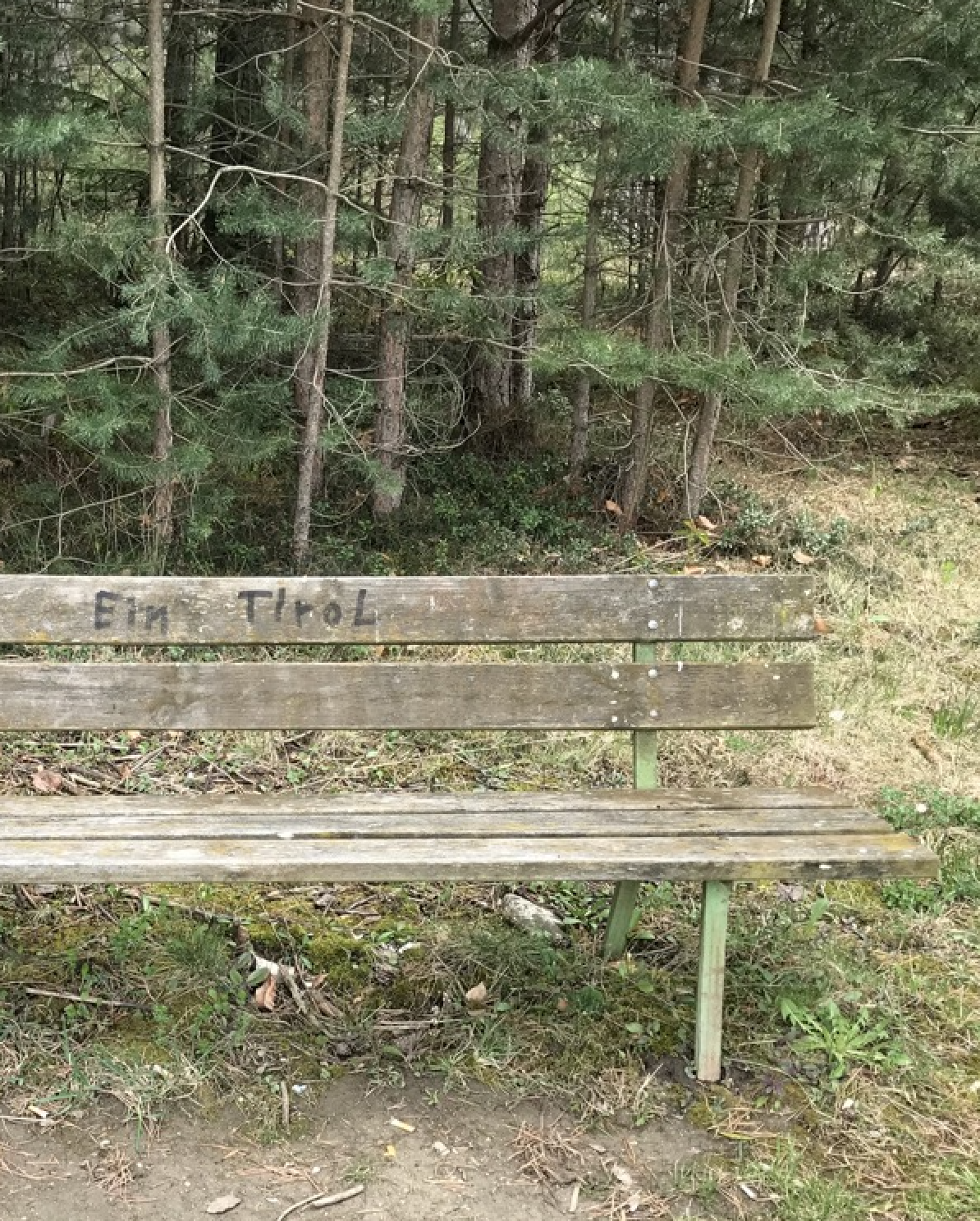
Within this interdisciplinary Graduate School, I am particularly interested in supervising anthropological PhD projects with a focus on statelessnessin Europe or its border regions or on one of the various European independence movements (e.g. in Catalonia, Bretagne, Basque Country, Scotland, Celtic Nationalism, One Tirol, … ). Other topics are possible, too, as long as they fit the programme and are based on ethnographic field research and lie within the field of political and legal anthropology.
Make sure you read the entire research programme carefully before preparing your application! If you have questions, contact me under my uni-konstanz email-address.The deadline is already 30 June 2024!
In this invited lecture, I will discuss my concept of “we-formation” in regard to three different topics: First, as anthropological theory and methodology; Second, as a way to make sense of the resistance against the attempted military coup and third in regard to the possibility of a public anthropology of cooperation in these trying times.
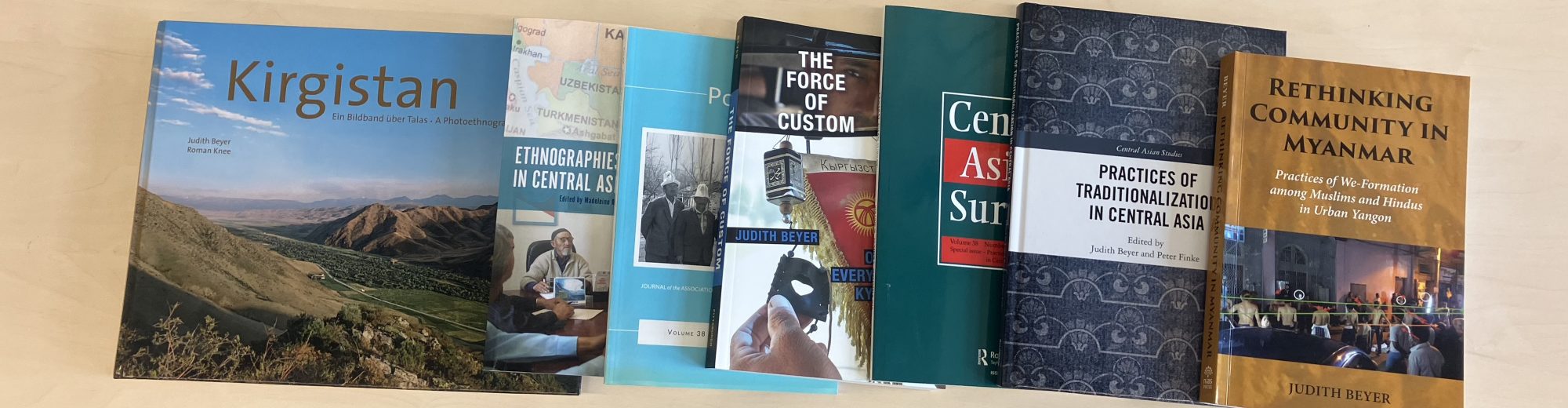
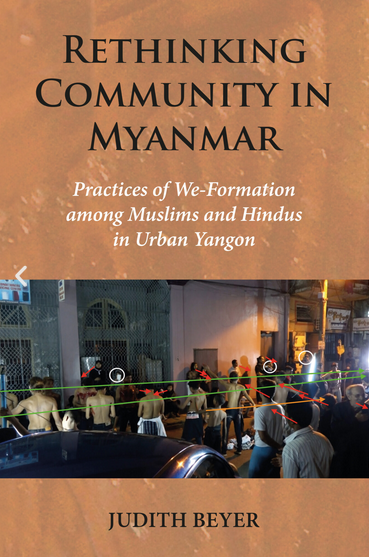
First, I will explore the concept in regard to its theoretical and methodological innovativeness, taking an example from my Yangon ethnography as illustration. We-formation, I argue in my book Rethinking community in Myanmar. Practices of we-formation among Muslims and Hindus in urban Yangon, “springs from an individual’s pre-reflexive self-consciousness whereby the self is not (yet) taken as an intentional object” (8). The concept encompasses individual and intersubjective routines that can easily be overlooked” (20), as welll as more spectacular forms of intercorporeal co-existence and tacit cooperation.
By focusing on individuals and their bodily practices and experiences, as well as on discourses that do not explicitly invoke community but still centre around a we, we-formation sensitizes us to how a sense of we can emerge (Beyer 2023: 20).
Second, I will put my theoretical and methodological analysis of we-formation to work and offer an interpretation of why exactly the attempted military coup of 1 February 2021 is likely to fail (given that the so-called ‘international community’ does not continue making the situation worse). In the conclusion of my book I argue that the “generals’ illegal power grab has not only ended two decades of quasi-democratic rule, it has also united the population in novel ways. As an unintended consequence, it has opened up possibilities of we-formation and enabled new debates about the meaning of community beyond ethno-religious identity” (250).
Third, I will discuss how (not) to cooperate with Myanmar today. Focusing on what is already happening within the country and amongst Burmese activists in exile, but also what researchers of Myanmar from the Global North can do within their own countries of origin to make sure the resistance does not lose momentum. In this third aspect, I take we-formation out of its intercorporeal and pre-reflexive context in which I came to develop the concept during my fieldwork in Yangon and employ it to stress a type of informed anthropological action that, however, does not rely on having a common enemy or on gathering in a new form of ‘community’ that has become reflexive of itself. Rather, it aims at encouraging everyone to think of one’s own indidivual strengths, capabilities and possibilities and put them to work to support those fighting for a free Myanmar.
You can purchase my book on the publisher’s website: NIAS Press.
Here’s the full programme of the Groupe Recherche Birmanie for the spring term 2023:
‘Community’, I argue in my new anthropological monograph, was actively turned into a category for administrative purposes during the time of British imperial rule. It has been put to work to divide people into ethno-religious selves and others ever since.
Rather than bestowing on community some sort of positivist reality or deconstructing the category until nothing is left, my aim in this book is to shift the angle of approach: I acknowledge that community (for reasons that can usually be traced historically) feels real to and is meaningful for individuals. Their experiences and their struggles to engage with community are no less real. Through their own classificatory practices, my interlocutors — Muslims and Hindus in urban Yangon — demonstrate that they reason and reflect on symbols and meanings in their own culture as much as anthropologists do. But my approach goes beyond a social constructivist concern over how terms such as community are used, and also beyond a representational approach in which actors are subjected to culture as a system of meaning.
When I talk about the work of community (drawing on Nancy 2015), I reflect on the ways in which individuals accommodate ‘community’ in their acts of reasoning, meaning-making and symbolization. The way my interlocutors in Yangon see and talk about themselves has a historical context that begins in nineteenth-century England, encompasses British colonial India and later Burma itself, and extends into presentday Myanmar. I then widen the emic perspective of my interlocutors and offer a novel way of describing how a we that does not neatly map onto or overlap with a homogeneous social group is generated in various situations.
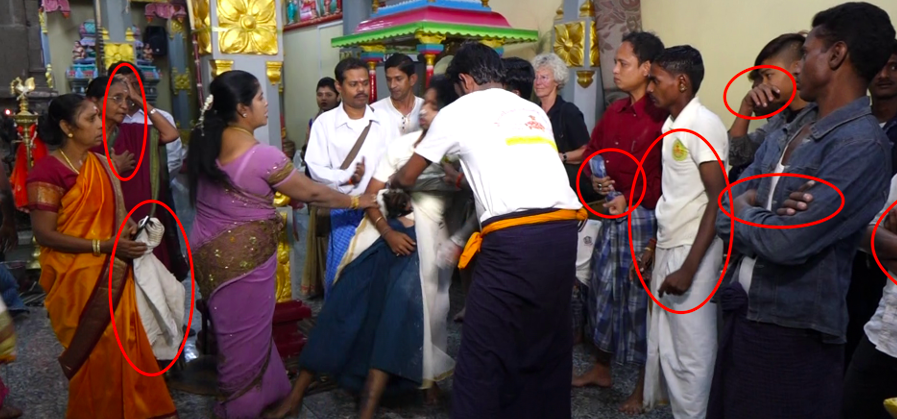
What I call we-formation encompasses individual and intersubjective routines that can easily be overlooked, as well as more spectacular forms such as the intercorporeal aspects of the ritual march I described earlier. Attending to such sometimes minute moments of co-existence or tacit cooperation is difficult, but doing so can help us understand how community continues to have such an impact on the everyday lives of our interlocutors, not to mention on our own analytical ways of thinking about sociality.
By focusing on individuals and their bodily practices and experiences, as well as on discourses that do not explicitly invoke community but still centre around a we, we-formation sensitizes us to how a sense of we can emerge .
You can purchase the book on the publisher’s website: NIAS Press.
I published a new blog post for the Critical Statelessness Studies (CSS) Blog Series of the University of Melbourne.
I describe and analyse a central characteristic of many ‘expert activists’ working in the field of statelessness: they struggle with what I call a ‘practitioner-scholar dilemma’. Despite the fact that they often do cross disciplinary boundaries and fields of practice in combining scholarly and activist work, they position themselves on one side of an imagined divide. Drawing on Gramsci, I argue that the ‘practitioner-scholar dilemma’ originates in the way the state system structures the very possibilities of engagement with the issue of statelessness. I credit one newly emerging group of expert activists with the possibility to overcome this dilemma…
I published a new research article in Dialectical Anthropology as part of a (still forthcoming) special issue on Antonio Gramsci’s concept of “common sense”, co-edited by Jelena Tošić and Andreas Streinzer. The special issue will also feature an afterword by anthropologist Prof. Kate Crehan, an established Gramsci scholar and an important guiding voice during the virtual workshop that Jelena and Andreas organized and afterwards when we circulated our draft papers.
In the article, I follow a group of professionals in their efforts to address the problem of statelessness in Europe. My interlocutors divide the members of their group into “practitioners,” on the one hand, and “scholars” on the other. Relating this emic dichotomization to Antonio Gramsci’s dialectical take on common sense, I argue against a theoretical reductionism that regards expertise and activism as two essentially different and mostly separate endeavors, and put forward the concept of the “expert activist.” Unpacking what I call the “practitioner–scholar dilemma,” I show that in their effort to end statelessness, “practitioners” take a reformist route that aims at realizing citizenship for the stateless, while “scholars” are open to a more revolutionary path that contemplates the denaturalization and even the eradication of the state. By drawing on Gramsci, I suggest that the impasse the group encounters in their work might relate more to the structural constraints imposed by the state within or against which they operate than to the problem of statelessness they are trying to solve.
My article contributes to a body of emergent work in anthropology that explores the intersection of scholarly expertise and activism. It is also the first article that I am writing on the topic of statelessness, drawing on my new fieldwork data that includes written observations, photographs, the recording and subsequent transcription of free-flowing conversations, oral presentations and speeches, journal entries, and textual documents, all obtained from participating in workshops, conferences, and policy briefings in various European settings such as universities in the UK, museums, and event spaces in The Hague and at the European Youth Centre and the Council of Europe in Strasbourg.
My ethnographic research is ongoing and involves in-person and online attendance at thematic webinars on the topic of statelessness, in annual stakeholder meetings, and the launching of new reports and other publications.
I am particularly interested in receiving feedback from the people I have been working with as I continue researching the topic of expert activism and statelessness in Europe.






 judith beyer