Category Archives: life history

In honour of Akbar Hussain (1944 – 2024)

On July 28, 2024  at 4.30pm, my  dear Akbar Hussain passed away.

We have known each other for over a decade and as is the case with many central interlocutors in anthropology, there is never a way to thank them enough for what they are enabling us to achieve. Akbar Hussain was born as Mohammad Akbar Hussain Khan. He descended from a well-known Turkic Qizilbash family of high-ranking warriors, originating from Lankaran in what is now Azerbaijan. His ancestors had fought in the British Army and their heroic services were rewarded with name titles – such as “Captain” – and with land titles – such as a grant given to Akbar Hussain’s great-grandfather in 1886 that allowed him to relocate from the Northern part of British India to Burma. While the family raised their children in Myanmar, they continued to go back and forth to countries in the East such as Pakistan (since 1947) and the West (Akbar Hussain himself lived in the USA for many years). Theirs was a polyglott Muslim family as most Muslim families are in Myanmar. In contrast to his ancestors, however, Akbar Hussain did not serve any army; he served his mosque in downtown Yangon. He knew its history better than most, and due to the location of his appartment, he also knew its present: who would go in and out, at what time and for what purpose. He was curious enough to engage with my curiosity, multi-lingual so that we could easily communicate about the most complicated matters, very knowledgable and yet modest and able to admit when he did not know something – suggesting that I probe literature instead of his brain.
This is a very blurry picture of the two of us, but somehow, it says so much about our relation. Akbar Hussain was always there when I needed him and even, when I did not know that I needed him. He always kept to the background or to the sidelines, observing everything, commenting quietly afterwards or hinting at things, pointing at people, alerting me what to pay attention to, and whom to listen to more closely. Translating from Urdu to English for me at times, and always making sure that I get home safely at night after a procession or another long day spent at his house with him and his lovely wife.

He passed away and I could not say goodbye properly, neither in person, nor at the graveyard. He had asked me many times to come see him during the last few years. We communicated via a third person who would scan his handwritten letters to me in an internet café … as if it were the 1990s, as if there was a military dicatorship in place … wait … oh. And I would write self-censored emails back, because I knew that I was sending them to an address and a person whom I did not know and that I relied on that person to print them out and give them to him when he came to pick up his ‘mail’. So he knew all about my private life in safe Europe, but little of my fears and worries for him, his wife and everyone in Myanmar, really, as there was no way to ask how he was really doing in the current situation. He never spoke of politics, he sticked to writing about his health, his religion, the weather and of course reported meticuously about all upcoming festivities at the mosque.

We met at the mosque over 10 years ago and soon I realized that he frequently stayed at the managing trustee’s house at the time. He was his right hand, but also a careful observer as the person was very old and also not uncomplicated, feared by some even. Akbar Hussain knew how to handle complicated people, he even knew how to deal with a female German anthropologist who intruded into the daily life of the mosque, too, but – in contrast to  tourists or journalists who dropped in and out, sometimes coming only for one day in the year – Ashura – to witness, record and distribute gruesome images of men flagellating themselves or walking over burning coal – to then disappear again, thinking they had understood something, he dealt with me as someone who would always come back and stay because I somehow never understood enough. And he kept explaining. Eventually, when he thought, I had acquired enough knowledge, he asked me: “Hey, when will you become Shia?” In my book, I recall this sentence and have interpreted it in the following way:

‘Hey, when will you become Shia?’ he often asked, which indicated to me that it would have been easier for him to conceive of me as a converted ‘member’ than as someone who was simply very interested (and increasingly knowledgeable) in what it means to be a Shia in Yangon. My interest and knowledge in the Shia religion were fine, but they were not what mattered in the end: membership in the community did (Beyer 2024 ,8)

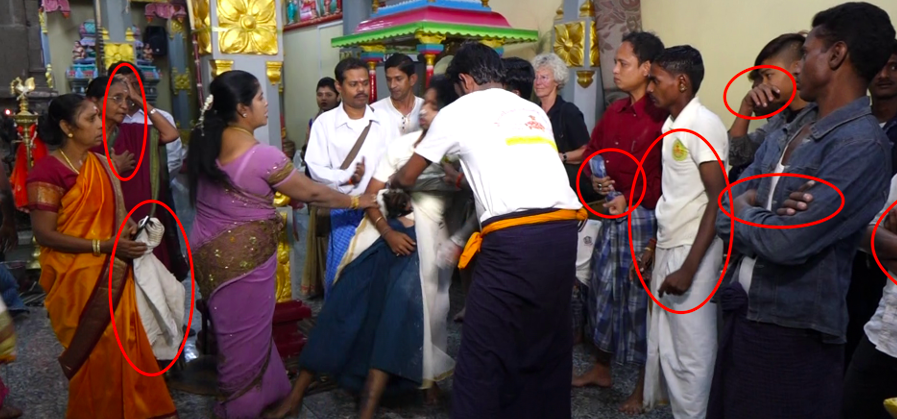
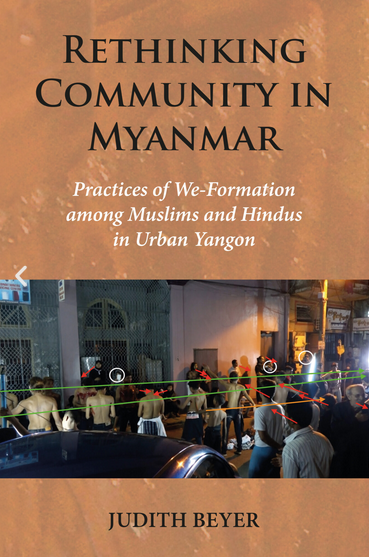
He is on the cover photograph of my Myanmar book, as usual at the sidelines, with his back even turned away from where supposedly the ‘action’ is, yet later able to deconstruct and interpret the event with me in all its details. Since we often sticked together, everyone initiatially wondered who I was. The following conversation is from a transcript I made between Akbar Hussain, me and another person from the mosque who explained to me how Akbar Hussain would answer this question in my absence.

Third person (to me): they all ask ‘where is she from, where is she from?’ Akbar Hussain then always says ‘my relation’ #00:08:44-6#

AH Because my relation are all foreigners  #00:08:49-8#

J That is true #00:08:51-8#

AH So they thought that you are my relative #00:08:57-3#

J That’s good – we can keep it this way (laughs) #00:09:02-9#

AH They ask me ‘from America?’ ‘No, I say, from Germany.’ They are very inquisitive (laughs) #00:09:18-7#

J That’s fine, I am also inquisitive #00:09:23-9#

(all laughing) #00:09:26-6#

All his relatives are foreigners, he said, because Akbar Hussain had chosen to never give up his Pakistani citizenship. He loved Myanmar and Yangon, the downtown area, his street and the mosque, but his home was in Pakistan where he spent his youth and went to university. He was fiercely political, one of the harshest critics of the mullahs in Pakistan and in Afghanistan, of those who perverted his beloved religion and his culture. He was proud and knowledgable and sometimes so outspoken that when he picked up the microphone at the mosque to condemn the killing of innocents, the endemic corruption or anything else going on in Pakistan, Saudi Arabia, Iran or Northern Africa, one could mistake him for being radical himself. He was radical in the sense that he did not only believe, but stood up for what he believed. But this concerned politics and religion abroad. He was careful to not position himself publicly when it came to Myanmar – knowing that he was a foreigner by choice. Someone who had to frequent the downtown visa section of the Ministry of Foreign affairs every few months to renew his residence status. While he had tried to incorporate me into his ‘community’ and even his family, he himself had remained Other all the time … we both occupied the same positionality, I later understood.

I read about Akbar Hussain’s death on the Facebook page of a friend of mine from Yangon. She is the wife of the late managing trustee and knew Akbar Hussain very well. He saw her getting married at a young age, he saw her two children growing up, he went in and out of her house in downtown for many years and he supported her late husband in many ways. She is thankful for him, her story being one of the numerous stories that need to be told because they are paradigmatic for Myanmar’s Muslims: for the way religious divides are being bridged, for the way religious tolerance is being practiced at a low level, for the way in which the people of Myanmar are capable of transcending the categories that have been imposed upon them throughout colonial history. These are the stories we do not get to hear about too much, but they exist and they matter. Just like the people that tell them.
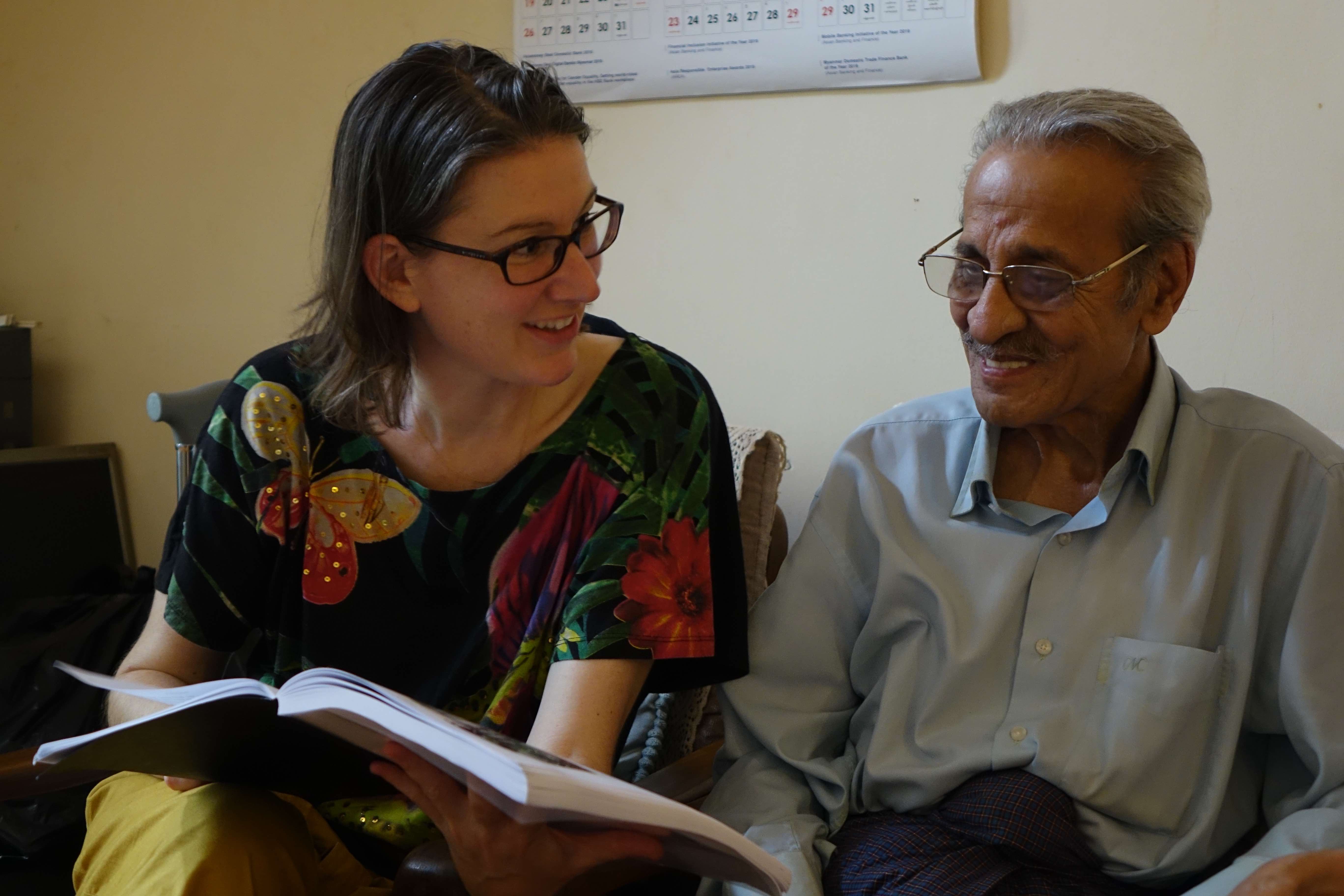
One last conversation in person. Spring 2020 (photo: Felix Girke)

Akbar Hussain, may you rest in peace and … thank you.

မိသားစုနဲ့ထပ်တူအလွန်တရာမှဝမ်းနည်းကြေကွဲမိပါတယ်စိတ်မကောင်းလိုက်တာသူသိတ်ချစ်မြတ်နိုးလှတဲ့လလေး Muharram လမှာဆုံးသွားရှာရတာစိတ်ထိခိုက်ဝမ်းနည်းမိပါတယ်

Inna lillahi wa inna ilayhi raji’un إِنَّا لِلَّٰهِ وَإِنَّا إِلَيْهِ رَاجِعُونَ.
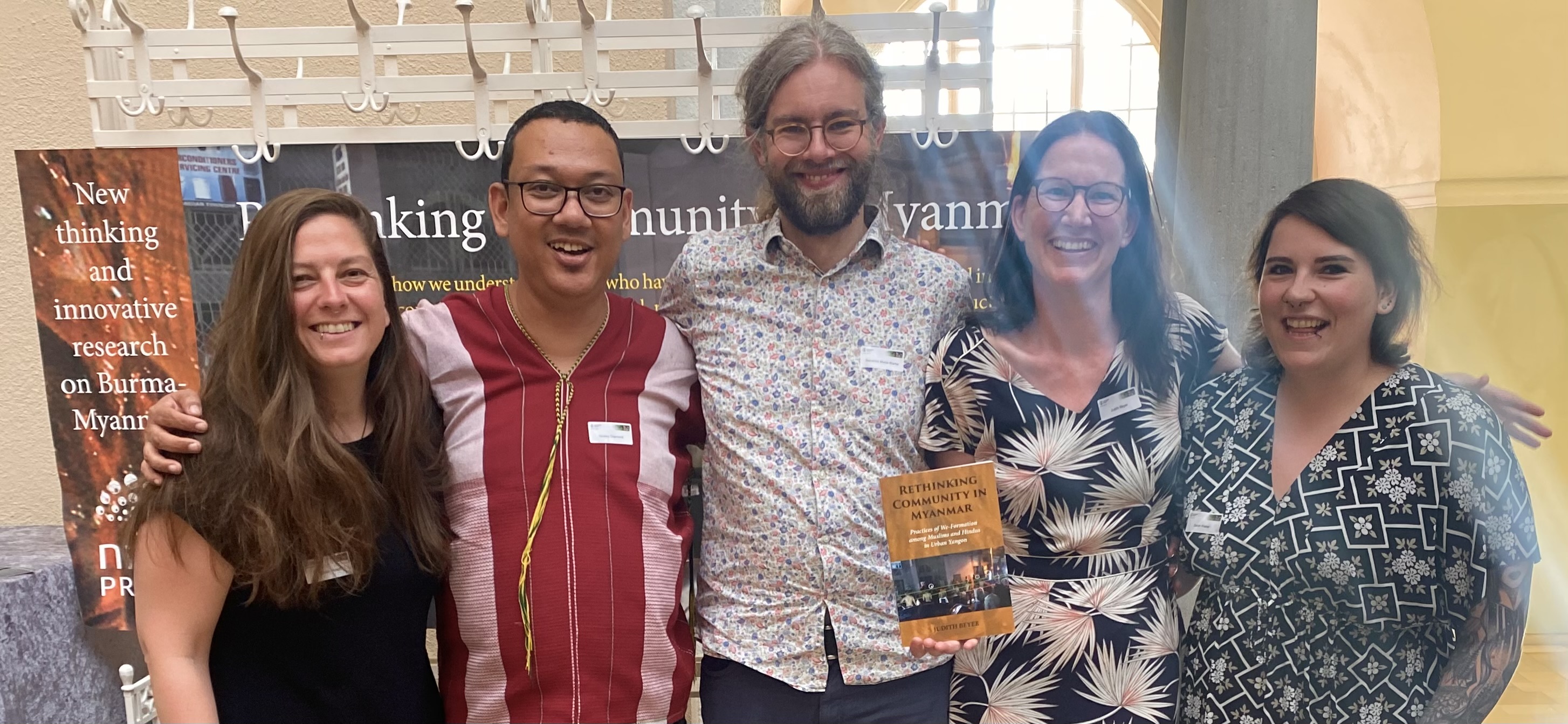
 

Book Launch: Rethinking Community in Myanmar. 15th Int. Burma Studies Conference

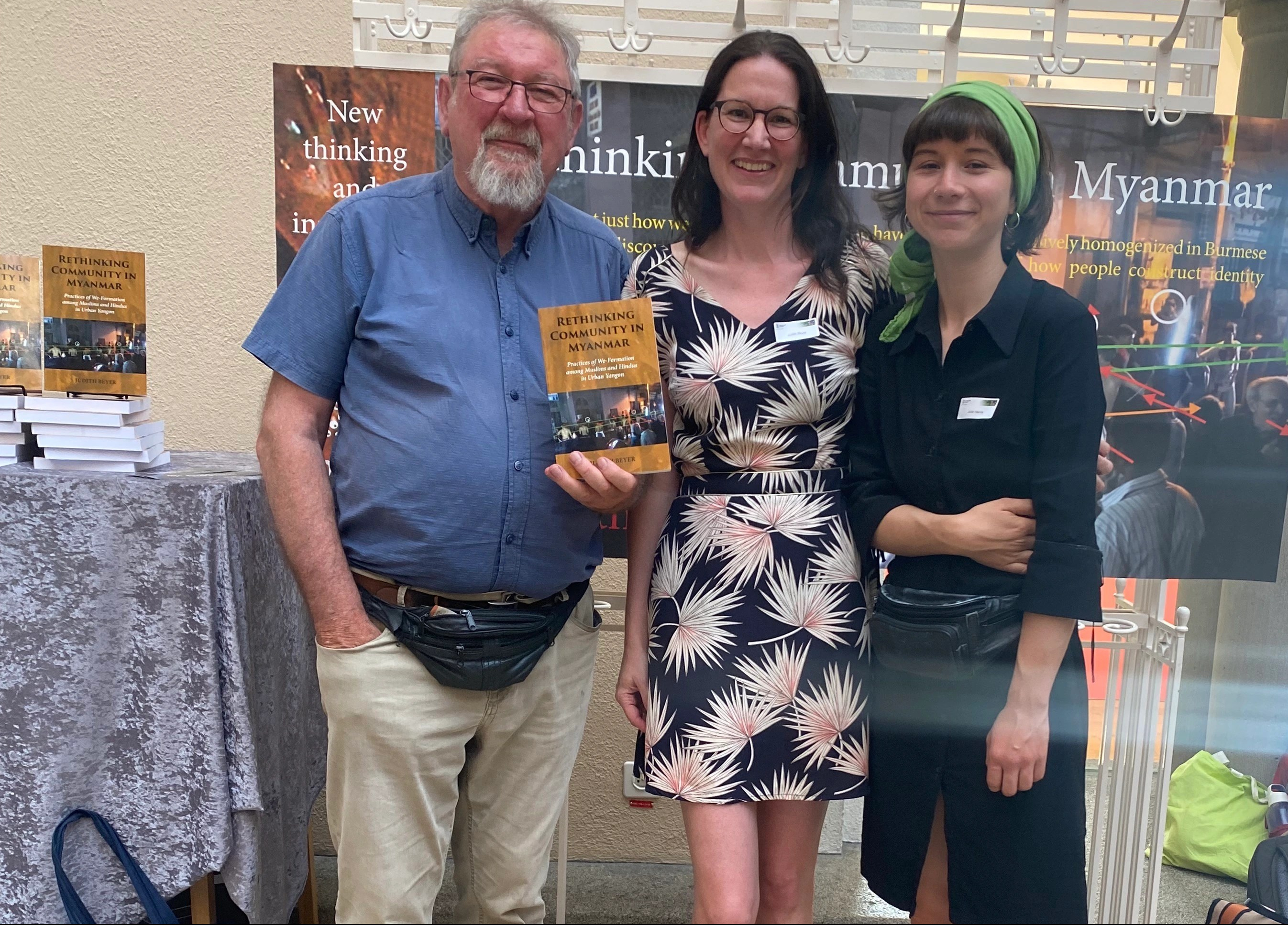
At the 15th International Burma Studies Conference, hosted at the University of Zurich, (9-11 June 2023), I launched my book Rethinking Community in Myanmar. Practices of We-Formation Among Muslims and Hindus in Urban Yangon.

Informal book launch in good company — while missing many from Myanmar

I wanted to celebrate the publication of my monograph: 10 years in the making if I count from the first days of fieldwork in 2012-2013. Good anthropological monographs take time and they are never the result of one indiviual only, even though writing can be a solitary process, particularly towards the end. I wanted to use the occasion of having over 200 Myanmar specialists gathering in one place, to say “Thank you” publicly to all the important people who could not be present in Zurich, but also to those who were able to share a glass of wine with me that day.

Great PhDs to be: Carolin Hirsch, Nickey Diamond, Benedict Mette-Starke, Sarah Riebel (plus book and me)

I set out by thanking my Muslim and Hindu interlocutors in Myanmar — there can neither be an anthropology nor an ethnography without the people ‘in’ (paraphrasing Tim Ingold). I owe them everything and I am glad that there will be an open access version of my book coming out towards the end of this year that will allow at least some of my interlocutors to download the book in Myanmar — I cannot bring it to them at the moment; not so much because it would be dangerous for me (it might be), but because I simply cannot take the risk of putting them into danger once I have left the country or their houses …

I then thanked my four research assistants — my KRA (Kachin Research Army) — and I explained to the audience of Burma/Myanmar experts that I profited enormously from them having conversations with my interlocutors about what it means to be a member of a minority in a majority Buddhist country. Listening in — as I am currently developing also in another context — is a methodologically fruitful approach to conduct fieldwork or carry out digital ethnography where fieldwork is not possible, because it decenters the anthropologist. What I am interested in mostly is “free-flowing talk” where my interlocutors do not try to guess what it is I want from them (in terms of what they might be expected to tell me), but where I can simply follow them having conversations with one another. Since all of my research assistants were Christian Kachin women, it was not religion they shared with my interlocutors (who were Muslims and Hindus), but the experience of being ‘slotted in’ as members of ‘communities’.

I also thanked my colleagues in Myanmar who had been professors of Anthropology at the University of Yangon prior to the attempted military coup in February 2021. Thanks to them, my PhD students received research visa, thanks to them, I had the opportunity of teaching and learning from young anthropology students, and thanks to them I learned a lot about the history of the discipline in Myanmar and about the history of the University of Yangon. I truly hope that one day they will be able to return to their professional jobs — which they cherished a lot, and to their students whom they loved.

None of these people could be with my family, my PhD students, and the other Myanmar scholars that day.

Thanking those who were there

I was happy to be surrounded by many friends, who had helped in different ways to bring this book to fruition: many of my colleagues had read draft chapters, some had written reviews or are going to write them. Alicia Turner gave some introductory words — she knows the book very well as she has written the most constructive and helpful review that made the final product so much better!

The managing editor of NIAS Press, Gerald Jackson, had come from Copenhagen to Zurich with his research assistant Julia Heinle and with a lot of amazing books on Southeast Asia and on Myanmar in tow. He took my book project on board and steered it smoothly through the production process in not even two years from the submission date!

Gerald Jackson and Julia Heinle (both NIAS Press) with the book and me.

My PhD students who are working on Myanmar, were all present, too. We discussed my material just as much as we discussed theirs. They all completed long-term ethnographic fieldwork in or on Myanmar and I can’t wait to see their own books!

And — last but not least — my family — who accompanied me from 2012 onwards and carried out their own research projects in Yangon: on the politics of cultural heritage in one case and on what it means to go to a local school in Chinatown in Yangon in the other case.

Thank you to everyone who was there that evening — be it in spirit or in the flesh — I am very grateful for the support I have received in the last decade. I hope the book will be useful to many.

We-formation. Reflections on methodology, the military coup attempt and how to engage with Myanmar today. Lecture in Paris, 16 May 2023

In this invited lecture, I will discuss my concept of “we-formation” in regard to three different topics: First, as anthropological theory and methodology; Second, as a way to make sense of the resistance against the attempted military coup and third in regard to the possibility of a public anthropology of cooperation in these trying times.

First, I will explore the concept in regard to its theoretical and methodological innovativeness, taking an example from my Yangon ethnography as illustration. We-formation, I argue in my book Rethinking community in Myanmar. Practices of we-formation among Muslims and Hindus in urban Yangon, “springs from an individual’s pre-reflexive self-consciousness whereby the self is not (yet) taken as an intentional object” (8). The concept encompasses individual and intersubjective routines that can easily be overlooked” (20), as welll as more spectacular forms of intercorporeal co-existence and tacit cooperation.

By focusing on individuals and their bodily practices and experiences, as well as on discourses that do not explicitly invoke community but still centre around a we, we-formation sensitizes us to how a sense of we can emerge (Beyer 2023: 20).

Second, I will put my theoretical and methodological analysis of we-formation to work and offer an interpretation of why exactly the attempted military coup of 1 February 2021 is likely to fail (given that the so-called ‘international community’ does not continue making the situation worse). In the conclusion of my book I argue that the “generals’ illegal power grab has not only ended two decades of quasi-democratic rule, it has also united the population in novel ways. As an unintended consequence, it has opened up possibilities of we-formation and enabled new debates about the meaning of community beyond ethno-religious identity” (250).

Third, I will discuss how (not) to cooperate with Myanmar today. Focusing on what is already happening within the country and amongst Burmese activists in exile, but also what researchers of Myanmar from the Global North can do within their own countries of origin to make sure the resistance does not lose momentum. In this third aspect, I take we-formation out of its intercorporeal and pre-reflexive context in which I came to develop the concept during my fieldwork in Yangon and employ it to stress a type of informed anthropological action that, however, does not rely on having a common enemy or on gathering in a new form of ‘community’ that has become reflexive of itself. Rather, it aims at encouraging everyone to think of one’s own indidivual strengths, capabilities and possibilities and put them to work to support those fighting for a free Myanmar.

You can purchase my book on the publisher’s website: NIAS Press.

Here’s the full programme of the Groupe Recherche Birmanie for the spring term 2023:

“Rethinking community in Myanmar. Practices of We-Formation among Muslims and Hindus in Urban Yangon” (NIAS Press 2023) has arrived!

‘Community’, I argue in my new anthropological monograph, was actively turned into a category for administrative purposes during the time of British imperial rule. It has been put to work to divide people into ethno-religious selves and others ever since.

Rather than bestowing on community some sort of positivist reality or deconstructing the category until nothing is left, my aim in this book is to shift the angle of approach: I acknowledge that community (for reasons that can usually be traced historically) feels real to and is meaningful for individuals. Their experiences and their struggles to engage with community are no less real. Through their own classificatory practices, my interlocutors — Muslims and Hindus in urban Yangon — demonstrate that they reason and reflect on symbols and meanings in their own culture as much as anthropologists do. But my approach goes beyond a social constructivist concern over how terms such as community are used, and also beyond a representational approach in which actors are subjected to culture as a system of meaning.

When I talk about the work of community (drawing on Nancy 2015), I reflect on the ways in which individuals accommodate ‘community’ in their acts of reasoning, meaning-making and symbolization. The way my interlocutors in Yangon see and talk about themselves has a historical context that begins in nineteenth-century England, encompasses British colonial India and later Burma itself, and extends into presentday
Myanmar. I then widen the emic perspective of my interlocutors and offer a novel way of describing how a we that does not neatly map onto or overlap with a homogeneous social group is generated in various situations.

What I call we-formation encompasses individual and intersubjective routines that can easily be overlooked, as well as more spectacular forms such as the intercorporeal aspects of the ritual march I described earlier. Attending to such sometimes minute moments of co-existence or tacit cooperation is difficult, but doing so can help us understand how community continues to have such an impact on the everyday lives of our interlocutors, not to mention on our own analytical ways of thinking about sociality.

By focusing on individuals and their bodily practices and experiences, as well as on discourses that do not explicitly invoke community but still centre around a we, we-formation sensitizes us to how a sense of we can emerge .

You can purchase the book on the publisher’s website: NIAS Press.

Rethinking Community in Myanmar. New Book out soon!

Announced for November 2022 with NIAS Press:

Rethinking Community in Myanmar. Practices of We-Formation among Muslims and Hindus in Urban Yangon.

This is the first anthropological monograph of Muslim and Hindu lives in contemporary Myanmar. In it, I introduce the concept of “we-formation” as a fundamental yet underexplored capacity of humans to relate to one another outside of and apart from demarcated ethno-religious lines and corporate groups. We-formation complements the established sociological concept of community, which suggests shared origins, beliefs, values, and belonging. Community is not only a key term in academic debates; it is also a hot topic among my interlocutors in urban Yangon, who draw on it to make claims about themselves and others.

Invoking “community” is a conscious and strategic act, even as it asserts and reinforces stereotypes of Hindus and Muslims as minorities. In Myanmar, this understanding of community keeps self-identified members of these groups in a subaltern position vis-à-vis the Buddhist majority population. I demonstrate the concept’s enduring political and legal role since being imposed on “Burmese Indians” under colonial British rule. But individuals are always more than members of groups. I draw on ethnomethodology and existential anthropology to reveal how people’s bodily movements, verbal articulations, and non-verbal expressions in communal spaces are crucial elements in practices of we-formation. Through participant observation in mosques and temples, during rituals and processions, and in private homes I reveal a sensitivity to tacit and intercorporeal phenomena that is still rare in anthropological analysis.

Rethinking Community in Myanmar develops a theoretical and methodological approach that reconciles individuality and intersubjectivity and that is applicable far beyond the Southeast Asian context. Its focus on we-formation also offers insights into the dynamics of resistance to the attempted military coup of 2021. The newly formed civil disobedience movement derives its power not only from having a common enemy, but also from each individual’s determination to live freely in a more just society.

In honour of Baiyz Apa (1927 – 2020)

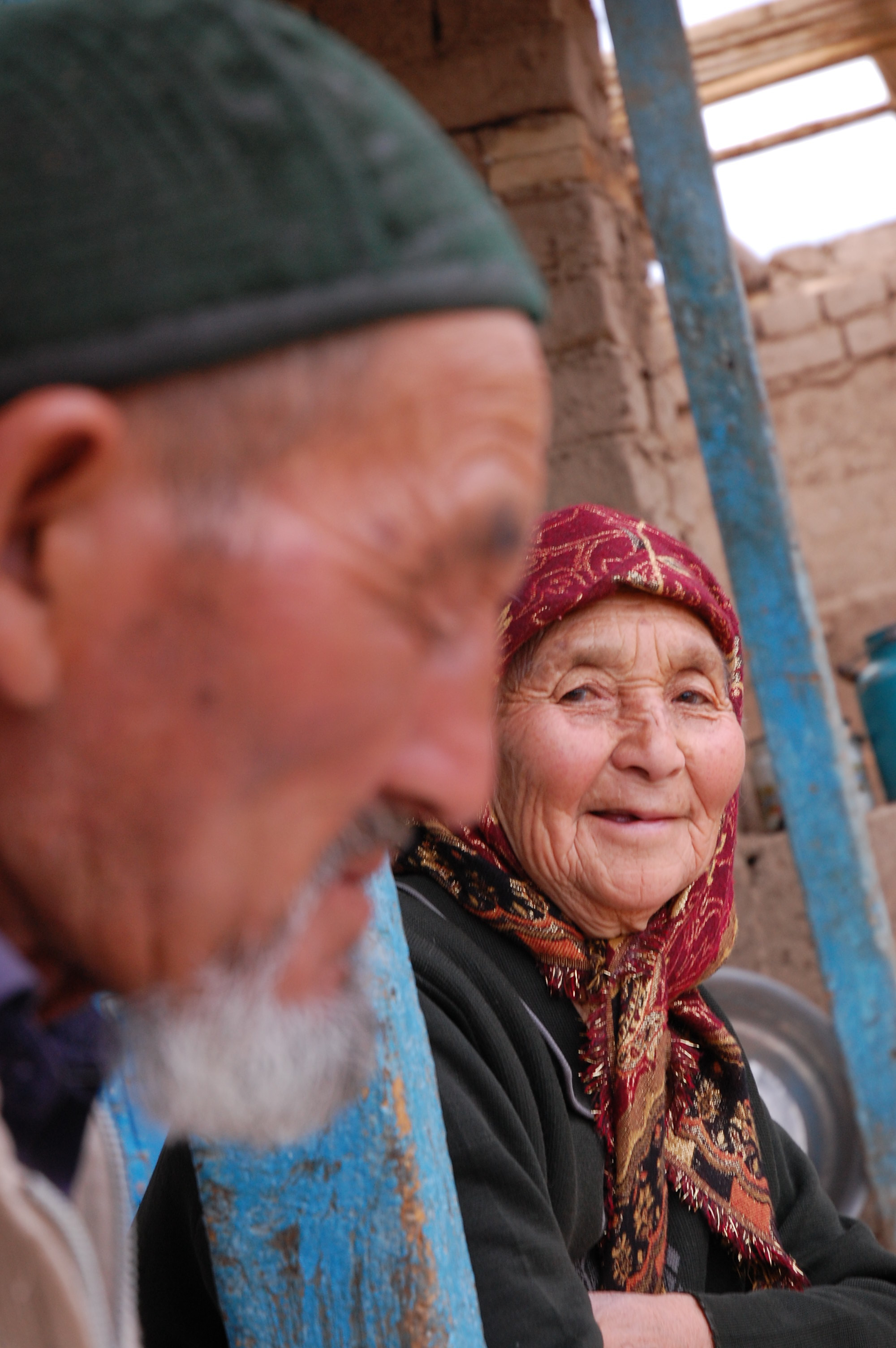
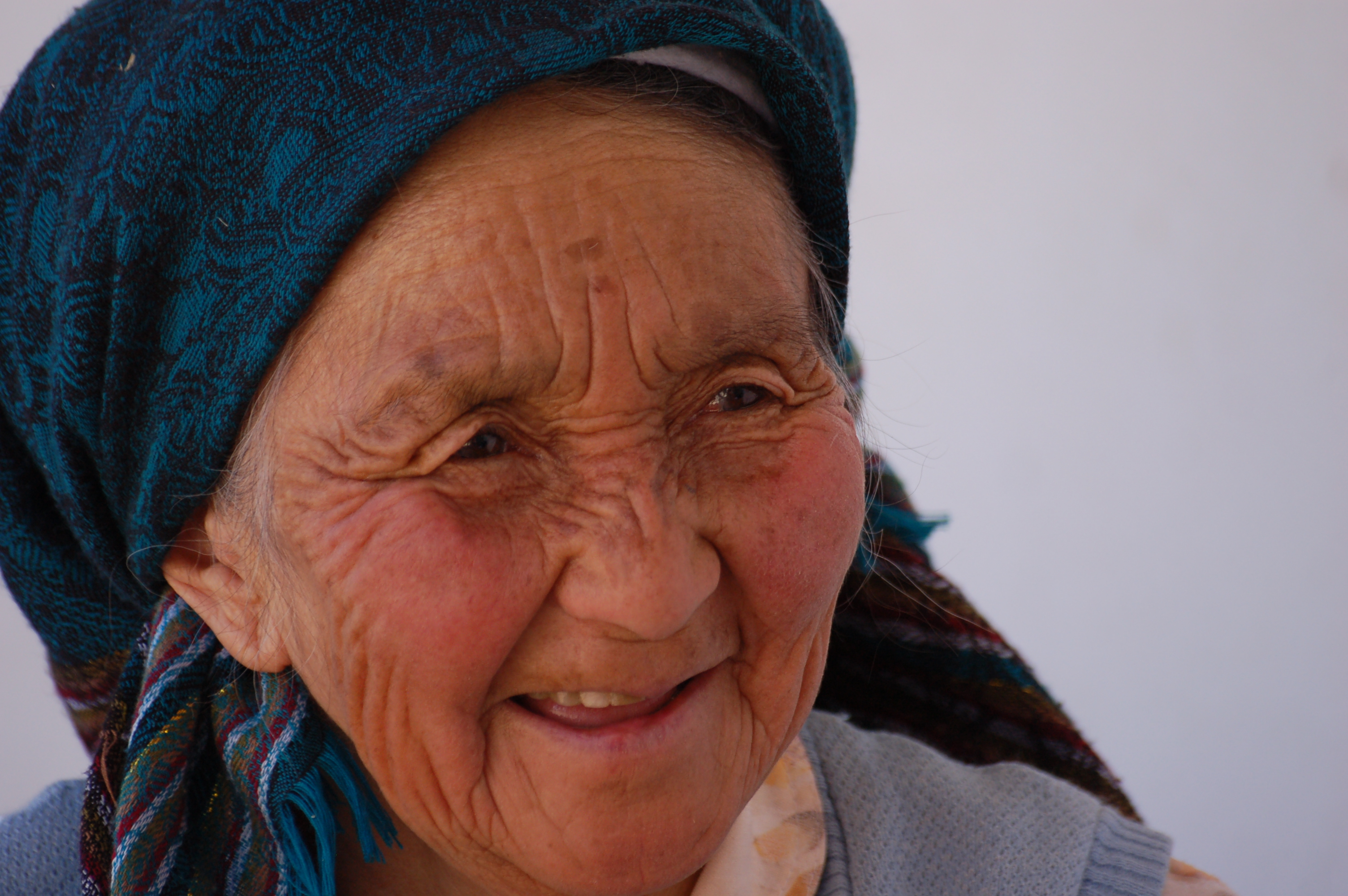
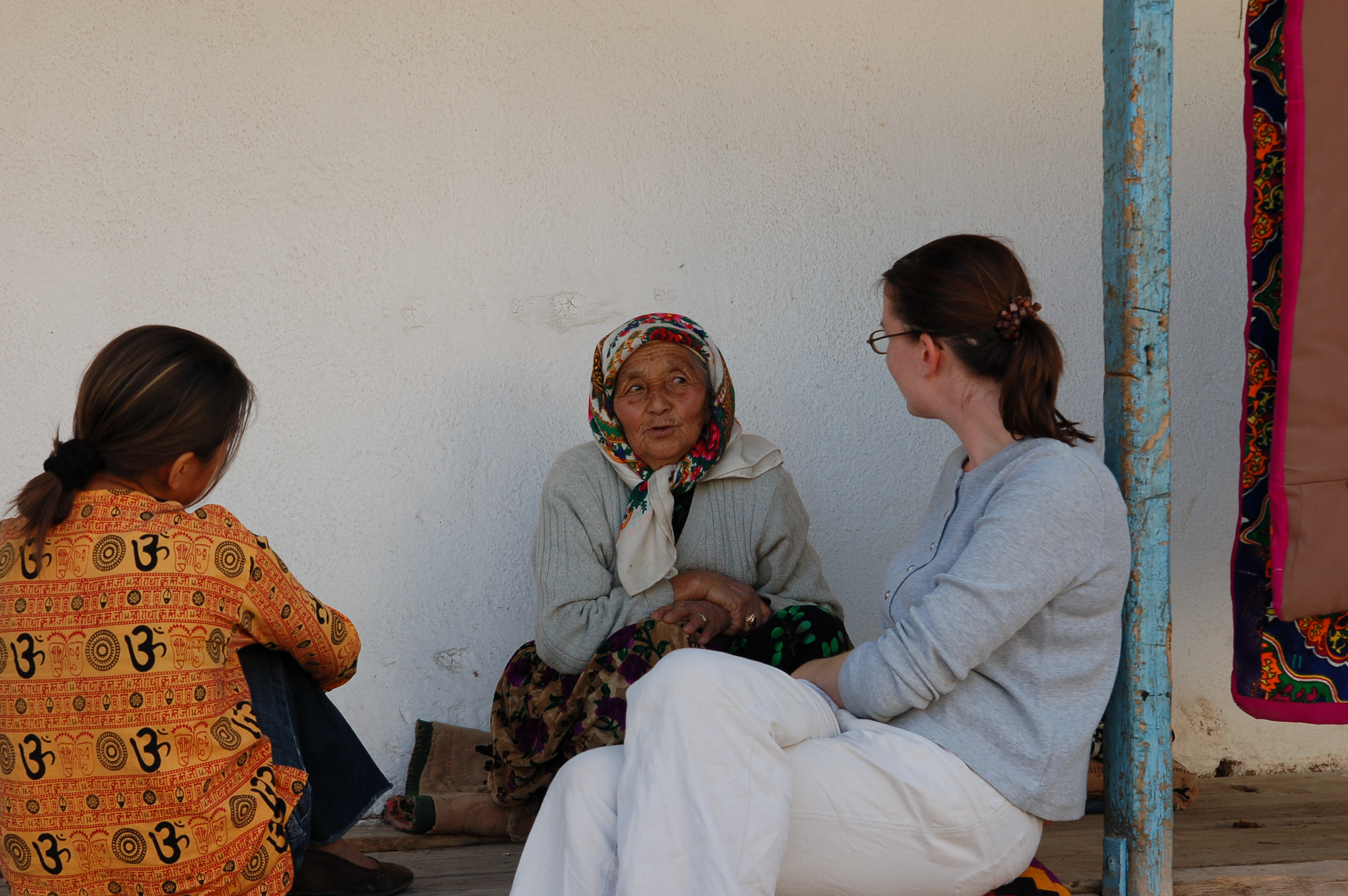
On January 27, 2020 at 4.20am, my  beloved Kyrgyz grandmother, Baiyz Apa, passed away. She had been waiting for this moment for the last five years, asking Kudai (Allah) to please bring her home. I lived in her home for one and a half years between 2005 and 2006 and have frequently returned in 2008, 2010, 2015 for further ethnographic research and whenever it was possible. The last time I “saw” her was in December 2019 when her great-grandchildren recorded an Instagram videomessage of hers for me. Who would have thought this to be possible? I carried out research at a time when there were only two telephones in the  village: one at the mayor’s office and one at the peregovornyi punkt – the post office. Both almost never worked. When I wanted to talk to my parents or grandparents in Germany, I needed to travel for 40km into Talas town and hope for either a mobile signal or use one of the telephones there … Now Baiyz Apa was on Instagram, telling me that we have not seen each other in a long time. She was right. I could see that she was very weak but her mind was sharp as always. I showed her message to my son, whom she named when he was born. She gave me two options — Aralbek or Zhangybek — the first indicating the child to be the  “leader” of Aral, the village we all lived in, the second meaning that of a “new leader.” Of course I chose the second.

It was through her blessing, I believe and she believed, that he came into the world. I remember very clearly how I had asked her in 2010 to please give me a bata so that I would give birth to a child. And she did. But beyond her blessing, Baiyz Apa has given me many other things: It is through her that I truly came to understand what growing up in one of the remotest parts of the Soviet Union must have meant for a woman. It was through her that I understood that as a woman one can do ANYTHING. She gave birth to 11 children … the first 4 died. After the fourth death, she consulted with the village imam at a time when “being a Muslim” was forbidden in Kyrgyzstan. He advised her to pray — so she began to learn to “read namaz” five times a day and thanks to Allah, her fifth child — a boy — lived. After him, she had six other children and also adopted a daughter.

It was probably half way into my fieldwork (which was devoted to understanding legal pluralism in Kyrgyzstan) that I realized how interesting Baiyz Apa’s life history was. And I asked her whether she would like me to write it down for her. She said “if it helps you with your work, I will.” And so it was not out of self-interest, but of generosity that she agreed to dig deep into her memories and tell me story after story after story for weeks on end.

I had been smart enough not to impose a linear structure onto the way she was telling her life story by not asking her to go back as far as she remember and start from there until we would have reached the present time. In contrast, I had asked her to start from the most important event in her life. What was she most proud of? And she began to talk about how she had managed to marry off all of her children as a single working mother. Her husband had been much older than her and had died early, so that she was left with the burden of not only working full time in the Kolchoz, but also raising her children alone, being responsible for her household and —  everyone familiar with Central Asia knows how difficult this is — finding money and ways to participate in the life-cycle rituals: births, birthdays, graduation ceremonies, marriages, funerals, mourning rituals, to only name the most important ones. I also vividly remember her story about how much she wanted to go to school and how she walked for hours on end from the pasture down to the valley each morning in the dark to attend the village school there, together with only boys. How she was married to a man much older than her since all younger men had gone to the war — partly fighing in Germany — maybe against my own grandfather at the time.

I will always remember  Baiyz Apa for her straightforwardness. In Kyrgyzstan, it is sometimes not customary to tell things as they are — something I learned the hard way, being extremely straightforward myself. But we were very much alike in this way. She would speak out and she would speak up. When once a thief stole the potatoes out of her house’s cellar during spring, she faced him after the villagers had caught him; and while he had returned all the sacks and wanted to ask for forgiveness, she made him take them back and plant them on his own land. Her family was not happy about this as these potatoes had been meant for planting and it is on the potato harvest that villagers in Aral base their life-cycle economy. But she would no longer have what a thief had touched, she said. She was strong- willed and proud, that way …

Baiyz Apa refused to speak Russian during the Soviet Union although she perfectly understood. She never bowed down to authorities. When she worked in the Kolchoz as an accountant (schetchik), she managed to go around ‘the system’ without entering into moral conflict with her religious belief to which she sticked no matter how unusual it must have been for a woman to pray while the state preached atheism. She worked on an opium plantation in the mountains, she drove a tractor, she flew to the southern part of the country at a time when many women had never even set foot outside of their villages.

Most of all, however, she was the kindest, funniest person I came to know in Kyrgyzstan. I will never forget how the night before one of my departures from Aral, she had worked until the morning hours  to finish a shyrdak and a töshök — two traditional Kyrgyz carpets and cushions — for me to take home. Her daughter-in-law had told me how she dripped black tea into her eyes to “stay awake.”

Baiyz Apa is home now. I am happy for her. She told all of us not to cry for “an old woman.” Usually I listened to her, like a good daughter or granddaughter would. But in this case I cannot. I will always miss her and I am grateful to have met her.

Her life history which I wrote down was published in Kyrgyz in 2010. I release the pdf-file of her book Baiyz Apanyn Zhashoo Tarzhymaly here – in honour of Baiyz Apa and for everyone to read, beyond Aral and the other villages where the book has been distributed to.

Anyn arty kairluu bolsun!