Category Archives: publishing

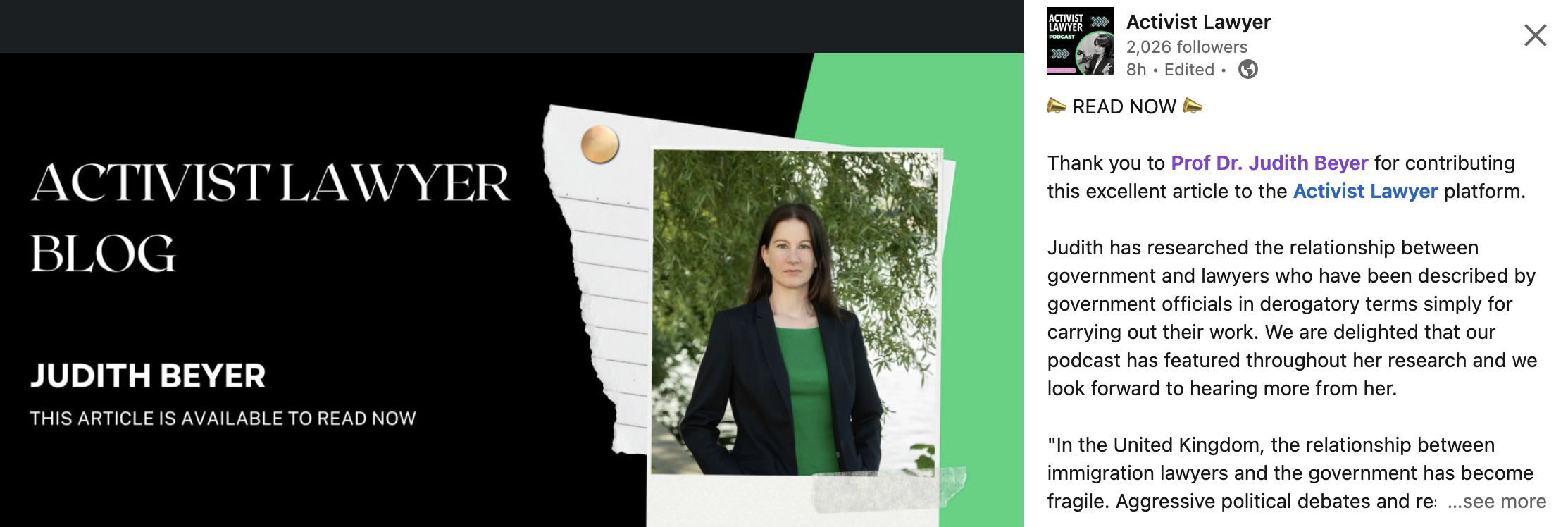
New post for the “Activist Lawyer”-platform

In contemporary Britain, it is no longer only migrants who are being targeted by the government, but those who fend for them just as well.

In “‘Illegal’ migration and the Othering of activist lawyers in the UK“, I argue that human rights solicitors, who pride themselves in fending for their marginalized clients, have become targets of state officials who began to call them “activist lawyers” in 2020.
The current populist atmosphere in British politics regarding the topic of “illegal migration” not only others those who seek asylum, but also their immigration lawyers and NGO workers who are committed to supporting their clients in their asylum claims. Those lawyers who began to publicly reclaim the term “activist lawyers”, a term initially hurled at them as a slur, effectively managed to strip the state’s vocabulary of its negative attributes. What makes the term “activist lawyers” and the way it is being handled by im/migration and human rights lawyers particularly interesting is that it is no longer exclusionary words about others that lawyers are dealing with here, but words about themselves.

Through this reversal, lawyers brought the former slur in line with their profession’s ethical stance as well as their own personal biographies. The podcast and platform “Activist Lawyer”, hosted by the human rights solicitor Sarah Henry, has been covering this development since 2020 and features many interesting audio formats as well as texts. Make sure you visit “Activist Lawyer – and read my full text here.

New publications on legal pluralism and community

Two new publications came out this month — one on my last research with ethno-religious minorities in urban Yangon in Myanmar, the other based on long-term fieldwork in Central Asia, in rural Kyrgyzstan.

In “Legal Pluralism in Central Asia“, published for an edited volume on the Central Asian World by Routledge, I put forward the argument of a rhetorical emergence of legal pluralism, combining literature from legal and linguistic anthropology.
I argue that
“we should understand legal pluralism not as the precondition that allows for cases to be dealt with and adjudicated in a plural legal manner; rather, it should be considered a possible outcome whose rhetorical emergence empirically varies from case to case. Depending on the situation, legal pluralism does not define the set-up of a case from the beginning, but rather becomes created intersubjectively in situ by the disputing parties involved in the case” (410).
I conclude with a caution:
“As anthropologists, we should refrain from advocating legal pluralism in such contexts [where claims about ‘custom’ are competitive rather than descriptive] as a more “culture- friendly” or encompassing way to deal with questions of order, sanctioning or indeed harmony, since “Plurality may actually reinforce structures of inequality as the plurality of forums available decreases the binding power of any law” (418, von Benda- Beckmann et al., 2009, p. 12).

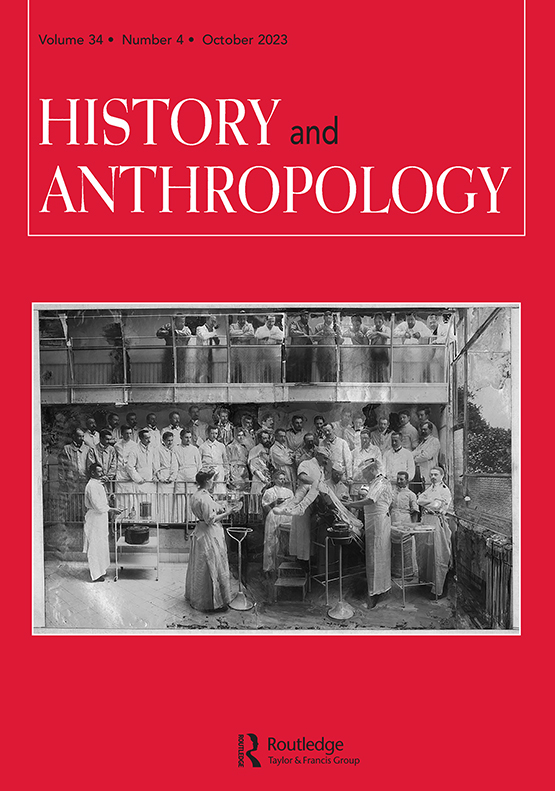
In “Community as a category of empire“, published for History and Anthropology, I argue that ‘community’ is a category that is inextricably bound up with the historical development of the British empire. It was in this context that modern social theory took root, including, eventually, publications on community in anthropology and sociology that profoundly influenced nineteenth- and twentieth-century thought and that continue to shape everyday understandings of the category within and beyond academia. I first elaborate what type of work the category ‘community’ was intended to do in the British empire. I then introduce two key figures who were responsible for designing, distributing and implementing two contrasting imperial theories of community. Subsequently, I sketch the migratory history of the category following the ancestors of today’s so-called ‘Burmese Indians’ across the Bay of Bengal from India to Burma. The final part of the article presents the repercussions ‘community’ has in contemporary Myanmar, drawing on recent legislation around ‘race and religion’ as well as my own ethnographic data from religious processions of ethno-religious minorities who find themselves in a subaltern position vis-à-vis the Buddhist majority population and an ethnonationalist state.

New publication: Perversion and the state

This is a peer-reviewed journal article that developed out of two years of Cartel work within the Lacan Circle of Australia (Melbourne). I presented the topic in 2021 and worked on this publication in which I combine psychoanalytical theory with an anthropological outlook on contemporary politics.

In this article I explore the psychoanalytical underpinnings of the recent purchase of the original manuscript of Marquis de Sade’s 120 Days of Sodom by the French state from the perspective of Jacques Lacan’s concept of perversion. I argue that in declaring de Sade’s book national heritage, the French state has tried to empty the text of its transgressive characteristics and reduced it to a fetish object. By placing the textual artefact inside the National Library of France, where it remains inaccessible, it has installed this object at the centre of the State in an effort to prop itself up while at the same time trying to veil a void. While this case is spectacular, we can abstract from it a distinguishing characteristic of the 21st century: the installation of fetish objects in an increasingly deserted symbolic order as well as the reappearance of the Name-of-the-Father in the imaginary order where the State acts as if it was the progenitor. This article aims to demonstrate the usefulness of Lacan’s teaching on perversion for a critical psychoanalysis that is “in the world”.

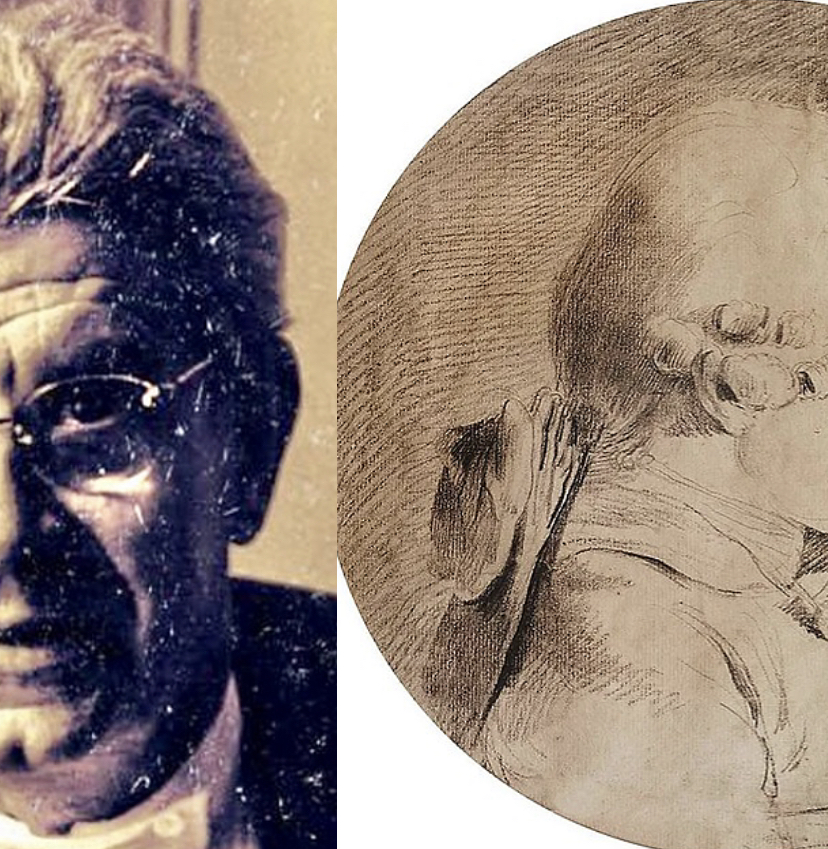
Jacques Lacan wrote “On Kant with Sade” in 1963; six years after the French state dropped a ban on Marquis de Sade’s book “120 Days of Sodom” (1904). Since 2021, the book is part of France’s “national heritage”.

The article is accessible through open access on the website of the European Journal of Psychoanalysis.

I am currently beginning new work in a Cartel on “Brave Waste World” that is devoted to studying Lacan’s teachings in regard to the concepts of waste, the exiled and the world. The topic of my Cartel contribution is “Waste of the world. On statelessness.”

Book Launch: Rethinking Community in Myanmar. 15th Int. Burma Studies Conference

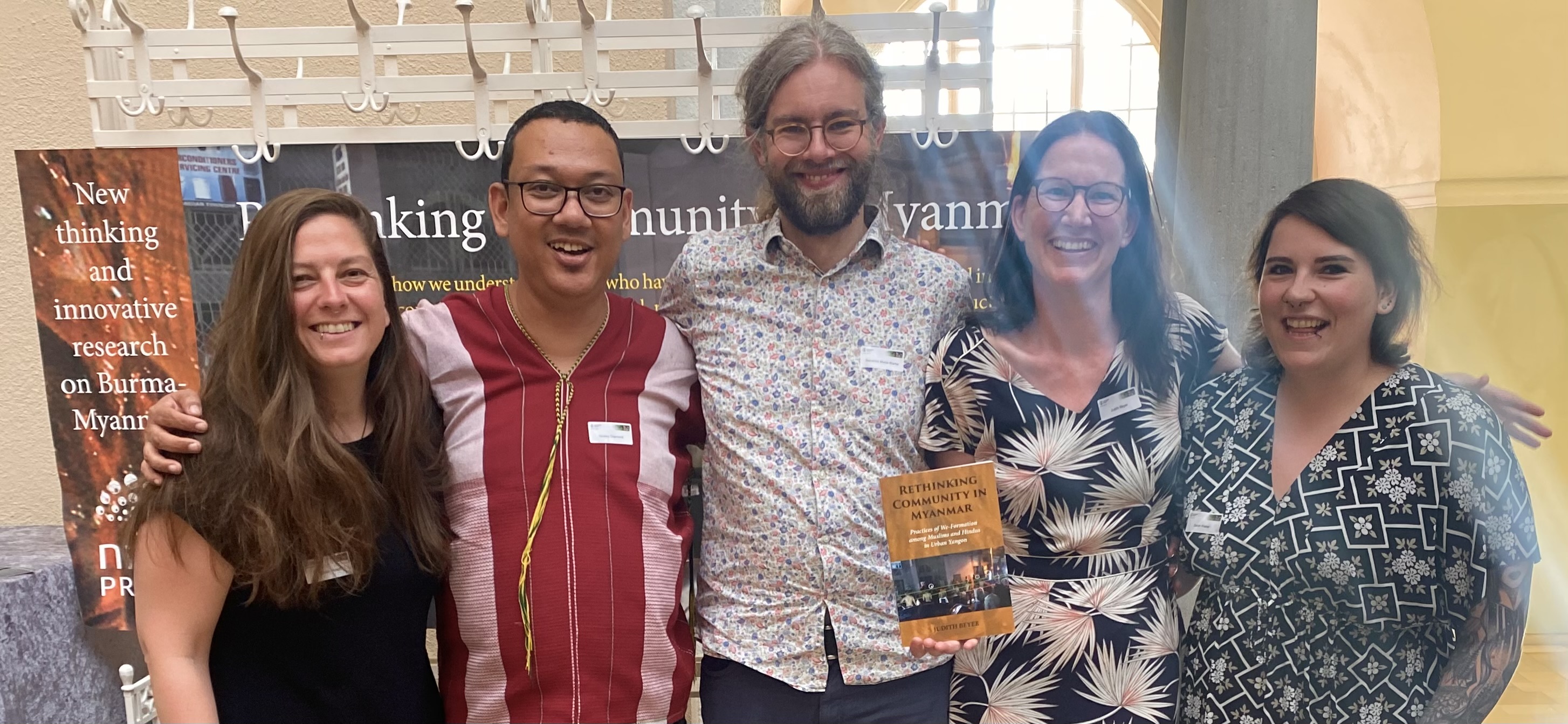
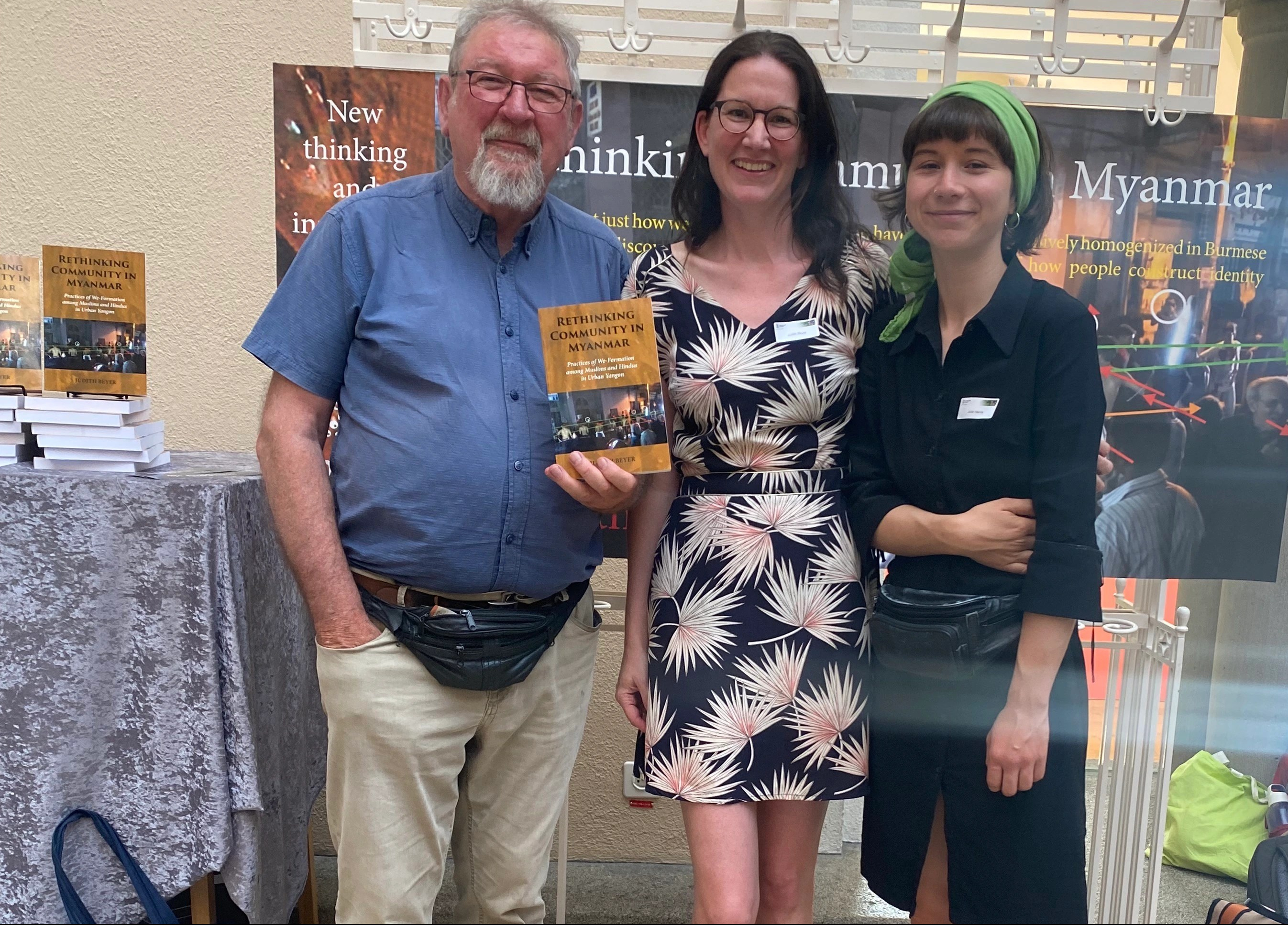
At the 15th International Burma Studies Conference, hosted at the University of Zurich, (9-11 June 2023), I launched my book Rethinking Community in Myanmar. Practices of We-Formation Among Muslims and Hindus in Urban Yangon.

Informal book launch in good company — while missing many from Myanmar

I wanted to celebrate the publication of my monograph: 10 years in the making if I count from the first days of fieldwork in 2012-2013. Good anthropological monographs take time and they are never the result of one indiviual only, even though writing can be a solitary process, particularly towards the end. I wanted to use the occasion of having over 200 Myanmar specialists gathering in one place, to say “Thank you” publicly to all the important people who could not be present in Zurich, but also to those who were able to share a glass of wine with me that day.

Great PhDs to be: Carolin Hirsch, Nickey Diamond, Benedict Mette-Starke, Sarah Riebel (plus book and me)

I set out by thanking my Muslim and Hindu interlocutors in Myanmar — there can neither be an anthropology nor an ethnography without the people ‘in’ (paraphrasing Tim Ingold). I owe them everything and I am glad that there will be an open access version of my book coming out towards the end of this year that will allow at least some of my interlocutors to download the book in Myanmar — I cannot bring it to them at the moment; not so much because it would be dangerous for me (it might be), but because I simply cannot take the risk of putting them into danger once I have left the country or their houses …

I then thanked my four research assistants — my KRA (Kachin Research Army) — and I explained to the audience of Burma/Myanmar experts that I profited enormously from them having conversations with my interlocutors about what it means to be a member of a minority in a majority Buddhist country. Listening in — as I am currently developing also in another context — is a methodologically fruitful approach to conduct fieldwork or carry out digital ethnography where fieldwork is not possible, because it decenters the anthropologist. What I am interested in mostly is “free-flowing talk” where my interlocutors do not try to guess what it is I want from them (in terms of what they might be expected to tell me), but where I can simply follow them having conversations with one another. Since all of my research assistants were Christian Kachin women, it was not religion they shared with my interlocutors (who were Muslims and Hindus), but the experience of being ‘slotted in’ as members of ‘communities’.

I also thanked my colleagues in Myanmar who had been professors of Anthropology at the University of Yangon prior to the attempted military coup in February 2021. Thanks to them, my PhD students received research visa, thanks to them, I had the opportunity of teaching and learning from young anthropology students, and thanks to them I learned a lot about the history of the discipline in Myanmar and about the history of the University of Yangon. I truly hope that one day they will be able to return to their professional jobs — which they cherished a lot, and to their students whom they loved.

None of these people could be with my family, my PhD students, and the other Myanmar scholars that day.

Thanking those who were there

I was happy to be surrounded by many friends, who had helped in different ways to bring this book to fruition: many of my colleagues had read draft chapters, some had written reviews or are going to write them. Alicia Turner gave some introductory words — she knows the book very well as she has written the most constructive and helpful review that made the final product so much better!

The managing editor of NIAS Press, Gerald Jackson, had come from Copenhagen to Zurich with his research assistant Julia Heinle and with a lot of amazing books on Southeast Asia and on Myanmar in tow. He took my book project on board and steered it smoothly through the production process in not even two years from the submission date!

Gerald Jackson and Julia Heinle (both NIAS Press) with the book and me.

My PhD students who are working on Myanmar, were all present, too. We discussed my material just as much as we discussed theirs. They all completed long-term ethnographic fieldwork in or on Myanmar and I can’t wait to see their own books!

And — last but not least — my family — who accompanied me from 2012 onwards and carried out their own research projects in Yangon: on the politics of cultural heritage in one case and on what it means to go to a local school in Chinatown in Yangon in the other case.

Thank you to everyone who was there that evening — be it in spirit or in the flesh — I am very grateful for the support I have received in the last decade. I hope the book will be useful to many.

We-formation. Reflections on methodology, the military coup attempt and how to engage with Myanmar today. Lecture in Paris, 16 May 2023

In this invited lecture, I will discuss my concept of “we-formation” in regard to three different topics: First, as anthropological theory and methodology; Second, as a way to make sense of the resistance against the attempted military coup and third in regard to the possibility of a public anthropology of cooperation in these trying times.

First, I will explore the concept in regard to its theoretical and methodological innovativeness, taking an example from my Yangon ethnography as illustration. We-formation, I argue in my book Rethinking community in Myanmar. Practices of we-formation among Muslims and Hindus in urban Yangon, “springs from an individual’s pre-reflexive self-consciousness whereby the self is not (yet) taken as an intentional object” (8). The concept encompasses individual and intersubjective routines that can easily be overlooked” (20), as welll as more spectacular forms of intercorporeal co-existence and tacit cooperation.

By focusing on individuals and their bodily practices and experiences, as well as on discourses that do not explicitly invoke community but still centre around a we, we-formation sensitizes us to how a sense of we can emerge (Beyer 2023: 20).

Second, I will put my theoretical and methodological analysis of we-formation to work and offer an interpretation of why exactly the attempted military coup of 1 February 2021 is likely to fail (given that the so-called ‘international community’ does not continue making the situation worse). In the conclusion of my book I argue that the “generals’ illegal power grab has not only ended two decades of quasi-democratic rule, it has also united the population in novel ways. As an unintended consequence, it has opened up possibilities of we-formation and enabled new debates about the meaning of community beyond ethno-religious identity” (250).

Third, I will discuss how (not) to cooperate with Myanmar today. Focusing on what is already happening within the country and amongst Burmese activists in exile, but also what researchers of Myanmar from the Global North can do within their own countries of origin to make sure the resistance does not lose momentum. In this third aspect, I take we-formation out of its intercorporeal and pre-reflexive context in which I came to develop the concept during my fieldwork in Yangon and employ it to stress a type of informed anthropological action that, however, does not rely on having a common enemy or on gathering in a new form of ‘community’ that has become reflexive of itself. Rather, it aims at encouraging everyone to think of one’s own indidivual strengths, capabilities and possibilities and put them to work to support those fighting for a free Myanmar.

You can purchase my book on the publisher’s website: NIAS Press.

Here’s the full programme of the Groupe Recherche Birmanie for the spring term 2023:

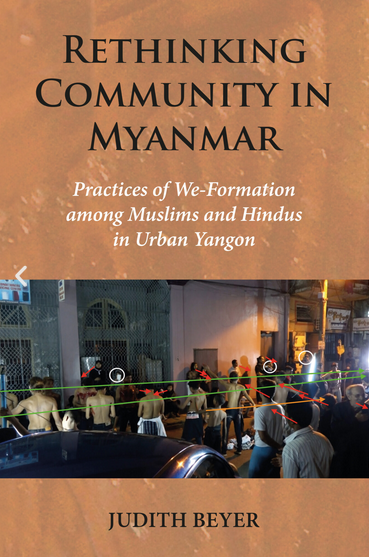
“Rethinking community in Myanmar. Practices of We-Formation among Muslims and Hindus in Urban Yangon” (NIAS Press 2023) has arrived!

‘Community’, I argue in my new anthropological monograph, was actively turned into a category for administrative purposes during the time of British imperial rule. It has been put to work to divide people into ethno-religious selves and others ever since.

Rather than bestowing on community some sort of positivist reality or deconstructing the category until nothing is left, my aim in this book is to shift the angle of approach: I acknowledge that community (for reasons that can usually be traced historically) feels real to and is meaningful for individuals. Their experiences and their struggles to engage with community are no less real. Through their own classificatory practices, my interlocutors — Muslims and Hindus in urban Yangon — demonstrate that they reason and reflect on symbols and meanings in their own culture as much as anthropologists do. But my approach goes beyond a social constructivist concern over how terms such as community are used, and also beyond a representational approach in which actors are subjected to culture as a system of meaning.

When I talk about the work of community (drawing on Nancy 2015), I reflect on the ways in which individuals accommodate ‘community’ in their acts of reasoning, meaning-making and symbolization. The way my interlocutors in Yangon see and talk about themselves has a historical context that begins in nineteenth-century England, encompasses British colonial India and later Burma itself, and extends into presentday
Myanmar. I then widen the emic perspective of my interlocutors and offer a novel way of describing how a we that does not neatly map onto or overlap with a homogeneous social group is generated in various situations.

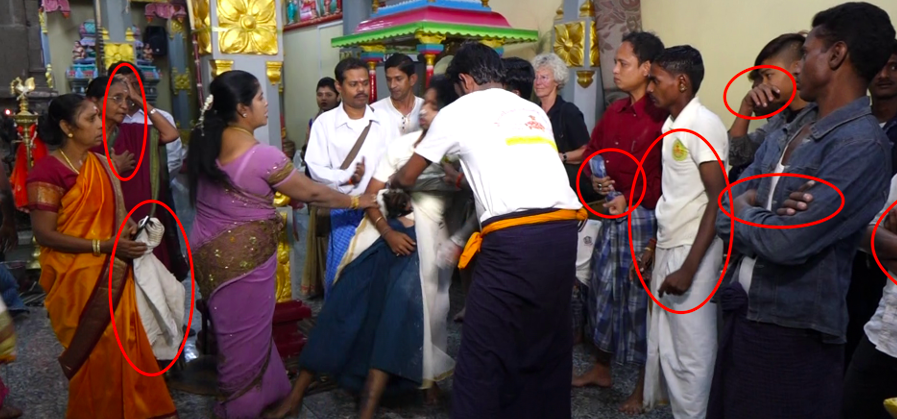
What I call we-formation encompasses individual and intersubjective routines that can easily be overlooked, as well as more spectacular forms such as the intercorporeal aspects of the ritual march I described earlier. Attending to such sometimes minute moments of co-existence or tacit cooperation is difficult, but doing so can help us understand how community continues to have such an impact on the everyday lives of our interlocutors, not to mention on our own analytical ways of thinking about sociality.

By focusing on individuals and their bodily practices and experiences, as well as on discourses that do not explicitly invoke community but still centre around a we, we-formation sensitizes us to how a sense of we can emerge .

You can purchase the book on the publisher’s website: NIAS Press.

Rethinking Community in Myanmar. New Book out soon!

Announced for November 2022 with NIAS Press:

Rethinking Community in Myanmar. Practices of We-Formation among Muslims and Hindus in Urban Yangon.

This is the first anthropological monograph of Muslim and Hindu lives in contemporary Myanmar. In it, I introduce the concept of “we-formation” as a fundamental yet underexplored capacity of humans to relate to one another outside of and apart from demarcated ethno-religious lines and corporate groups. We-formation complements the established sociological concept of community, which suggests shared origins, beliefs, values, and belonging. Community is not only a key term in academic debates; it is also a hot topic among my interlocutors in urban Yangon, who draw on it to make claims about themselves and others.

Invoking “community” is a conscious and strategic act, even as it asserts and reinforces stereotypes of Hindus and Muslims as minorities. In Myanmar, this understanding of community keeps self-identified members of these groups in a subaltern position vis-à-vis the Buddhist majority population. I demonstrate the concept’s enduring political and legal role since being imposed on “Burmese Indians” under colonial British rule. But individuals are always more than members of groups. I draw on ethnomethodology and existential anthropology to reveal how people’s bodily movements, verbal articulations, and non-verbal expressions in communal spaces are crucial elements in practices of we-formation. Through participant observation in mosques and temples, during rituals and processions, and in private homes I reveal a sensitivity to tacit and intercorporeal phenomena that is still rare in anthropological analysis.

Rethinking Community in Myanmar develops a theoretical and methodological approach that reconciles individuality and intersubjectivity and that is applicable far beyond the Southeast Asian context. Its focus on we-formation also offers insights into the dynamics of resistance to the attempted military coup of 2021. The newly formed civil disobedience movement derives its power not only from having a common enemy, but also from each individual’s determination to live freely in a more just society.

New Publication: On ‘the transition’ – in Myanmar and beyond

In a new publication in the Journal of Burma Studies (2018; 22/2), together with Felix Girke, I am returning to an old topic of mine: a critical investigation of the so-called ‘transition paradigm’, which I have explored in the context of post-Soviet Central Asia during the time of my doctoral research. I have published on this topic already in 2006 here, drawing on my data from Kyrgyzstan. In this new article, Felix and I are tracing the genealogy of the transition paradigm across disciplines, regions and decades from Latin America in the 1960s, via Southern Europe in the 1980s, Central Asia in the 1990s to contemporary Myanmar. We argue that

[the transition paradigm] has the potential to become a ‘god-term’ (Burke) as it did in other places … Burke suggests that a god-term is treacherous in that it ‘explain[s] too little by explaining too much (1945:107).

Challenging the concept’s current status within the subfield of Myanmar/Burma studies, our task in this article is to alert a regionally interested and educated audience to debates that have been going on elsewhere already decades ago. Offering the framework of conceptualizing transition as a ‘migratory model’ (drawing on Behrends, Rottenburg and Park 2014), these are some of the questions we ask in the article.For a full version of the article, see here (paywalled; for a pdf contact me!).


Follow-up on “parasitic professionalism”

This is a follow-up on my earlier post which I published with Allegra on Parasitic Professionalism.

I received an email yesterday from one of the largest finance journals worldwide. Got asked whether I would like to write an article on Myanmar for them. They suggested I could “benefit from this opportunity” to publish with them. This was followed by a detailed description of how to write the article and a strict deadline.

I answered and asked whether the article would be open access and what the journal usually pays its authors.

The reply: “Regarding the fee, I regret to inform you that all the articles published in our journal are contributed from authors and we are unfortunately unable to provide remuneration due to our publisher’s policy. We hope that you will understand and still consider this a great opportunity to get your message across to some of the most powerful and informed business leaders and policy makers in the world.”

They also offered a free subscription for one year and free advertisment of my book or the logo of my organisation in the printed version of their journal.

The email ended with the phrase: “We hope this is acceptable to you and that you enjoy this publication experience.”

I replied:
“Dear xxxx, as an academic scholar, I am a strong advocate of open access policy. As a professional, I think that one should get paid for one’s expertise.
While reaching a large audience with one’s writing is certainly important, exposure and prestige is no substitution for financial renumeration. I am sure that as an edior of “XXXX” you understand this – and I would seriously question your publisher’s policy on this issue. To emphasize: While I do have a steady income and thus would not “need” a honorarium, a lot of scholars whom you can count among “the world’s smartest people” (your webpage) much more than me, do not. It is for them, not for me, that I therefore have to decline your offer.
If you are interested in knowing more about the state of academia worldwide, I suggest reading the following – open-access – articles” (all written by fellow anthropologist – and journalist – Sarah Kendzior):

http://www.aljazeera.com/…/surviving-post-employment-econom…
http://www.aljazeera.com/…/…/2013/09/201391764312806487.html
http://www.aljazeera.com/…/…/2013/03/201331116423560886.html

(Photo: A Sheep Parasite. Open Source Photography / Oregon State University)

On Parasitic Professionalism

I recently published a post entitled “On parasitic professionalism” over at allegralaboratory.net – here it is:

Last month I received an email from an “associate” working at a research institution that caters to the biggest development agencies worldwide: DFID, UN, Worldbank, Australian Aid – you name it.

This associate was doing part-time work at the institution’s “research helpdesk“ and their job was to put together research reports on certain topics of interest to the big development agencies. So far, so good. These reports, however, are to include “expert comments“ from academics. This is where I seemed to come in. The associate asked me to provide the development agency with expertise on a couple of questions related to conflict and security issues in one of my fieldsites: “We often find that even 4-5 lines of pointers and specific comments from experts can be really useful in informing [name of organization]’s thinking and policies.“

In turn, my name could appear in the report “in a list amongst the contributing experts.“ I declined and replied that I only work pro bono for refugees and asylum seekers who cannot afford to pay for my expertise.

There is something seriously wrong with these kinds of requests. The problem is not that this person was asking for my expertise. It is that they did it in the name of one of the biggest development agencies, who was not even their direct employer, but in all likelihood only paid the research institution at which helpdesk the person was working as an “associate,” thus probably also precariously employed.

Who profits from this arrangement? Not I, not the associate – maybe their research institute. In the end, however, the procedure seems to be set up to benefit the big development agencies: They receive an expert report without having to invest a lot of time, expertise, and money themselves. Who knows what revenue they, in turn, can generate with it.

But the kind of knowledge these reports contain is often diluted through a process of what I would call parasitic professionalism: It is knowledge that is being generated by one academic living off the expertise of another academic. The first academic is working for the gross benefit of a third, often corporate, actor who only has to initiate the knowledge extraction at the very beginning in order to then lean back and wait for the results to come in.

These “far-fetched facts” as the German anthropologist Richard Rottenburg (2009) has aptly called the specific kind of genre through which the development industry legitimizes itself, are being produced through chains of translations that make the tracing of original sources impossible. The effort that is being demanded from each person in this kind of knowledge production assembly line seems minimal at first sight: an issue you could summarize in “4-5 lines of pointers” does not sound like a lot of work or even worth asking money for. But we all know that in order to write intelligently about topics such as conflict, rule of law, civil society, or any of the other big themes development agencies are usually interested in, you indeed do have to be an expert in your field. And writing concisely takes a lot more effort than writing longer pieces; anyone who has ever written a research application knows this.

New research in ecology has shown that by laying eggs inside other animals such as aphid mummies, a certain type of wasp has not only found a reliable source of food for their hatching larvae, but in doing so has managed to convert their food into a much higher amount of their own biomass than previously thought it could. The scientists at the University of Exeter refer to this successful type of animal as a “hyperparasitoid” – or “real-life ‘alien’”: a parasitoid that feeds off another parasitoid. Likewise, large global policy institutions feed from their own experts’ capacity to syphon off the knowledge of external scholars, the hosts to which this entire industry attaches itself.

The in-house experts of the hyperparasites reach out to other experts or mid-range research institutes because they themselves have become “too expensive to do fieldwork” as David Mosse described for the case of World Bank anthropologists (2006: 11). “Associates” working for these institutes are then, in turn, aiming at acquiring specialized knowledge from outside experts who might be tenured and well-situated or – nowadays more likely – who might be living in even more precarious conditions.

These “hosts” often offer their free service, hoping that their name being mentioned in a prestigious report of a global development agency might help them on the job market.

Parasitic professionalism is inherently linked to the prestige economy. The term dates back to anthropological writings of Herskovits (1940) and Bascom (1948) in the 1950s where it described “goods through which social approval and social status are gained” (Bascom 1948: 220-221). Sarah Kendzior has recently employed it in the context of university graduates indebting themselves by working in unpaid internships after finishing college, or as underpaid adjunct faculty, hoping that the institution’s prestige will rub off: “But these are hollow victories, designed to suck you dry ….”, writes Kendzior. “Research associates” aim for the same thing as they work for little or no money, hoping that the well-known name of the company or institute they are associated with will help them to move up the career ladder.

In a post on academic precarity at Savage Minds from July 2012, Nathan Fisk (@nwfisk) cited his friend Lane saying “I prefer to think of myself as a virus, any prospective employer as a host.” Nathan then already suspected that “it should be expected that said hosts have something of an immune system.” The point I am trying to make is that academics in precarious living situations are more likely to be the hosts who are not immune at all, but have become easy prey: While it is commonsensical for lawyers and doctors, for example, to demand money for their expertise, no matter how small, in academia this is still considered unusual. But it should not be.

We need to make sure that the knowledge we have painfully acquired over decades, knowledge which is often intrinsically related to our personal development as an academic, is well accounted for.

We need to demand adequate compensation from those who themselves make a lot of money using our analyses. In the end, it boils down to one important rule: For the sake of everyone, do not work for free – especially if you can afford it.

Works cited.

Bascom, William. 1948. Ponapean Prestige Economy. Southwestern Journal of Anthropology  4(2): 211-221.

Herskovits, Melville. 1940. The economic life of primitive peoples. New York: Knopf.

Rottenburg, Richard. 2009. Far-fetched facts. A parable of development aid. Boston: MIT Press.

xxxxxxx

The post generated some discussion and I received emails from colleagues who shared their (similar) experience with me. Some of the comments can be read here below the original post.