
Category Archives: conferences
Paris 2019. Lectures, Conference, Keynote
Conférences de Judith Beyer (University of Konstanz), Professeure invitée de l’EHESS, Chaire sécable de l’Institut d’études de l’Islam et des sociétés du monde musulman
1. The force of custom. Law and the ordering of everyday life in Kyrgyzstan
In this talk, I offer a unique critique of the concept of ‘postsocialism’, a new take on the concept of legal pluralism, and a plea to bring ethnomethodological approaches into correspondence with ethnographic data. Drawing on a decade of anthropological fieldwork and engagement with Central Asia, I will focus on describing how my informants in rural Kyrgyzstan order their everyday lives and rationalize their recent history by invoking the force of custom (Kyrgyz: ‘salt’).
Although ‘salt’ is often blamed for bringing about more disorder and hardship than order and harmony, as I will exemplify with the example of mortuary rituals, it allows my informants to disavow responsibility for their actions by pushing a model of ‘how things get done here’ to the front. Invoking ‘salt’ enables actors even as they claim to be constrained by it, it opens up possibilities to conceptualize, classify, and contextualize large- and mid-scale developments in an intimate idiom. It also is a way to communicate to others that one is an expert in and of one’s own culture. An ethnomethodological perspective, as I pursue it, challenges a conception of social order as hidden within the visible actions and behaviours of members of society. Rather, it examines how members produce and sustain the observable orderliness of their own actions.
- Le 12 mars 2019 de 16h à 18h – Université Paris-Nanterre, Département d’anthropologie, salle E105, 200, avenue de la République, 92001 Nanterre
2. The arrival of the Indian Other. On classifying minorities in Burma
Migrants from India have arrived in Burma from pre-colonial times onwards up until the Second World War. They crossed the Bay of Bengal out of personal economic endeavours, but having been categorized collectively by the British colonial state already before they embarked on the steamships to Rangoon, their collective identities travelled with them. Next to looking for work, other migrants relocated there to make use of parcels of land that were given to them as a reward for their services in the colonial apparatus or in the Indian army; yet others took up positions in the higher echelons of the administration in Burma. These people entered a Buddhist polity that had been shaped by centuries of hierarchical modes of royal governance – one which included Muslims and other ethno-religious minorities. This talk traces the different types of classifications and reclassifications that were projected onto and subsequently appropriated by ‘Indian migrants’ in order to shed light on the current situation of ethno-religious minorities in contemporary Myanmar, particularly in the city of Yangon.
Dans le cadre du Séminaire “Dialogues entre recherches classiques et actuelles sur l’Asie du Sud-Est“
- Le 14 mars 2019 de 10h à 12h – EHESS, SR 737, 54, boulevard Raspail, 75006 Paris
3. Accountability and justice in asylum claims. Debating the issue of Rohingya statelessness in British courts.
Accountability is a reflexive technique by means of which actors realize and lay claim to their actions. In order to be recognizable, accountability “depends on the mastery of ethno-methods” (Giddens 1979: 57; 83). If, as Garfinkel put it, “[a]ny setting organizes its activities to make its properties as an organized environment of practical activities detectable, countable, recordable, repeatable, tell-a-story-aboutable, analysable – in short, accountable” (1967, 33; italics in original), then so-called ‘screening interviews’ in asylum cases of stateless Rohingya are a challenge to this principle as they are defined by non-knowledge about the other. When UK border agents and Rohingya meet, their ‘membership’, which forms the basis of all co-production of action (and knowledge) in ethnomethodology, needs to be established ad hoc in the interview situation. What we can learn from those ‘first contact’ encounters and the subsequent travelling of a Rohingya asylum seeker’s file through the court system, is, I argue, how accountability is constantly being produced through interaction and how, as an important by-product of this production process, not only a ‘case’ is decided, but also the validity of the state’s own account is rendered plausible.
Dans le cadre de la conférence co-organisée par Yazid Ben Hounet et Judith Beyer “Claiming Justice after Conflict: The Stateless, the Displaced and the Disappeared at the Margins of the State”
- Le 15 mars 2019 de 10h15 à 11h15 – FMSH, Salle A3-50, 54 Bd Raspail 75006 Paris
4. On little and grand narratives in Central Asia
In this keynote speech, I engage with the conference topic of “challenging” and even “disturbing” “Grand Narratives” through an investigation of the tradition of orality and the usage of oral history in Central Asia. These are two interlinked endeavours, as oral tradition has been investigated “as history” (Vansina) and oral history understood as “the voice from the past” (Thompson). Anthropologists (of Central Asia) investigate tradition as “a site of necessary engagement that aggregates people, … informs policy, public debates, law, and representation, and is – despite its often enough strategic inception – affectively powerful” (Beyer and Finke forth. in Central Asian Survey). Examples from Central Asia show how “oral tradition”, especially when mediated by state and media apparatus, can take on “grand narrative” qualities. Moreover, in contrast to how oral history has been treated in the past, namely as history “from below”, of “the everyday” and by “the little guys” (Graeber), thus as “little narrative”, as I will call it, it is worth exploring in what ways this method of ethnographic and historical inquiry has the capacity to yield “grand” results.
Dans le cadre de la Conférence “CASIO 2.0 : Disturbing Grand Narratives” organisée par l’EHESS et ZMO (Berlin).
- Le 28 mars 2019 de 10h à 12h – PSL, Salle du Conseil, 60, Rue Mazarine, 75006 Paris.
Going back to Paris …
In the middle of my ongoing sabbatical, there is some light at the end of the (writing) tunnel:
I will be going back to Paris for a month, almost exactly a year after my last one-month stay.
 From March 11 until April 11 I will be staying again at the Maison Suger, writing my book on ethno-religious minorities in Myanmar. My host this time will be the Institut d’études de l’Islam et des sociétés du monde musulman and I will be invited as a Professeure invitée together with other international scholars.
My task is to give a series of four lectures which I will focus thematically on the roles of Muslims in Asia, most generally. One presentation will be directly on my new Myanmar project, the second will be on legal pluralism in Central Asia. The third is a keynote I was invited to give in the frame of a conference on “Grand Narratives in Central Asia” in which I will focus on the role of oral history. The final lecture will be a first attempt to bridge to my newest project which aims at investigating the issue of statelessness in Europe, working with case material concerning Muslim Rohingya from Myanmar who are applying for asylum in the UK.
For the official press release of the University of Konstanz see here.
The force of custom. Lecture at the Institute’s Colloquium in Hamburg
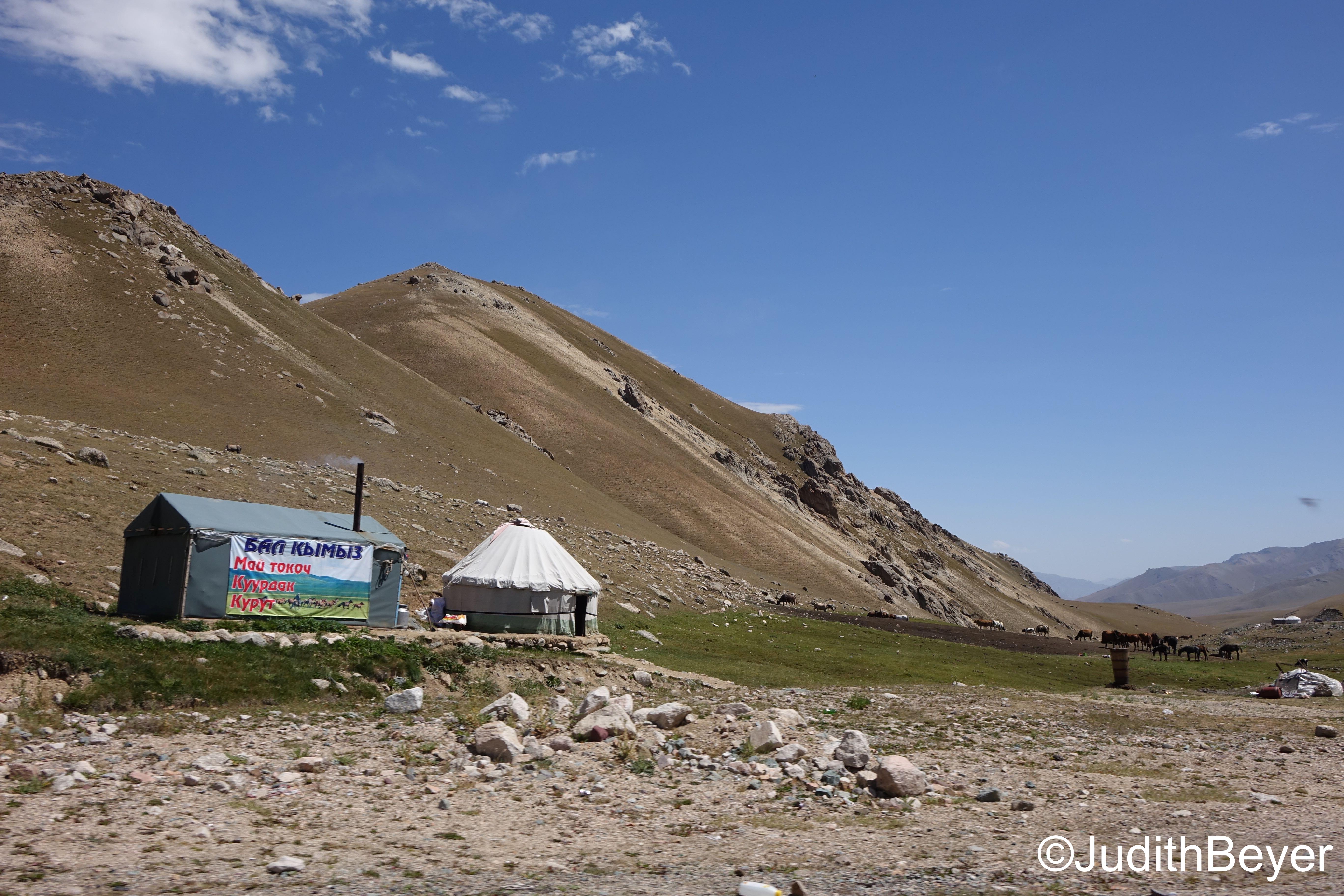
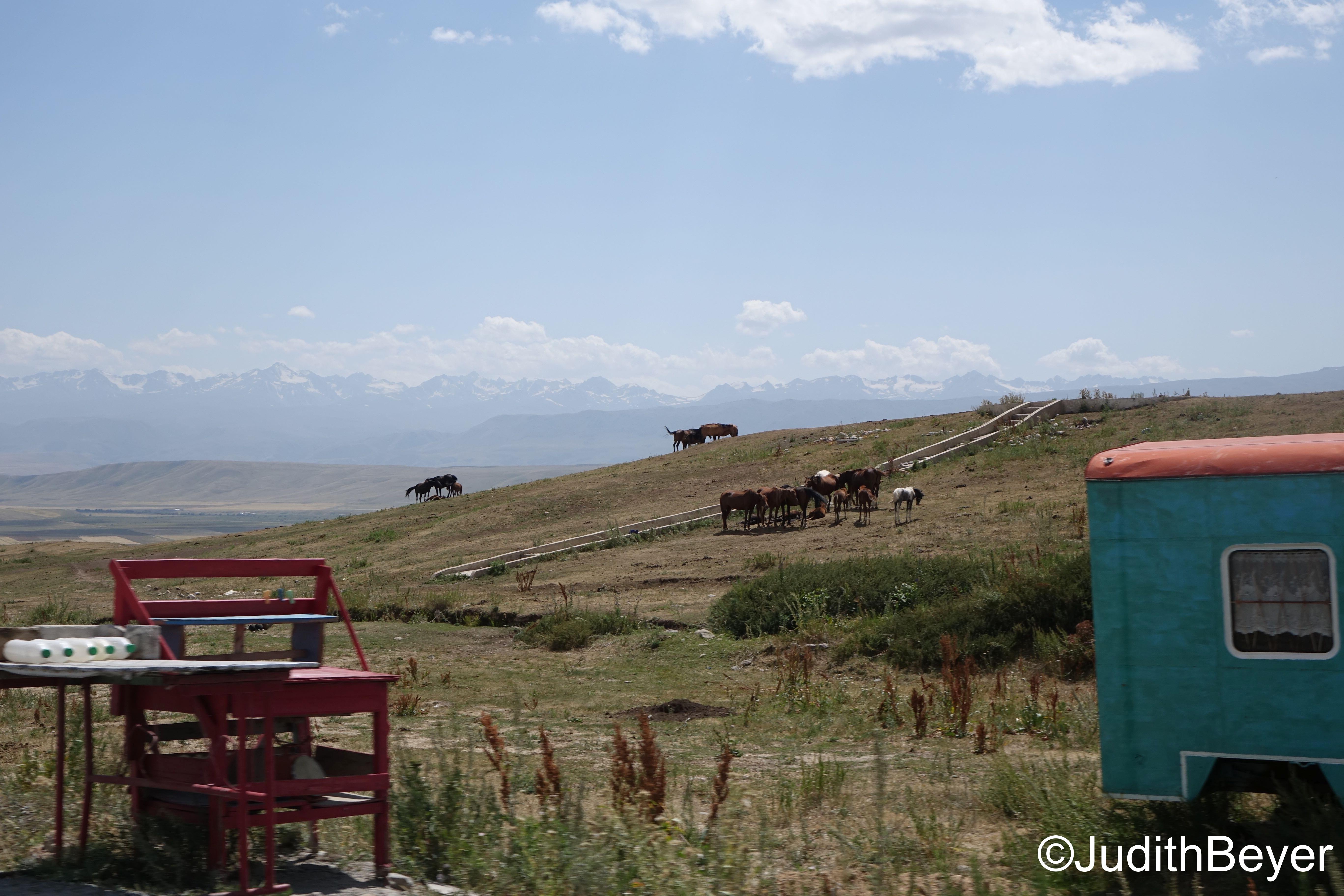
I’ll be travelling to Hamburg next week (13.11) to present the findings of my long-term ethnographic  engagement in Kyrgyzstan. My book “The force of custom. Law and the ordering of everyday life in Kyrgyzstan” came out in December 2016, almost two years ago. I am still happy with how a decade of scholarship has turned out and am looking forward to hearing comments and feedback from my Hamburg colleagues. Here’s the link to the programme in case you are around. Join me!
 And here’s what I will be talking about:
In this talk, I offer a unique critique of the concept of ‘postsocialism’, a new take on the concept of legal pluralism, and a plea to bring ethnomethodological approaches into correspondence with ethnographic data. Drawing on a decade of anthropological fieldwork and engagement with Central Asia, I will focus on describing how my informants in rural Kyrgyzstan order their everyday lives and rationalize their recent history by invoking the force of custom (Kyrgyz salt).
Although salt is often blamed for bringing about more disorder and hardship than order and harmony, as I will exemplify with the example of mortuary rituals, it allows my informants to disavow responsibility for their actions by pushing a model of ‘how things get done here’ to the front. Invoking salt enables actors even as they claim to be constrained by it, it opens up possibilities to conceptualize, classify, and contextualize large- and mid-scale developments in an intimate idiom. It also is a way to communicate to others that one is an expert in and of one’s own culture. An ethnomethodological perspective, as I pursue it, challenges a conception of social order as hidden within the visible actions and behaviours of members of society. Rather, it examines how members produce and sustain the observable orderliness of their own actions.

The lecture will be in English. Venue: Institut für Ethnologie (Raum 222 im Gebäude ESA W – Westflügel des Hauptgebäudes, 2. Stock). 13.11. 6.15pm.

When in Paris …
As a promise to my host, the Maison Suger, located in the pittoresque St Germain district in a little side street just around my new favorite coffee place, I will submit a short statement about how I spent my time in Paris. So here it is:
Doing being writing — one month in Paris.

entrance to the Maison Suger – a haven for working in peace while living in the middle of Paris

my writing space at Maison Suger.
In this one month in Paris, I managed to get more writing done for my book than in the entire last year! After a full semester of teaching and finishing off a series of articles, reviews and reports, my goal had been to begin my stay in the French capital with nothing else than having to give a series of lectures in the seminars of the people who kindly supported my application to the Fernand Braudel Fellowship at the Fondation Maison de Sciences de l’Homme (FMSH) and, once done, to write.
All in all, I gave three lectures, the first on March 6 in the frame of the general anthropological “Séminaire de l’équipe Anthropologie comparative des sociétés et cultures musulmanes” (LAS) based at the Institute (IISMM) under the direction of the following anthropologists:
- Anne-Marie Brisebarre, directrice de recherche émérite au CNRS (*) ( LAS )
- Barbara Casciarri, maître de conférences à l’Université Paris 8 Vincennes-Saint-Denis (TH) ( Hors EHESS )
- Tarik Dahou, chargé de recherche à l’IRD (TH) ( Hors EHESS )
- Marie-Luce Gélard, maître de conférences à l’Université Paris-Descartes (TH) ( Hors EHESS )
This tells you already a bit about the set-up of French academic institutions. It is a bit like the Russian system, to be honest, where you have an Akademia Nauk (an Academy of Science) and the Universities. Teaching takes place at the universities, research gets done in the academy – which in itself consists of myriads of ‘networks’, ‘laboratories’, ‘seminars’, ‘colloqus’, ‘séances’, ‘interventions’, ‘conferences’, and so on. No wonder BrunoLatour came up with ANT.
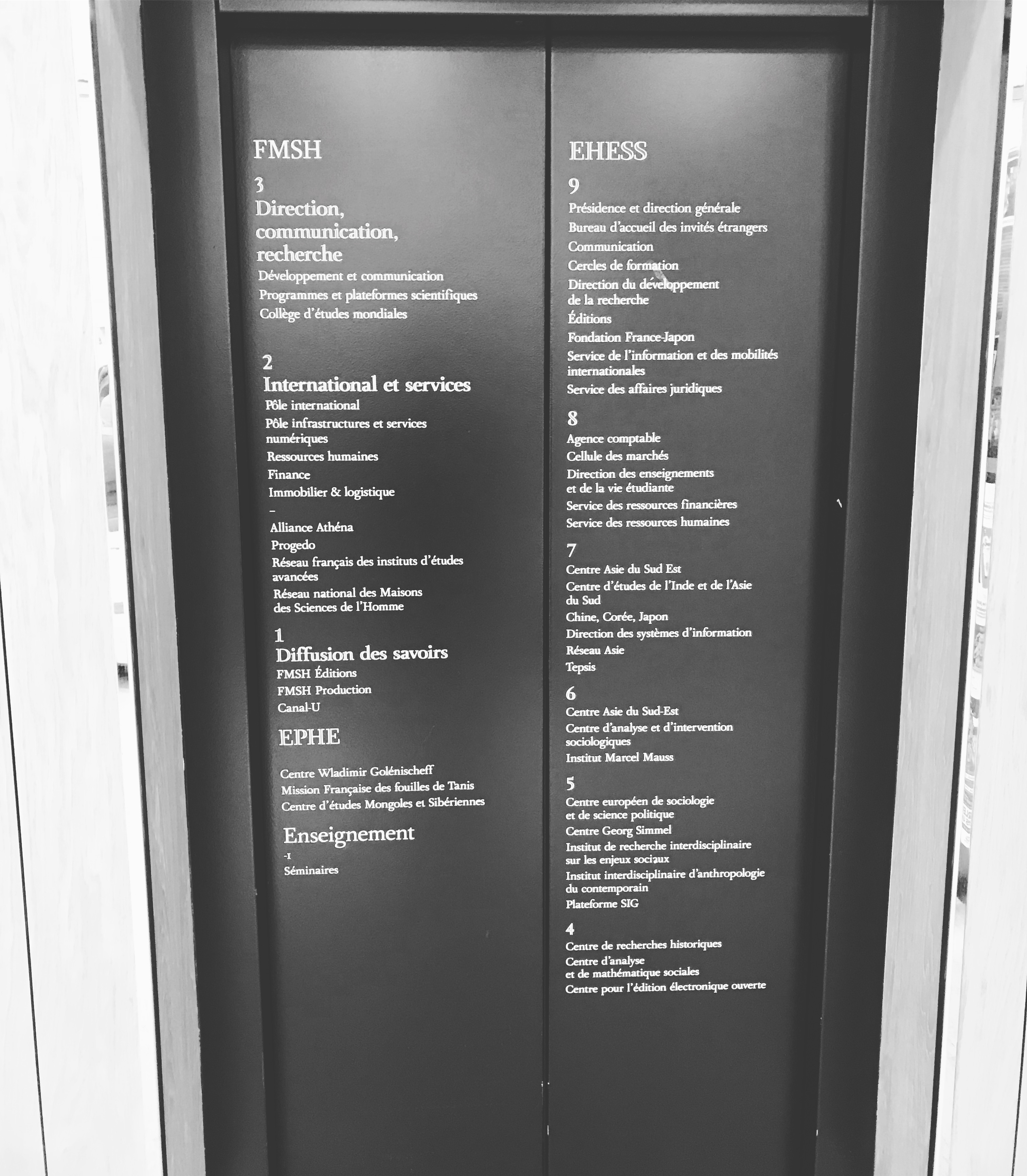
doors of knowledge at the FMSH / EHSS building (right)
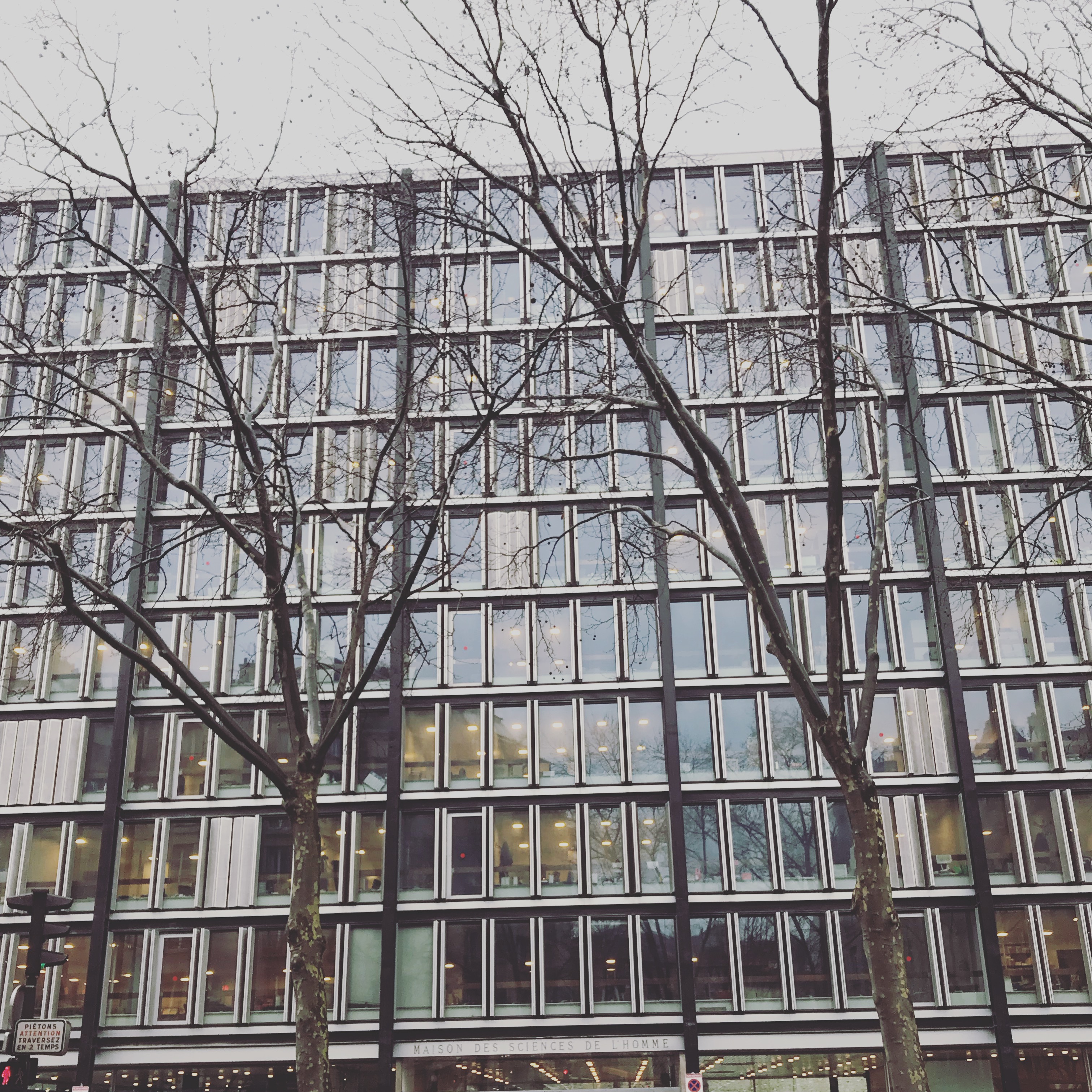 I gave up trying to understand all the acronyms and who belonged where and only memorized the address and who had been inviting me to give a talk! Yazid Ben Hounet, whom I have known from our time together in the project group “Legal Pluralism” at the Max Planck Institute for Social Anthropology took me for lunch to a small Afghan restaurant before my lecture, so I was already happy when I began presenting (can I just say: “Thank you, Paris!” for the amazing variety of foods I have eaten in those few weeks?). The title of my talk was “Being Muslim in contemporary Myanmar. On ‘community’ and the problem with communal violence” and I have written about it already here. The audience consisted mostly of anthropologists with an interest in Islam, but there were two experts on Myanmar who had joined that day as research on this Southeast Asian country is still very rare. I was particularly happy for their feedback, but also positively challenged by the questions of the non-regional experts.
What I found striking and what I have noticed in all my presentations (which all happened to be on Muslims), was how often people in the audience would use my ethnographic material or the arguments I was making in order to think about contemporary French society: veiling, divorce, polygamy, secularism in general … or, to be more precise, laïcité. I attended a roundtable on secularism in Asia which, in my view, was actually about secularism in France by means of reseach in Asia … so the topics of my talks, on Muslims in Myanmar and in Central Asia, raised interesting questions and comments in the audience.
The second talk was on legal pluralism in Central Asia, taking the example of the local funeral economy in northwestern Kyrgyzstan. I have summarized my argument here. This invitation came from Baudouin Dupret, a legal anthropologist and the only other person I know who tries to approach legal anthropology with ethnomethodological tools (as I have been trying to do). The talk took place in the seminar “Transformations de la normativité islamique” and we went out for lunch afterwards in one of the many restaurants in the area around Boulevard Raspail. What I came to cherish were long lunch breaks with colleagues — always accompanied by a glass of wine!
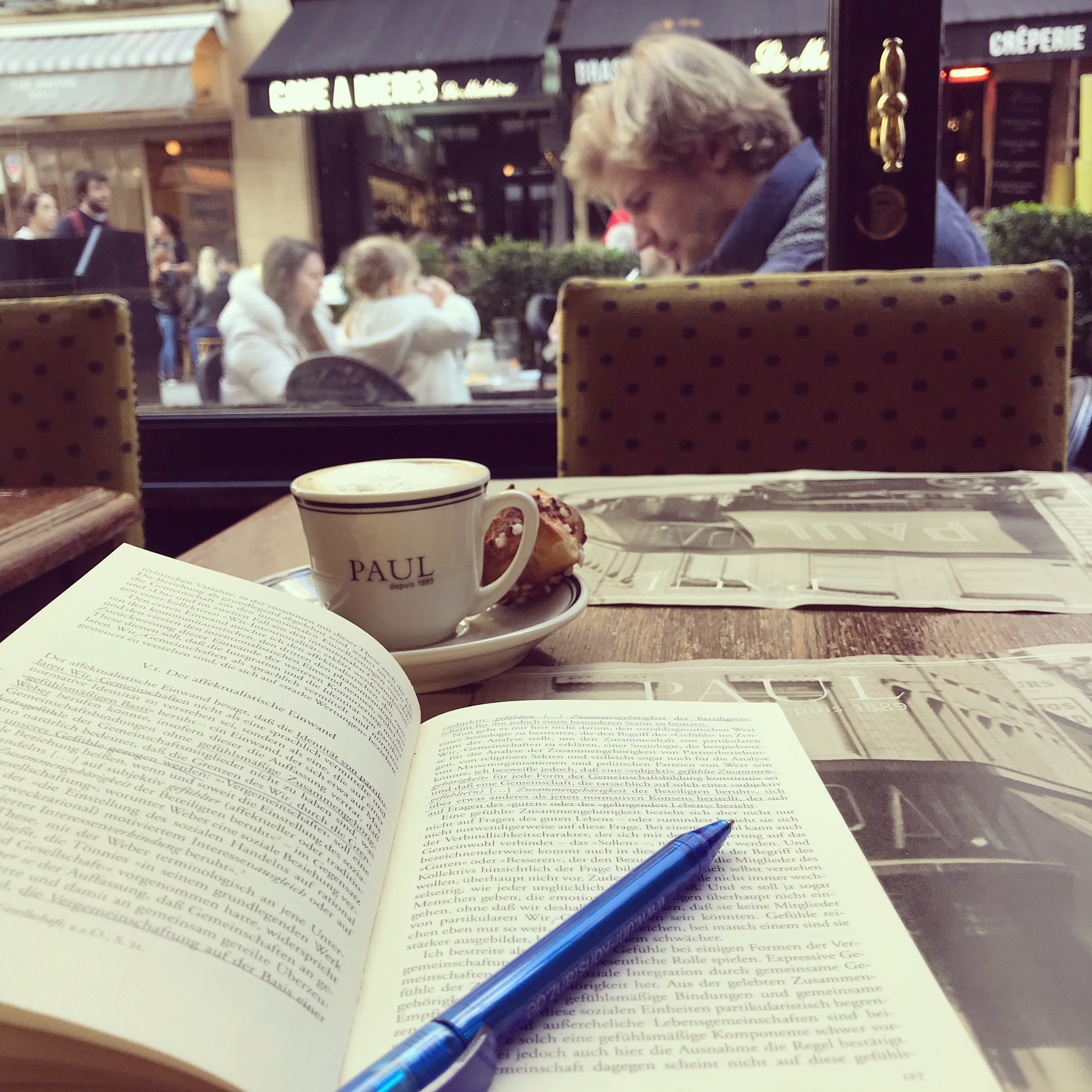
reading in cafés. People actually do it here!
The final talk I gave took place at the FMSH building and it was my favorite one. I had the opportunity to speak in front of an audience who had all been to and carried out fieldwork in Central Asia. It is very rare for me these days to speak to other regional experts as I am based at a sociology department and in a German context where research on Central Asia is only done only sporadically. It wa thus s a pleasure talking about the main arguments of my book “The force of custom. Law and the ordering of everyday life in Kyrgyzstan” — and to see that people actually understood what I was trying to say, and seemed to have enjoyed the presentation, too. Thank you to the organizers of this talk, Stéphane Dudoignon, Carole Ferret and Isabelle Ohayon for inviting me. I was pleasantly surprised to find out that my co-presenter that afternoon was Olivier Ferrando, an old friend whom I had not met for several years!
After my lecturing obligations had been met, I was left to my own devices; which meant that I could dive into the books and articles I had brought along. I started writing my historical chapter for my new book on ethno-religious minorities in Myanmar and hope to use the remaining days in Paris to push it as far as possible. The Maison Suger has provided ideal working conditions to make this possible!
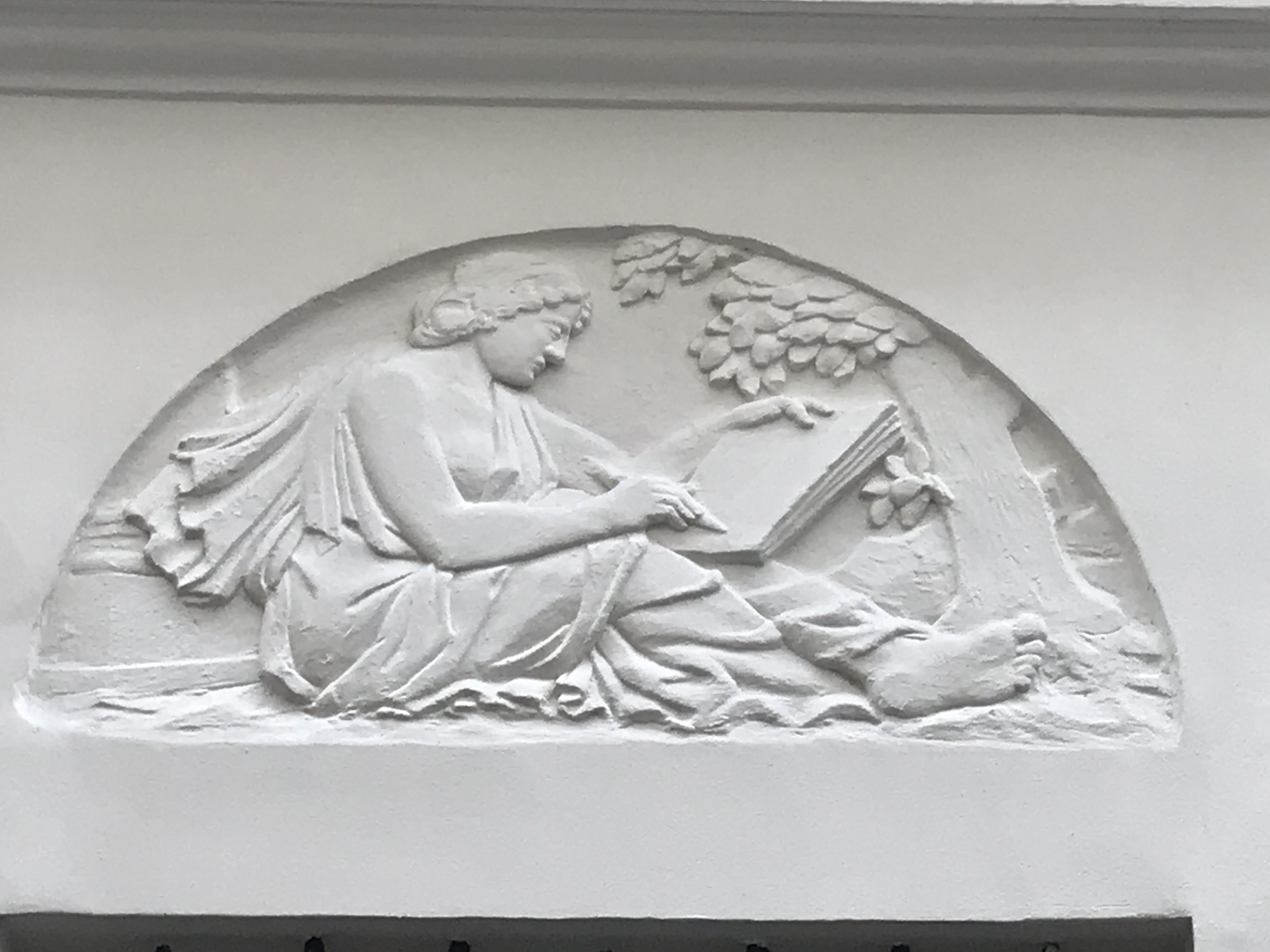
an inspirational goddess of writing
Since I am in the lucky position to start a 10-month sabbatical afterwards, my goal is to carry the “French writing spirit” with me back to Konstanz, install myself there and keep up the tradition of meeting colleagues for lunch regularly!
Merci, Paris!
Workshop: The Future of Central Asian Studies
co-organized by Judith Beyer (Konstanz) and Madeleine Reeves (Manchester).
The last three years have seen a flourishing of anthropological and historical monographs on Central Asia. We propose an innovative workshop format that seeks to launch several of these recent monographs and to use a discussion of their findings as a basis for reflection on the future of Central Asian studies. The workshop will facilitate a series of focused discussions that emerge from bringing the texts into conversation with one another.
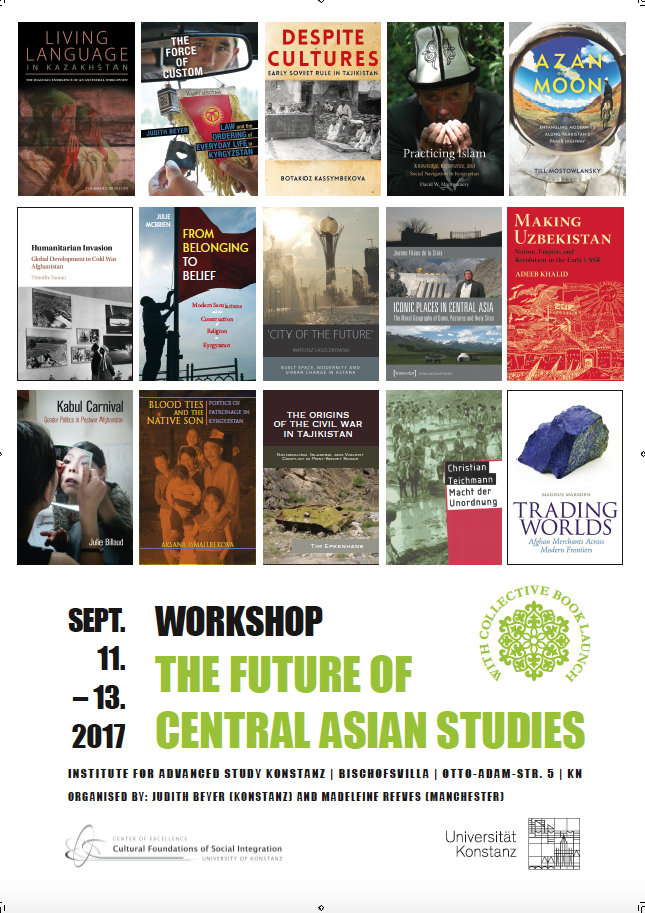 How can material from Central Asia inform conceptual debates about order, knowledge, modernity, empire, religion and resources in the widest sense? What can be gained from drawing together anthropological and historical scholarship on law and empire, or dynamics of peace and conflict? How can we better integrate the history and anthropology of Afghanistan to allow comparison with the rest of Central Asia? The book panel discussions will be videotaped and edited versions of these discussions will be made available to an international audience.
For a full programme see here.
Workshop: Divergent resource claims in plural ecologies. Case studies from Southeast Asia

Workshop 6–8 July 2017
Institute for Advanced Study, Konstanz.
Organized by Judith Beyer (University of Konstanz) and Birgit Bräuchler (Monash University)
In this workshop, we intend to investigate divergent claims to resource access, thereby furthering our common interest in plural ecologies across Southeast Asia. Following Ribot and Peluso’s Theory of Access (2003), we define access to resources as the “ability to derive benefits from things – including material objects, persons, institutions, and symbols” (2003:153). Access to natural resources (such as land, water, mineral resources) is always legitimized, negotiated, defended, and denied through the recourse to cultural resources.
Cultural resources include economic (markets, infrastructure, etc.), political (legitimation discourses about civil rights, ethnicity, indigeneity cultural heritage, etc.), and religious (traditional knowledge, cosmology, etc.) forms of power and influence. In social-political practice, natural and cultural resources never appear separately but are always intertwined, and, to a certain extent, interdependent. Competition for and claims to resources is decisive since privileged access and the inclusion of a particular group usually involves the exclusion or neglect of others (see Hall, Hirsch, & Li 2011: 8, 13; Adhuri 2009).
We here consider the concepts of majority, minority, and indigeneity as political constructs functioning at the interface of local identity claims, traditional resource demands, the enforcement of national laws, and internationally promoted human rights. The “right to culture” is central in the recent development of collective human rights (see, for example, Francioni & Scheinin, 2008; Stamatopoulou, 2007) and the United Nations Declaration on the Rights of Indigenous Peoples (United Nations, 2007). Among others, it concerns the granting of long denied access to resources and promotes the advancement of group-specific rights on a national level, which is fostered by an increasing number of decentralization and demo- cratization processes in Southeast Asia and does not go undisputed as it leads to the exclusion of non-group members (compare e.g., F. v. Benda-Beckmann & K. von Benda-Beckmann, 2010; Kymlicka & Norman, 2000; Rosaldo, 2003; Taylor, 1994; Young, 1989). In debates on minority and indigeneity the question is whether it is justified to grant specific rights to individuals or groups within a state for historic reasons (see, in particular, Barnard, 2006; Bohnet & Höher, 2004; Guenther et al, 2003; Preece, 2005). Again, this implies a close interlinkage of political, cultural and natural resources.
What is of special interest for this workshop is how such ambivalences and contestations between local, national and international rights and claims inform ecological policies and power struggles at the respective levels. Given the rising demand for cultural rights and the plurality of ecologies within and across countries in Southeast Asia, a regional comparison would shed
new light on debates about diverging normative orders, the translation of individual and collective human rights, and the (sustainable) management of a broad range of resources.
For a full programme of the workshop see here.
Doing Fieldwork in Myanmar
On April 1, 2016 I co-organized a one-day research workshop on “Doing fieldwork in Myanmar” with Dr. Felix Girke and the anthropology department of the University of Yangon. The event brought together 24 participants from Myanmar and German-speaking countries. Eleven PhD and MA students presented first findings from their on-going anthropological fieldwork in the country. The topics ranged from labour and migration to religion, livelihood, and cultural heritage ( see the final programme ). A major focus rested on questions of method and fieldwork practice. The students debated challenges and obstacles that they experienced while carrying out their research. More senior scholars guided them in further developing the conceptual frameworks of their studies.
After fifty years of authoritarianism, Myanmar has only recently become accessible for foreign researchers again. These students are thus on the forefront of a new generation of anthropologists carrying out long-time qualitative research in this Southeast Asian country. The University of Yangon itself had been off limits for most foreigners until 2014.
In our effort to bring about a Memorandum of Understanding between the University of Konstanz in Germany and the University of Yangon in Myanmar, this workshop was an important first step towards more institutionalized collaboration and academic exchange.


“What is non-traditional after all? Gender, sex, and discrimination in Central Asia”
Panel at the European Society for Central Asian Studies (ESCAS) Conference October 8-11 2015 in Zurich, Switzerland
Organized and chaired by Prof. Dr. Judith Beyer
1. Judith Beyer
Juniorprofessor of Anthropology, University of Konstanz, Germany
Introduction
This panel seeks to problematize the notion of tradition and retraditionalization in the Central Asian context. The three papers critically investigate the implications of current retraditionalization discourses and practices concerning gender, sex and discrimination. (Re-) traditionalization is often portrayed as a positive dimension of ongoing wider transformation processes, and as a source of inspiration to which people in Central Asia turn to, looking for guidance in how to shape their own future. This panel, however, concentrates on the intended or unintended side effects of such discourses and practices, and seeks to explore in what ways they might lead to an overall re-conceptualization of gender- and sex-relations on the one hand, and to an exclusion, marginalization and criminalization of some members of society on the other hand.
2. Cynthia Buckley
Professor of Sociology, University of Illinois, USA
Framing homosexuality in moral terms: Patterns of potential tolerance among Eurasia’s Muslim populations
Over the past decade substantial shifts in public opinion regarding homosexuality in western Europe, north America and elsewhere match legislative changes legalizing same sex unions and restricting statues limiting the rights of homosexuals. Most recently, Russia and other Eurasian states have been experiencing increasingly restrictive legislation regarding homosexuality and rising tides of anti-homosexual public opinion. Using data from the 2012 Pew Research Center’s Muslim World Survey, I investigate levels and individual predictors of homosexual tolerance in Azerbaijan, Kazakhstan, Kyrgyzstan, Tajikistan and Russia. Supporting previous studies on tolerance, bivariate logistic regression indicates that highly educated, female, rural and less religious individuals are less likely to view homosexuality as morally unacceptable in all countries but Russia. However, age patterns among Muslims in Eurasia differ markedly from other national studies. Thinking sociologically about the origins of and trends within tolerance can improve understandings of current public opinion trends and identify likely future trajectories in Central Asia.
3. Anna Kirey
Senior Program Officer, Public Health Program at Open Society Foundations
LGBT activism in Central Asia at the crossroads after the introduction of ‘propaganda’ bills
In my presentation I would like to provide an overview of LGBT activism in Central Asia with a focus on Kyrgyzstan and some glimpses into three other Central Asian countries. As someone who participated in ten years of emerging LGBT activism in the region, I would like to discuss different influences that contributed to framing LGBT issues before the ‘propaganda’ discourse emerged in post-Soviet space and after the introduction of the ‘propaganda’ bill in Kyrgyzstan. I will also relate this to current developments in Russia and Ukraine and to an overarching discourse on traditional values.
.
4. Diana Kudaibergenova
PhD Candidate, University of Cambridge, UK
Instagram exposed: Framing traditional and neo-traditional gender perceptions online
The paper discusses (neo-) traditional perspectives and perceptions as framed through the visual platform Instagram in contemporary Kazakhstan. Discussing gender roles in patriarchal societies such as Kazakhstan, I propose researching Instagram on the basis of three levels of framing: an internet-based frame (action), a social frame (traditional perceptions and code of behaviour) and a neo-traditional frame (re-creation of presumably traditional values online). In doing so, I argue that social networks serve as spaces of visualization and re-creation of new forms of traditional and “acceptable” behaviour, lifestyles, self-representation, gender and sexual identity as well as beauty standards. Instagram is both a global space of visual exchange as well as a norm-setting framework on the local level. In this hybrid production of cultural content, youngsters in Kazakhstan are positioning themselves as global consumers of famous brands and glamour but also as guardians of traditional lifestyles. But Instagram also serves as a space for breaking the typical gender roles especially for non-traditional discourses of male gay culture in Kazakhstan.
Anthropology between Book and Blog – my latest for Allegra
Anthropology between Book and Blog – Evaluation Criteria and Communication in Academia.
Talk on the Occasion of Allegra Lab’s Website Relaunch in Berlin at the Finnish Institute 19 February 2015 first published at Allegra Lab on March 2, 2015.I decided to embed my thoughts on productivity in the academic world – both traditional and digital – in the context of a debate that is old, but apparently not outdated. This is the debate about the type of knowledge the humanities are able to produce. This year, a Humanities World Report (HWR) was published in which the three authors – among them the historian Arne Jarrick, who is currently running a project on the long-term global history of law-making – advocated two things that are of relevance to us here today: one, that scholars in the humanities should strive towards strengthening international and interdisciplinary cluster formation where larger thematic complexes can be discussed. Second, they argued that just as in all the other sciences, the goal of the humanities should be “truth finding.”
I will deal with the first proposition first as I think that – worded in this way – this is what Allegra Lab has been doing so far and intends to continue doing in the future: providing an integrative research platform. But according to the report, the most dominant form of such international cooperation comes in the form of Digital Humanities (DH). What is meant by this term is somewhat opaque, as that field is quite diverse. Its most institutionalised manifestations are the so-called Digital Humanities Centres (DHC) which, according to the authors of the report, deal with the following five fields of research:
1) Digital collections, archiving and text encoding
2) Reading and analysing electronic texts
3) Geospatial and critical discursive mapping technologies
4) ‘Big Data’, social computing, crowd-sourcing, and networking and
5) 3D immersive visualisation environments
The authors estimate that there are around 65 Digital Humanities Centres in Europe with 19 centres in England alone, the largest being the University College London Centre for Digital Humanities, “staffed with six directors, ten staff, student, and liaison positions, ten affiliated faculty, and 13 or more affiliated graduate students.” (p. 67). The US has approximately 60 DH centres with world-leading facilities, such as the Harvard University of Digital Arts and Humanities (DARTH), or the Columbia University Digital Humanities Center (DHC).
Scholars carrying out qualitative work within the field of DH, or investigating the impact of digitalisation in people’s everyday lives, have criticised the institutionalisation of these centres and the type of data they are dealing with. They have raised their voices mainly against the lack of cultural criticism in the digital humanities. One such critical voice comes from Alan Lui (2012) of the Department of English at the University of Santa Barbara in the US. He says: “How the digital humanities advance, channel, or resist the great postindustrial, neoliberal, corporatist, and globalist flows of information-cum-capital, for instance, is a question rarely heard in the digital humanities associations, conferences, journals, and projects…” Equally under-debated is how new techniques in the digital humanities such as “distant reading” (Moretti 2000), or “culturomics” (Michel, Shen et.al. 2010), both quantitative computational methods of processing millions of digitised books across centuries, impact on traditional ways of close reading, thereby turning the very object of analysis – text – from a form of human expression into a source of (Big) Data.

The authors of the Humanities World Report (HWR) argue that “[t]he skepticism and even outright hostility to digital humanities evidenced by some blog literature might be a unique phenomenon within the humanities” (emphasis added). They continue to wonder: “Strangely, much of this debate is not published but articulated in blog posts and other short web-based forms, which do not encourage the writers to fully argue their case” (emphasis added). If we apply this statement to the work Allegra is doing – namely blogging – it means that blogging is understood by the makers of this encompassing report not as a form of publication, but as an “articulation.” This does not sound bad at all, but it is then right away denounced as “limiting” and gets juxtaposed with “publication.”
Now what is problem with that? Well, it shows us that even within the field of digital humanities there is an inclination towards traditional modes of publishing. What has been revolutionised are the digital methods with which data can be collected, archived, processed, and analysed. What has not been revolutionised, apparently, is the way in which this sort of new and often “Big Data” is then published and /or debated. The reason for this is no secret and here critical voices from within digital humanities as well as those coming from outside join in the laments: academia does not, by and large, recognise digital forms of publication. To publish digitally means taking a risk for researchers who are in the early stages of their career and have tenure track positions that come with specified evaluation criteria. This also includes, as I have shown, people working within DH, which apparently continue to focus on “traditional” ways of publication such as peer-reviewed journal articles and monographs. Online publications or engagement in digital networking can be mentioned in a scholar’s self-report, but they are not key to the evaluation as such. They are also not of interest to the universities or research institutes in general: I received two emails recently asking me to fill in my last year’s publications. In the drop-down list there were all sorts of possibilities mentioned, even non-textual based publications. But it was impossible to register online journal publications, or photographs or films, for example. So again: what has become digital is the data processing, not the debate.
What has been revolutionised are the digital methods with which data can be collected, archived, processed, and analysed. What has not been revolutionised, apparently, is the way in which this sort of new and often “Big Data” is then published and /or debated.
This stance also has significant impact on obtaining funding for digital initiatives such as Allegra Lab. While there is ample money for digital technology, there seems to be little appreciation within traditional third party funding institutions of the potential benefits engendered by online platforms for publication. While I personally have succeeded, for example, in getting money from funding institutions for digital equipment such as cameras, voice recorders, and software programmes, the same institution did not see any value in financially supporting an online publication platform where young researchers could present their findings and engage in conversation.
The authors of the Humanities World Report (HWR) conclude their report by arguing that “[t]he real challenge of digital humanities still lies ahead in asking new research questions enabled by the technology, training researchers to identify and utilise the potential, and developing a critical sense of the explanatory power of new technologies” (p.83). This might be the case, but even after all of these challenges have been met, there still lies another, maybe even bigger challenge, namely to publish, disseminate and debate the results so obtained in an equally digitalised form. This will continue to pose a problem as long as young researchers, who are particularly prone to new digital ways of communication, are discouraged from publishing outside the established framework of journals and publishing houses.
While there is ample money for digital technology, there seems to be little appreciation within traditional third party funding institutions of the potential benefits engendered by online platforms for publication.

I now come to the second point made by the authors of the report. They described the humanities, alongside all other sciences, as “truth seeking academic disciplines” (p. 184). Their assessment was challenged by Homi Bhabha recently at a conference organised by the Volkswagen Foundation in Hanover. Borrowing the term “thick ethical concept” from the British philosopher Bernard Williams, who developed it in his Ethics and the Limits of Philosophy (1986), Bhabha referred to the humanities as the “thick concept of contingency, convergence and veracity” – notions he has stressed throughout his work on post-colonialism. The humanities are contingent because they are able to reflect upon their spatial and temporal situatedness, they are converging in the sense that they cut across disciplines and fields, and they strive towards veracity – and not truth.
I think one can apply Bhabha’s characterisation to the type of work Allegra Lab has been carrying out and continues to strive for – both in terms of the texts our authors produce as well as in the way we go about circulating and discussing the knowledge so generated. The strength of academic blogging and other forms of digital networking lies in fulfilling these characteristics as outlined by Bhabha as being good as (and possibly even better than) traditional modes of publication. Our job as blogging anthropologists is to convince people out there that whether we read our texts closely or from a distance, they should be published digitally – and open access, of course – but this is another debate.
Literature cited
Holm, Poul, Arne Jarrick, and Dominic Scott. 2015. The Palgrave MacMillan Humanities World Report 2015. Accessible here.
Lui, Alan. 2012. Where is cultural criticism in the digital humanities? In: Matthew Gold (ed.). Debates in the Digital Humanities. University of Minnesota Press. Accessible here.
Michel, Jean-Baptiste, Yuan Kui Shen, Aviva Presser Aiden et.al. 2011. Quantitative analysis of culture using millions of digitized books. In: Science. 331,6014. Pp.176-182.
Moretti, Franco. 2000. Conjectures on World Literature. New Left Review. Pp.54-68. Accessible here.
Williams, Bernard. 2006 [1985]. Ethics and the limits of philosophy. Abingdon: Routledge.
 judith beyer