

Category Archives: outreach
Paris 2019. Lectures, Conference, Keynote
Conférences de Judith Beyer (University of Konstanz), Professeure invitée de l’EHESS, Chaire sécable de l’Institut d’études de l’Islam et des sociétés du monde musulman
1. The force of custom. Law and the ordering of everyday life in Kyrgyzstan
In this talk, I offer a unique critique of the concept of ‘postsocialism’, a new take on the concept of legal pluralism, and a plea to bring ethnomethodological approaches into correspondence with ethnographic data. Drawing on a decade of anthropological fieldwork and engagement with Central Asia, I will focus on describing how my informants in rural Kyrgyzstan order their everyday lives and rationalize their recent history by invoking the force of custom (Kyrgyz: ‘salt’).
Although ‘salt’ is often blamed for bringing about more disorder and hardship than order and harmony, as I will exemplify with the example of mortuary rituals, it allows my informants to disavow responsibility for their actions by pushing a model of ‘how things get done here’ to the front. Invoking ‘salt’ enables actors even as they claim to be constrained by it, it opens up possibilities to conceptualize, classify, and contextualize large- and mid-scale developments in an intimate idiom. It also is a way to communicate to others that one is an expert in and of one’s own culture. An ethnomethodological perspective, as I pursue it, challenges a conception of social order as hidden within the visible actions and behaviours of members of society. Rather, it examines how members produce and sustain the observable orderliness of their own actions.
- Le 12 mars 2019 de 16h à 18h – Université Paris-Nanterre, Département d’anthropologie, salle E105, 200, avenue de la République, 92001 Nanterre
2. The arrival of the Indian Other. On classifying minorities in Burma
Migrants from India have arrived in Burma from pre-colonial times onwards up until the Second World War. They crossed the Bay of Bengal out of personal economic endeavours, but having been categorized collectively by the British colonial state already before they embarked on the steamships to Rangoon, their collective identities travelled with them. Next to looking for work, other migrants relocated there to make use of parcels of land that were given to them as a reward for their services in the colonial apparatus or in the Indian army; yet others took up positions in the higher echelons of the administration in Burma. These people entered a Buddhist polity that had been shaped by centuries of hierarchical modes of royal governance – one which included Muslims and other ethno-religious minorities. This talk traces the different types of classifications and reclassifications that were projected onto and subsequently appropriated by ‘Indian migrants’ in order to shed light on the current situation of ethno-religious minorities in contemporary Myanmar, particularly in the city of Yangon.
Dans le cadre du Séminaire “Dialogues entre recherches classiques et actuelles sur l’Asie du Sud-Est“
- Le 14 mars 2019 de 10h à 12h – EHESS, SR 737, 54, boulevard Raspail, 75006 Paris
3. Accountability and justice in asylum claims. Debating the issue of Rohingya statelessness in British courts.
Accountability is a reflexive technique by means of which actors realize and lay claim to their actions. In order to be recognizable, accountability “depends on the mastery of ethno-methods” (Giddens 1979: 57; 83). If, as Garfinkel put it, “[a]ny setting organizes its activities to make its properties as an organized environment of practical activities detectable, countable, recordable, repeatable, tell-a-story-aboutable, analysable – in short, accountable” (1967, 33; italics in original), then so-called ‘screening interviews’ in asylum cases of stateless Rohingya are a challenge to this principle as they are defined by non-knowledge about the other. When UK border agents and Rohingya meet, their ‘membership’, which forms the basis of all co-production of action (and knowledge) in ethnomethodology, needs to be established ad hoc in the interview situation. What we can learn from those ‘first contact’ encounters and the subsequent travelling of a Rohingya asylum seeker’s file through the court system, is, I argue, how accountability is constantly being produced through interaction and how, as an important by-product of this production process, not only a ‘case’ is decided, but also the validity of the state’s own account is rendered plausible.
Dans le cadre de la conférence co-organisée par Yazid Ben Hounet et Judith Beyer “Claiming Justice after Conflict: The Stateless, the Displaced and the Disappeared at the Margins of the State”
- Le 15 mars 2019 de 10h15 à 11h15 – FMSH, Salle A3-50, 54 Bd Raspail 75006 Paris
4. On little and grand narratives in Central Asia
In this keynote speech, I engage with the conference topic of “challenging” and even “disturbing” “Grand Narratives” through an investigation of the tradition of orality and the usage of oral history in Central Asia. These are two interlinked endeavours, as oral tradition has been investigated “as history” (Vansina) and oral history understood as “the voice from the past” (Thompson). Anthropologists (of Central Asia) investigate tradition as “a site of necessary engagement that aggregates people, … informs policy, public debates, law, and representation, and is – despite its often enough strategic inception – affectively powerful” (Beyer and Finke forth. in Central Asian Survey). Examples from Central Asia show how “oral tradition”, especially when mediated by state and media apparatus, can take on “grand narrative” qualities. Moreover, in contrast to how oral history has been treated in the past, namely as history “from below”, of “the everyday” and by “the little guys” (Graeber), thus as “little narrative”, as I will call it, it is worth exploring in what ways this method of ethnographic and historical inquiry has the capacity to yield “grand” results.
Dans le cadre de la Conférence “CASIO 2.0 : Disturbing Grand Narratives” organisée par l’EHESS et ZMO (Berlin).
- Le 28 mars 2019 de 10h à 12h – PSL, Salle du Conseil, 60, Rue Mazarine, 75006 Paris.
Going back to Paris …
In the middle of my ongoing sabbatical, there is some light at the end of the (writing) tunnel:
I will be going back to Paris for a month, almost exactly a year after my last one-month stay.
 From March 11 until April 11 I will be staying again at the Maison Suger, writing my book on ethno-religious minorities in Myanmar. My host this time will be the Institut d’études de l’Islam et des sociétés du monde musulman and I will be invited as a Professeure invitée together with other international scholars.
My task is to give a series of four lectures which I will focus thematically on the roles of Muslims in Asia, most generally. One presentation will be directly on my new Myanmar project, the second will be on legal pluralism in Central Asia. The third is a keynote I was invited to give in the frame of a conference on “Grand Narratives in Central Asia” in which I will focus on the role of oral history. The final lecture will be a first attempt to bridge to my newest project which aims at investigating the issue of statelessness in Europe, working with case material concerning Muslim Rohingya from Myanmar who are applying for asylum in the UK.
For the official press release of the University of Konstanz see here.

When in Paris …
As a promise to my host, the Maison Suger, located in the pittoresque St Germain district in a little side street just around my new favorite coffee place, I will submit a short statement about how I spent my time in Paris. So here it is:
Doing being writing — one month in Paris.

entrance to the Maison Suger – a haven for working in peace while living in the middle of Paris

my writing space at Maison Suger.
In this one month in Paris, I managed to get more writing done for my book than in the entire last year! After a full semester of teaching and finishing off a series of articles, reviews and reports, my goal had been to begin my stay in the French capital with nothing else than having to give a series of lectures in the seminars of the people who kindly supported my application to the Fernand Braudel Fellowship at the Fondation Maison de Sciences de l’Homme (FMSH) and, once done, to write.
All in all, I gave three lectures, the first on March 6 in the frame of the general anthropological “Séminaire de l’équipe Anthropologie comparative des sociétés et cultures musulmanes” (LAS) based at the Institute (IISMM) under the direction of the following anthropologists:
- Anne-Marie Brisebarre, directrice de recherche émérite au CNRS (*) ( LAS )
- Barbara Casciarri, maître de conférences à l’Université Paris 8 Vincennes-Saint-Denis (TH) ( Hors EHESS )
- Tarik Dahou, chargé de recherche à l’IRD (TH) ( Hors EHESS )
- Marie-Luce Gélard, maître de conférences à l’Université Paris-Descartes (TH) ( Hors EHESS )
This tells you already a bit about the set-up of French academic institutions. It is a bit like the Russian system, to be honest, where you have an Akademia Nauk (an Academy of Science) and the Universities. Teaching takes place at the universities, research gets done in the academy – which in itself consists of myriads of ‘networks’, ‘laboratories’, ‘seminars’, ‘colloqus’, ‘séances’, ‘interventions’, ‘conferences’, and so on. No wonder BrunoLatour came up with ANT.
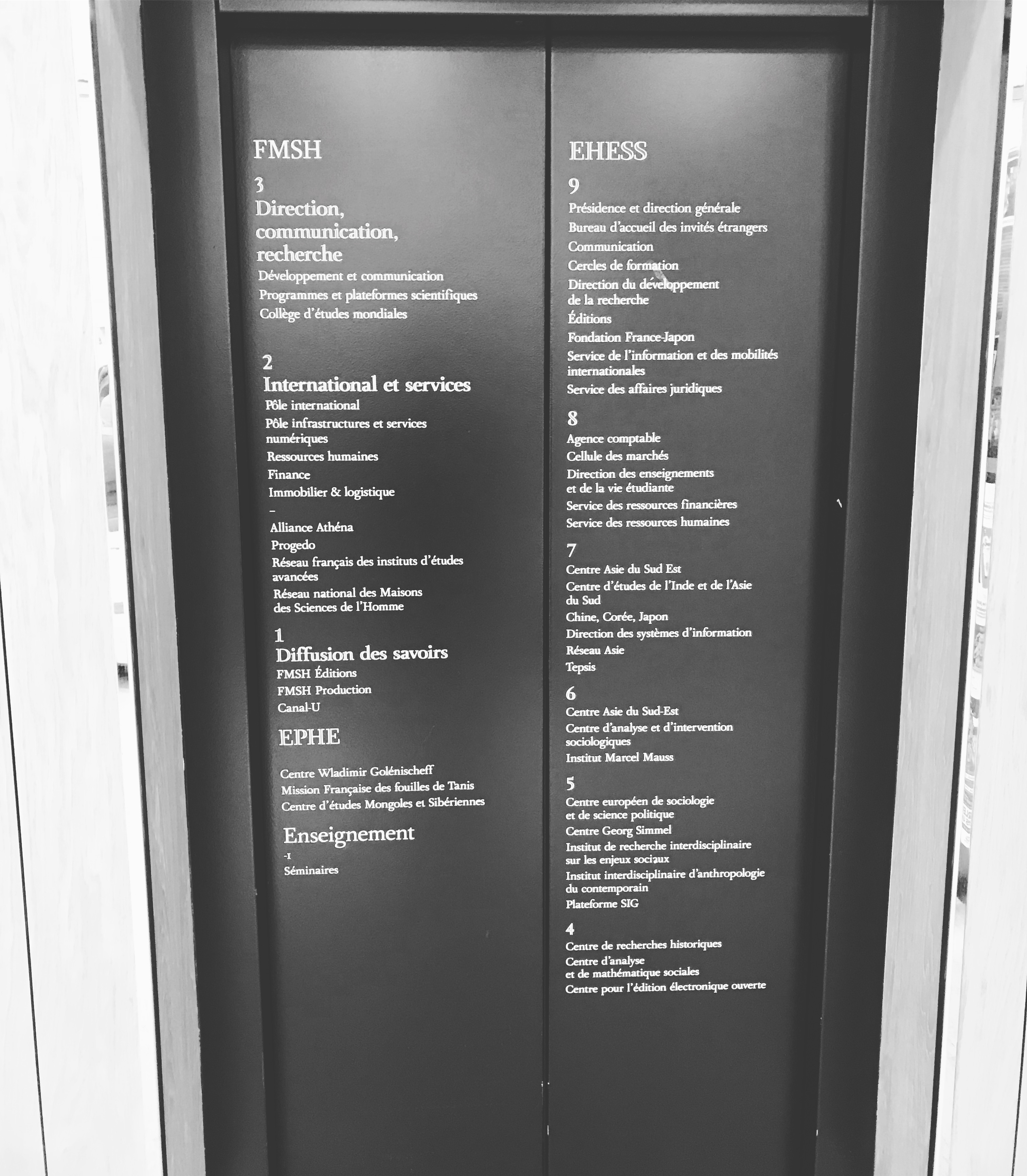
doors of knowledge at the FMSH / EHSS building (right)
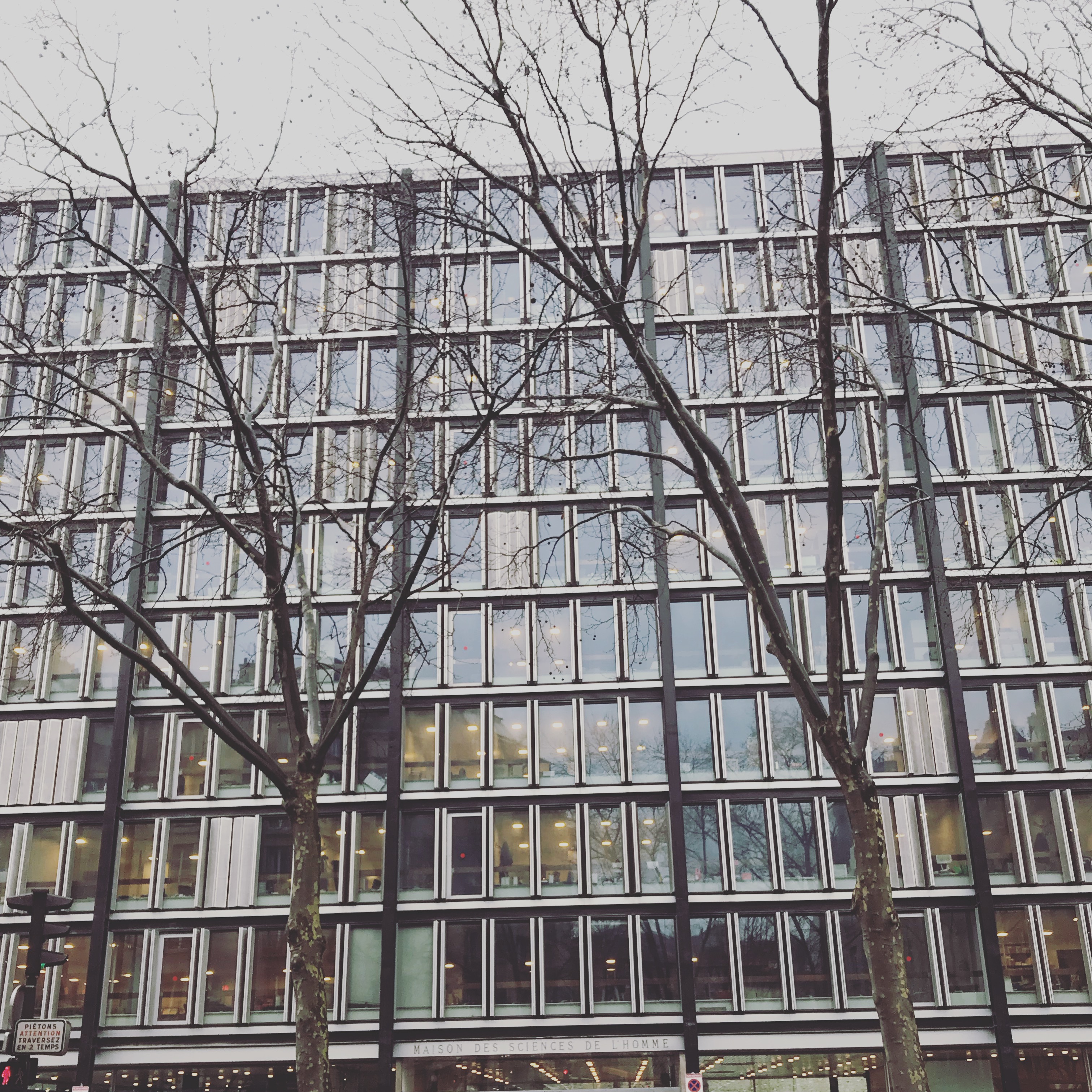 I gave up trying to understand all the acronyms and who belonged where and only memorized the address and who had been inviting me to give a talk! Yazid Ben Hounet, whom I have known from our time together in the project group “Legal Pluralism” at the Max Planck Institute for Social Anthropology took me for lunch to a small Afghan restaurant before my lecture, so I was already happy when I began presenting (can I just say: “Thank you, Paris!” for the amazing variety of foods I have eaten in those few weeks?). The title of my talk was “Being Muslim in contemporary Myanmar. On ‘community’ and the problem with communal violence” and I have written about it already here. The audience consisted mostly of anthropologists with an interest in Islam, but there were two experts on Myanmar who had joined that day as research on this Southeast Asian country is still very rare. I was particularly happy for their feedback, but also positively challenged by the questions of the non-regional experts.
What I found striking and what I have noticed in all my presentations (which all happened to be on Muslims), was how often people in the audience would use my ethnographic material or the arguments I was making in order to think about contemporary French society: veiling, divorce, polygamy, secularism in general … or, to be more precise, laïcité. I attended a roundtable on secularism in Asia which, in my view, was actually about secularism in France by means of reseach in Asia … so the topics of my talks, on Muslims in Myanmar and in Central Asia, raised interesting questions and comments in the audience.
The second talk was on legal pluralism in Central Asia, taking the example of the local funeral economy in northwestern Kyrgyzstan. I have summarized my argument here. This invitation came from Baudouin Dupret, a legal anthropologist and the only other person I know who tries to approach legal anthropology with ethnomethodological tools (as I have been trying to do). The talk took place in the seminar “Transformations de la normativité islamique” and we went out for lunch afterwards in one of the many restaurants in the area around Boulevard Raspail. What I came to cherish were long lunch breaks with colleagues — always accompanied by a glass of wine!
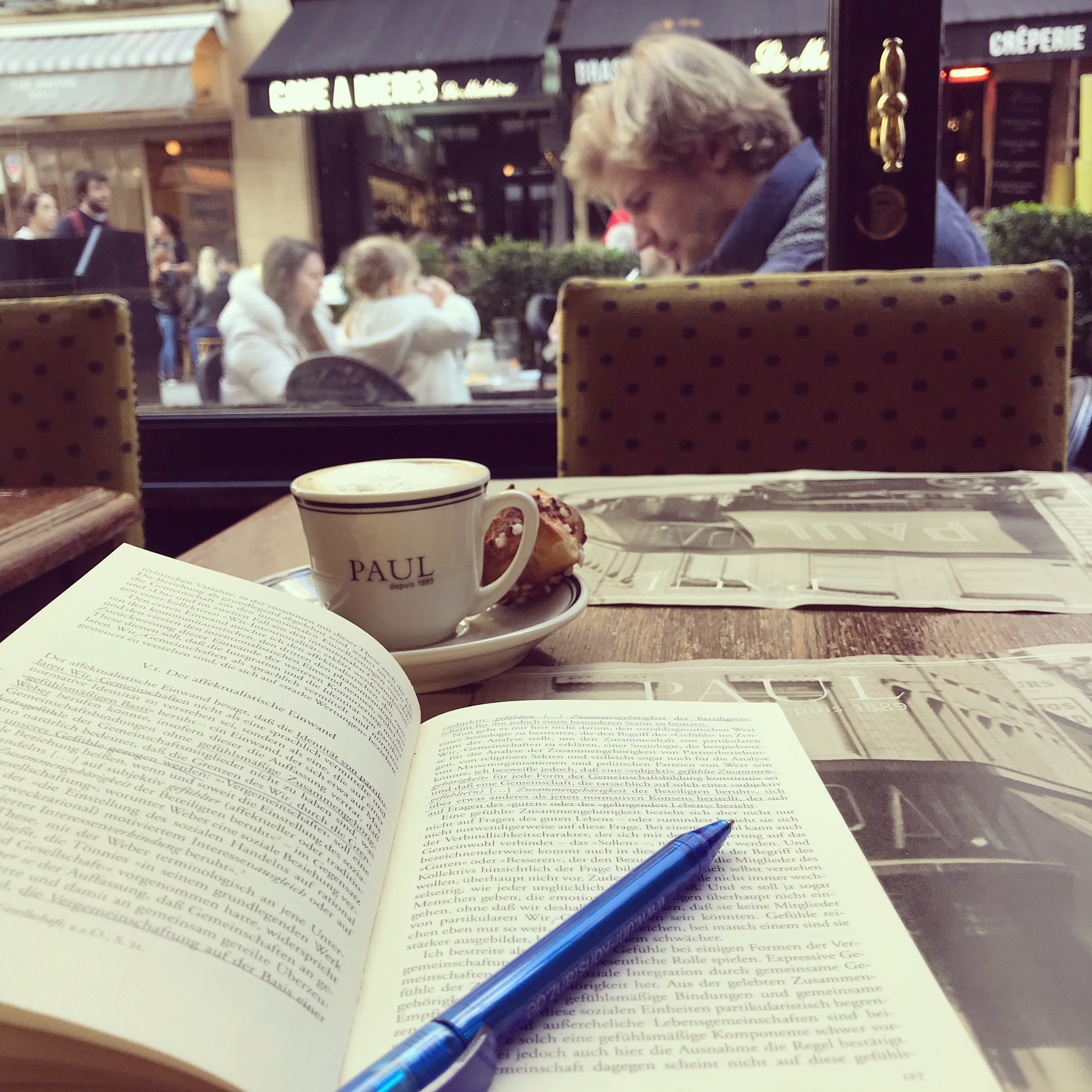
reading in cafés. People actually do it here!
The final talk I gave took place at the FMSH building and it was my favorite one. I had the opportunity to speak in front of an audience who had all been to and carried out fieldwork in Central Asia. It is very rare for me these days to speak to other regional experts as I am based at a sociology department and in a German context where research on Central Asia is only done only sporadically. It wa thus s a pleasure talking about the main arguments of my book “The force of custom. Law and the ordering of everyday life in Kyrgyzstan” — and to see that people actually understood what I was trying to say, and seemed to have enjoyed the presentation, too. Thank you to the organizers of this talk, Stéphane Dudoignon, Carole Ferret and Isabelle Ohayon for inviting me. I was pleasantly surprised to find out that my co-presenter that afternoon was Olivier Ferrando, an old friend whom I had not met for several years!
After my lecturing obligations had been met, I was left to my own devices; which meant that I could dive into the books and articles I had brought along. I started writing my historical chapter for my new book on ethno-religious minorities in Myanmar and hope to use the remaining days in Paris to push it as far as possible. The Maison Suger has provided ideal working conditions to make this possible!
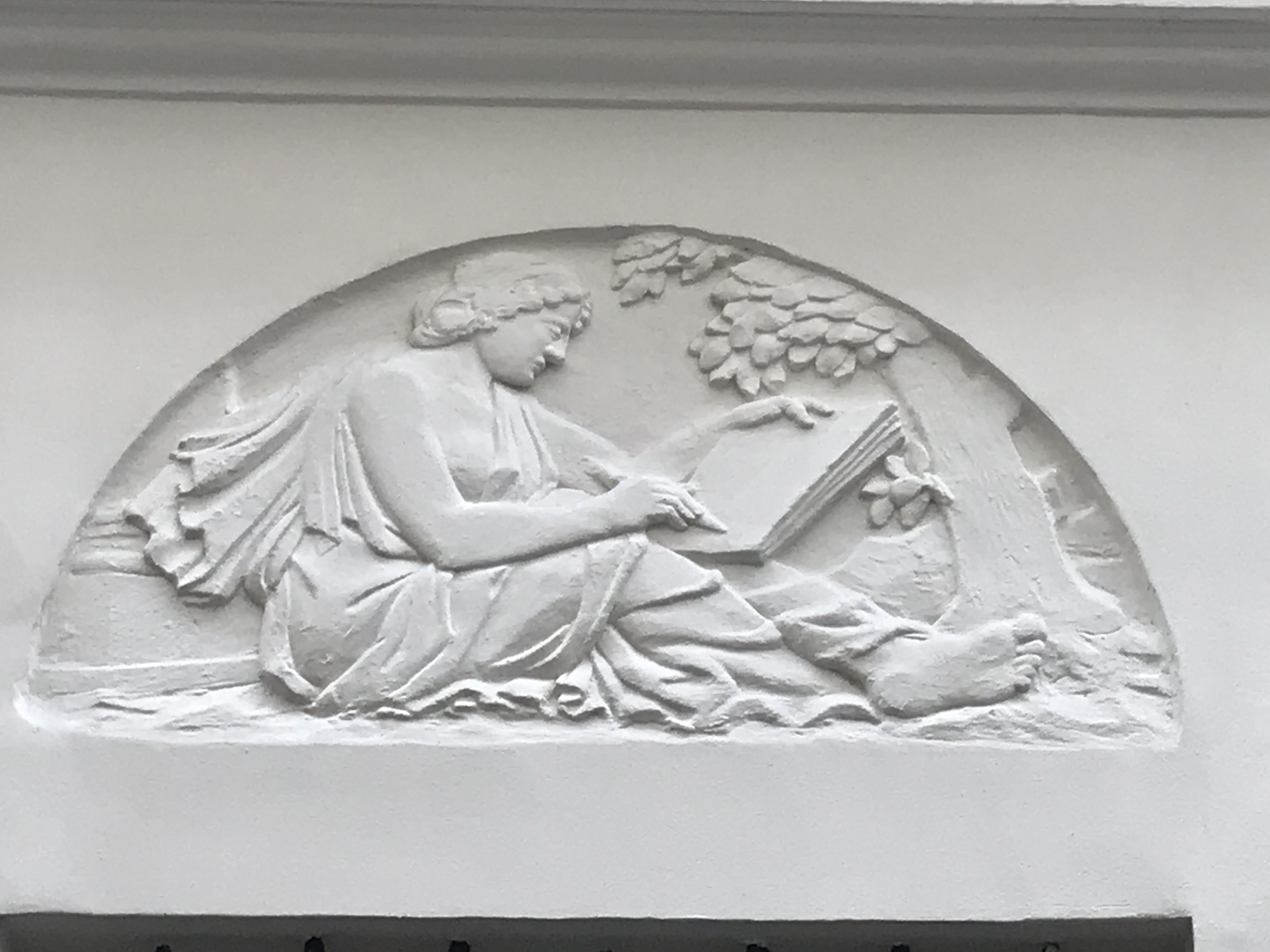
an inspirational goddess of writing
Since I am in the lucky position to start a 10-month sabbatical afterwards, my goal is to carry the “French writing spirit” with me back to Konstanz, install myself there and keep up the tradition of meeting colleagues for lunch regularly!
Merci, Paris!
Research Granted: How to become an activist in Myanmar and South Africa
The German Research Foundation (DFG) has granted 4 PhD positions at the University of Konstanz for a joint comparative research project on “Activist becomings in South Africa and Myanmar.“ I will supervise 2 PhD projects on Myanmar while my colleague, Thomas Kirsch, will supervise two projects on South Africa. We hope that the outcomes will provide new knowledge concerning practices of democratic participation in the midst of urban and postcolonial crisis.
The project is definitely a precious contribute to the infrastructural turn and could serve as a model of research in very different parts of the world and in different social and political circumstances (anonymous reviewer)

With a focus on material and non-material infrastructure, our project seeks to provide new theoretical and methodological tools to study political formations, thereby contributing to an anthropology of activism, infrastructural studies, political anthropology, anthropology of democracy and African and Asian studies. The research project explicitly seeks to disseminate knowledge and build bridges between scholarly research and activism – something I am really excited about!
Saints in politics. On imaginaries of power, gender and the dilemma of Aung San Suu Kyi
This week I published a post in openDemocracy on Myanmar and its “State Counsellor” Aung San Suu Kyi that focuses not on the horrific situation we are currently observing from the safety of our screens, but on our own expectations and imaginaries that we have regarding leader-figures in general and female politicians in particular:
Hillary Clinton and Aung San Suu Kyi. 2011. Wikimedia Commons.
“In the case of Myanmar, we are in danger of reducing a complicated reality to an imaginary that we try to bring into being through sheer desire. We attribute the qualities required to make change possible to a person who is then expected to be both saintly and powerful. That person is thus saddled with the impossible task of doing what is morally just, while at the same time acting strategically in order to maintain the power required for any sort of political action.”

In the article I further list three reasons why Aung San Suu Kyi’s saintly status has become a burden to her and argue that when we are demanding Aung San Suu Kyi to both embody the state and continue to ‘do the right thing’ we delude ourselves by projecting qualities onto politicians who have no intention of embodying them.
Read the full article here.
Workshop: The Future of Central Asian Studies
co-organized by Judith Beyer (Konstanz) and Madeleine Reeves (Manchester).
The last three years have seen a flourishing of anthropological and historical monographs on Central Asia. We propose an innovative workshop format that seeks to launch several of these recent monographs and to use a discussion of their findings as a basis for reflection on the future of Central Asian studies. The workshop will facilitate a series of focused discussions that emerge from bringing the texts into conversation with one another.
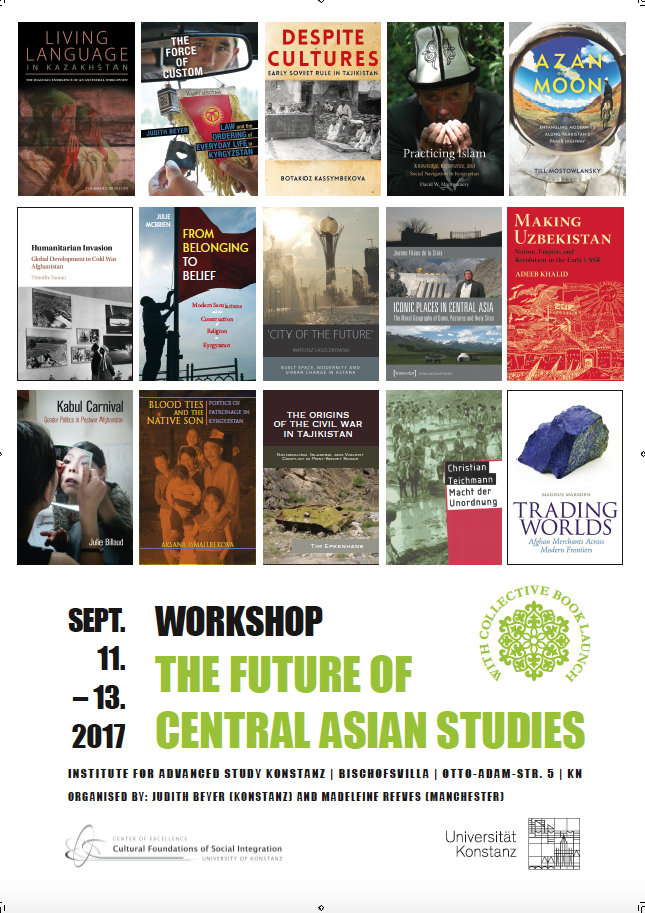 How can material from Central Asia inform conceptual debates about order, knowledge, modernity, empire, religion and resources in the widest sense? What can be gained from drawing together anthropological and historical scholarship on law and empire, or dynamics of peace and conflict? How can we better integrate the history and anthropology of Afghanistan to allow comparison with the rest of Central Asia? The book panel discussions will be videotaped and edited versions of these discussions will be made available to an international audience.
For a full programme see here.
Podcast about my book
Sean Guillory of Sean’s Russia Blog spoke with me the other day about my book “The force of custom. Law and the ordering of everyday life in Kyrgyzstan.” You can listen to the podcast online here or download the podcast here.

In our interview, Sean asked me what inspired me to do a study on “custom” (Kyrgyz salt) and how we can understand the concept anthropologically, how it is communicated, what metaphors are associated with it and in what contexts we can observe it in action.
Sean was also interested in hearing my reasons for not anonymizing my main informants, how people in my fieldsite conceive of their history, what the historical trajectories of the local courts of elders (aksakal courts) are, how Soviet life has been unmade after Kyrgyzstan gained independence, how we should understand the role of the state in the countryside and what the roles of elders and their relationship with villagers, politicians and state administrators are.
Finally, we discuss my decision to end the book with a criticism of the concept of postsocialism which, I argue, is not central for understanding everyday life in Kyrgyzstan.
My old school (Alte Landesschule Korbach) published an interview with me this month in their alumni journal. Sweet!

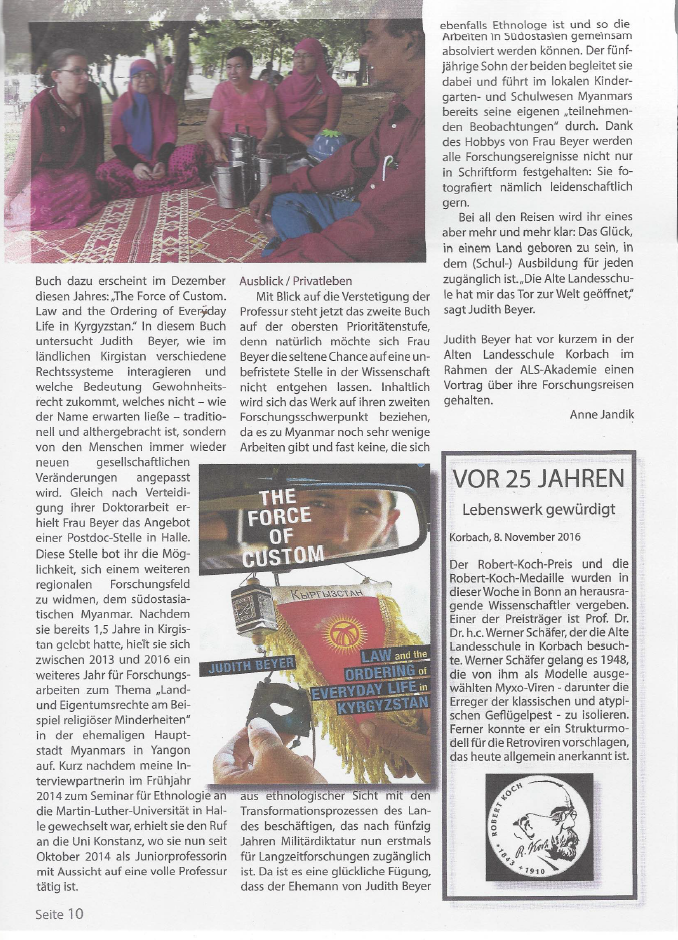

Follow-up on “parasitic professionalism”
This is a follow-up on my earlier post which I published with Allegra on Parasitic Professionalism.
I received an email yesterday from one of the largest finance journals worldwide. Got asked whether I would like to write an article on Myanmar for them. They suggested I could “benefit from this opportunity” to publish with them. This was followed by a detailed description of how to write the article and a strict deadline.
I answered and asked whether the article would be open access and what the journal usually pays its authors.
The reply: “Regarding the fee, I regret to inform you that all the articles published in our journal are contributed from authors and we are unfortunately unable to provide remuneration due to our publisher’s policy. We hope that you will understand and still consider this a great opportunity to get your message across to some of the most powerful and informed business leaders and policy makers in the world.”
They also offered a free subscription for one year and free advertisment of my book or the logo of my organisation in the printed version of their journal.
The email ended with the phrase: “We hope this is acceptable to you and that you enjoy this publication experience.”
I replied:
“Dear xxxx, as an academic scholar, I am a strong advocate of open access policy. As a professional, I think that one should get paid for one’s expertise.
While reaching a large audience with one’s writing is certainly important, exposure and prestige is no substitution for financial renumeration. I am sure that as an edior of “XXXX” you understand this – and I would seriously question your publisher’s policy on this issue. To emphasize: While I do have a steady income and thus would not “need” a honorarium, a lot of scholars whom you can count among “the world’s smartest people” (your webpage) much more than me, do not. It is for them, not for me, that I therefore have to decline your offer.
If you are interested in knowing more about the state of academia worldwide, I suggest reading the following – open-access – articles” (all written by fellow anthropologist – and journalist – Sarah Kendzior):
http://www.aljazeera.com/…/surviving-post-employment-econom…
http://www.aljazeera.com/…/…/2013/09/201391764312806487.html
http://www.aljazeera.com/…/…/2013/03/201331116423560886.html
(Photo: A Sheep Parasite. Open Source Photography / Oregon State University)
 judith beyer