Category Archives: conferences

“Work in progress. Performing the state in Central Asia”

I will give a lecture at the Università degli Studi di Milano-Bicocca on May 12th, 2.30 pm.

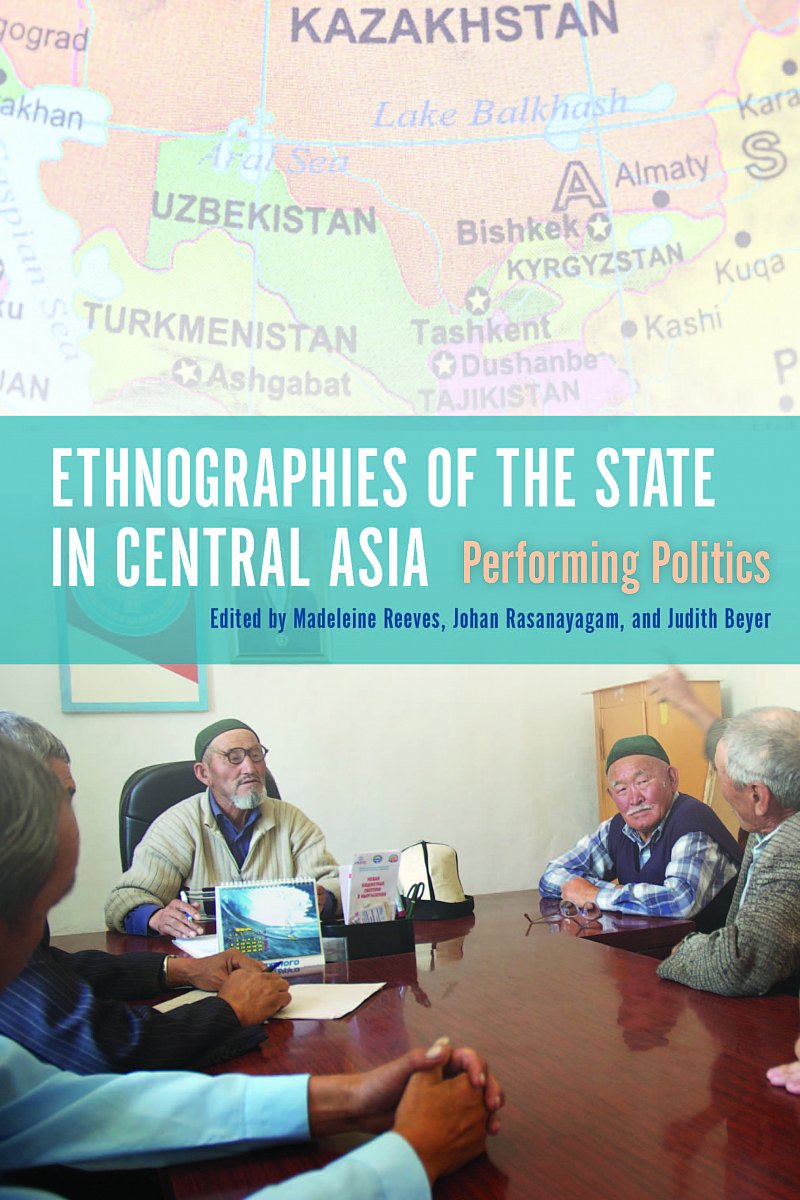
The topic is based on a co-edited volume I did with Madeleine Reeves and Johan Rasanayagam called “Ethnographies of the state in Central Asia. Performing politics.” (2014. Indiana University Press).

EthnographiesState

The seminar is organized by Antonio De Lauri.

Here’s the link to the programme: seminario stato 2015


Call for Papers: European Society for Central Asian Studies (ESCAS)

Central Asia in the XXI Century: Historical trajectories, contemporary challenges and everyday encounters

Call for pre-organized panels and papers

The European Society for Central Asian Studies (ESCAS) invites proposals for individual papers, panels and roundtable discussions for the fourteenth ESCAS biennial conference scheduled for 8th -11th October 2015 at the Department for Social and Cultural Anthropology, University of Zurich, Switzerland. The Conference will be organized by the Halle-Zurich Centre for the Anthropological Study of Central Asia (CASCA).

ESCAS welcomes proposals relating to all aspects of research in the arts, humanities and social sciences on Central Asia – namely the republics of Kazakhstan, Kyrgyzstan, Tajikistan, Turkmenistan and Uzbekistan, together with Xinjiang, Mongolia, Afghanistan and adjacent regions of Russia, China, Iran, South Asia and the Caucasus.

Scholars and practitioners of anthropology, archaeology, architecture, art & art history, cinema, development studies, economics & finance, history, musicology, philology, political science, sociology and other related disciplines are encouraged to participate. We particularly welcome panel proposals which will cross disciplinary boundaries, bringing together experts from different fields.

The theme of the 2015 conference is “Central Asia in the XXI Century: Historical trajectories, contemporary challenges and everyday encounters“.

More information, including where to submit your pre-organized panels or papers here.

I will be speaking about “Anthropology between book and blog. Evaluation criteria and communication in academia”

19 February, 2015 10 am – 1 pm

Organizers: Allegra Lab Association (Helsinki/Berlin) & The Finnish Institute,

Berlin Georgenstr. 24 (1. OG) 10117 Berlin


AcademicBlogging

CfP “The concept of crisis and the permanent state of exception”

I have a workshop on “The concept of crisis and the permanent state of exception” at the GAA Biannual Conference 2015 30.9. – 3.10.2015 at Marburg University. Here is the full text

Crisis is a temporal concept, indicating a turning point (from the Greek krisis). Its use suggests that it alternates with stable states of being-in-the-world that are predictable and calm. Whereas the anthropological literature of the 1950s and 1960s analysed crisis and conflict in congruence with models of harmony, anthropological research in the last decades has emphasised war, violence and trauma as “existential experiences.” In this body of literature, attention has shifted away from understanding “mounting crisis” as a phase in a sequence of events aimed to restore social equilibrium (Turner 1972). Rather, recent approaches discuss the “ontological alienation” of persons whose bonds “to the everyday world have become stretched, distorted, and even torn; sometimes irreparably so” (Lester 2013). Zygmunt Bauman and Carlo Bodoni (2014) have recently classified “the present crisis” as a crisis of agency and of territorial sovereignty. So is crisis a con-cept of particular Western thinking and acting – an expression of modernity? Eric Wolf (1999) approached crisis differently, arguing that crises are part and parcel of social life everywhere and that the distinction between normality and crisis is to a large extent ficti-tious.

Drawing on classical and recent anthropological analyses of crisis for our own research, this workshop seeks to explore the equivalents of the concept from emic points of view. How do our informants conceptualise and word their often precarious ways of living? When do they experience moments of “judgment,” “separation” and “choice” (all syno-nyms of crisis) in their personal lives? And how do their personal or collective “crises” relate to a more permanent state of exception that increasingly presents itself as the dominant paradigm of government in contemporary politics (Agamben 2003)?

Abstracts should be submitted both as a long version (1,200 characters includ-ing spaces max.) and a short version (300 characters including spaces max.). Email me at my university address in Konstanz if you are interested in contributing. Deadline is February 15, 2015.