Category Archives: Allgemein

Anthropology between Book and Blog – my latest for Allegra

Anthropology between Book and Blog – Evaluation Criteria and Communication in Academia.
Talk on the Occasion of Allegra Lab’s Website Relaunch in Berlin at the Finnish Institute
19 February 2015
 
first published at Allegra Lab on March 2, 2015.

I decided to embed my thoughts on productivity in the academic world – both traditional and digital – in the context of a debate that is old, but apparently not outdated. This is the debate about the type of knowledge the humanities are able to produce. This year, a Humanities World Report (HWR) was published in which the three authors – among them the historian Arne Jarrick, who is currently running a project on the long-term global history of law-making – advocated two things that are of relevance to us here today: one, that scholars in the humanities should strive towards strengthening international and interdisciplinary cluster formation where larger thematic complexes can be discussed. Second, they argued that just as in all the other sciences, the goal of the humanities should be “truth finding.”

I will deal with the first proposition first as I think that – worded in this way – this is what Allegra Lab has been doing so far and intends to continue doing in the future: providing an integrative research platform. But according to the report, the most dominant form of such international cooperation comes in the form of Digital Humanities (DH). What is meant by this term is somewhat opaque, as that field is quite diverse. Its most institutionalised manifestations are the so-called Digital Humanities Centres (DHC) which, according to the authors of the report, deal with the following five fields of research:

1) Digital collections, archiving and text encoding

2) Reading and analysing electronic texts

3) Geospatial and critical discursive mapping technologies

4) ‘Big Data’, social computing, crowd-sourcing, and networking and

5) 3D immersive visualisation environments

The authors estimate that there are around 65 Digital Humanities Centres in Europe with 19 centres in England alone, the largest being the University College London Centre for Digital Humanities, “staffed with six directors, ten staff, student, and liaison positions, ten affiliated faculty, and 13 or more affiliated graduate students.” (p. 67). The US has approximately 60 DH centres with world-leading facilities, such as the Harvard University of Digital Arts and Humanities (DARTH), or the Columbia University Digital Humanities Center (DHC).

Scholars carrying out qualitative work within the field of DH, or investigating the impact of digitalisation in people’s everyday lives, have criticised the institutionalisation of these centres and the type of data they are dealing with. They have raised their voices mainly against the lack of cultural criticism in the digital humanities. One such critical voice comes from Alan Lui (2012) of the Department of English at the University of Santa Barbara in the US. He says: “How the digital humanities advance, channel, or resist the great postindustrial, neoliberal, corporatist, and globalist flows of information-cum-capital, for instance, is a question rarely heard in the digital humanities associations, conferences, journals, and projects…” Equally under-debated is how new techniques in the digital humanities such as “distant reading” (Moretti 2000), or “culturomics” (Michel, Shen et.al. 2010), both quantitative computational methods of processing millions of digitised books across centuries, impact on traditional ways of close reading, thereby turning the very object of analysis – text – from a form of human expression into a source of (Big) Data.

A form of human expression or a source of (Big) Data?

The authors of the Humanities World Report (HWR) argue that “[t]he skepticism and even outright hostility to digital humanities evidenced by some blog literature might be a unique phenomenon within the humanities” (emphasis added). They continue to wonder: “Strangely, much of this debate is not published but articulated in blog posts and other short web-based forms, which do not encourage the writers to fully argue their case” (emphasis added). If we apply this statement to the work Allegra is doing – namely blogging – it means that blogging is understood by the makers of this encompassing report not as a form of publication, but as an “articulation.” This does not sound bad at all, but it is then right away denounced as “limiting” and gets juxtaposed with “publication.”

Now what is problem with that? Well, it shows us that even within the field of digital humanities there is an inclination towards traditional modes of publishing. What has been revolutionised are the digital methods with which data can be collected, archived, processed, and analysed. What has not been revolutionised, apparently, is the way in which this sort of new and often “Big Data” is then published and /or debated. The reason for this is no secret and here critical voices from within digital humanities as well as those coming from outside join in the laments: academia does not, by and large, recognise digital forms of publication. To publish digitally means taking a risk for researchers who are in the early stages of their career and have tenure track positions that come with specified evaluation criteria. This also includes, as I have shown, people working within DH, which apparently continue to focus on “traditional” ways of publication such as peer-reviewed journal articles and monographs. Online publications or engagement in digital networking can be mentioned in a scholar’s self-report, but they are not key to the evaluation as such. They are also not of interest to the universities or research institutes in general: I received two emails recently asking me to fill in my last year’s publications. In the drop-down list there were all sorts of possibilities mentioned, even non-textual based publications. But it was impossible to register online journal publications, or photographs or films, for example. So again: what has become digital is the data processing, not the debate.

What has been revolutionised are the digital methods with which data can be collected, archived, processed, and analysed. What has not been revolutionised, apparently, is the way in which this sort of new and often “Big Data” is then published and /or debated.

This stance also has significant impact on obtaining funding for digital initiatives such as Allegra Lab. While there is ample money for digital technology, there seems to be little appreciation within traditional third party funding institutions of the potential benefits engendered by online platforms for publication. While I personally have succeeded, for example, in getting money from funding institutions for digital equipment such as cameras, voice recorders, and software programmes, the same institution did not see any value in financially supporting an online publication platform where young researchers could present their findings and engage in conversation.

The authors of the Humanities World Report (HWR) conclude their report by arguing that “[t]he real challenge of digital humanities still lies ahead in asking new research questions enabled by the technology, training researchers to identify and utilise the potential, and developing a critical sense of the explanatory power of new technologies” (p.83). This might be the case, but even after all of these challenges have been met, there still lies another, maybe even bigger challenge, namely to publish, disseminate and debate the results so obtained in an equally digitalised form. This will continue to pose a problem as long as young researchers, who are particularly prone to new digital ways of communication, are discouraged from publishing outside the established framework of journals and publishing houses.

While there is ample money for digital technology, there seems to be little appreciation within traditional third party funding institutions of the potential benefits engendered by online platforms for publication.

Homi Bhabha

I now come to the second point made by the authors of the report. They described the humanities, alongside all other sciences, as “truth seeking academic disciplines” (p. 184). Their assessment was challenged by Homi Bhabha recently at a conference organised by the Volkswagen Foundation in Hanover. Borrowing the term “thick ethical concept” from the British philosopher Bernard Williams, who developed it in his Ethics and the Limits of Philosophy (1986), Bhabha referred to the humanities as the “thick concept of contingency, convergence and veracity” – notions he has stressed throughout his work on post-colonialism. The humanities are contingent because they are able to reflect upon their spatial and temporal situatedness, they are converging in the sense that they cut across disciplines and fields, and they strive towards veracity – and not truth.

I think one can apply Bhabha’s characterisation to the type of work Allegra Lab has been carrying out and continues to strive for – both in terms of the texts our authors produce as well as in the way we go about circulating and discussing the knowledge so generated. The strength of academic blogging and other forms of digital networking lies in fulfilling these characteristics as outlined by Bhabha as being good as (and possibly even better than) traditional modes of publication. Our job as blogging anthropologists is to convince people out there that whether we read our texts closely or from a distance, they should be published digitally – and open access, of course – but this is another debate.

Literature cited

Holm, Poul, Arne Jarrick, and Dominic Scott. 2015. The Palgrave MacMillan Humanities World Report 2015. Accessible here.

Lui, Alan. 2012. Where is cultural criticism in the digital humanities? In: Matthew Gold (ed.). Debates in the Digital Humanities. University of Minnesota Press. Accessible here.

Michel, Jean-Baptiste, Yuan Kui Shen, Aviva Presser Aiden et.al. 2011. Quantitative analysis of culture using millions of digitized books. In: Science. 331,6014. Pp.176-182.

Moretti, Franco. 2000. Conjectures on World Literature. New Left Review. Pp.54-68. Accessible here.

Williams, Bernard. 2006 [1985]. Ethics and the limits of philosophy. Abingdon: Routledge.

“Work in progress. Performing the state in Central Asia”

I will give a lecture at the Università degli Studi di Milano-Bicocca on May 12th, 2.30 pm.

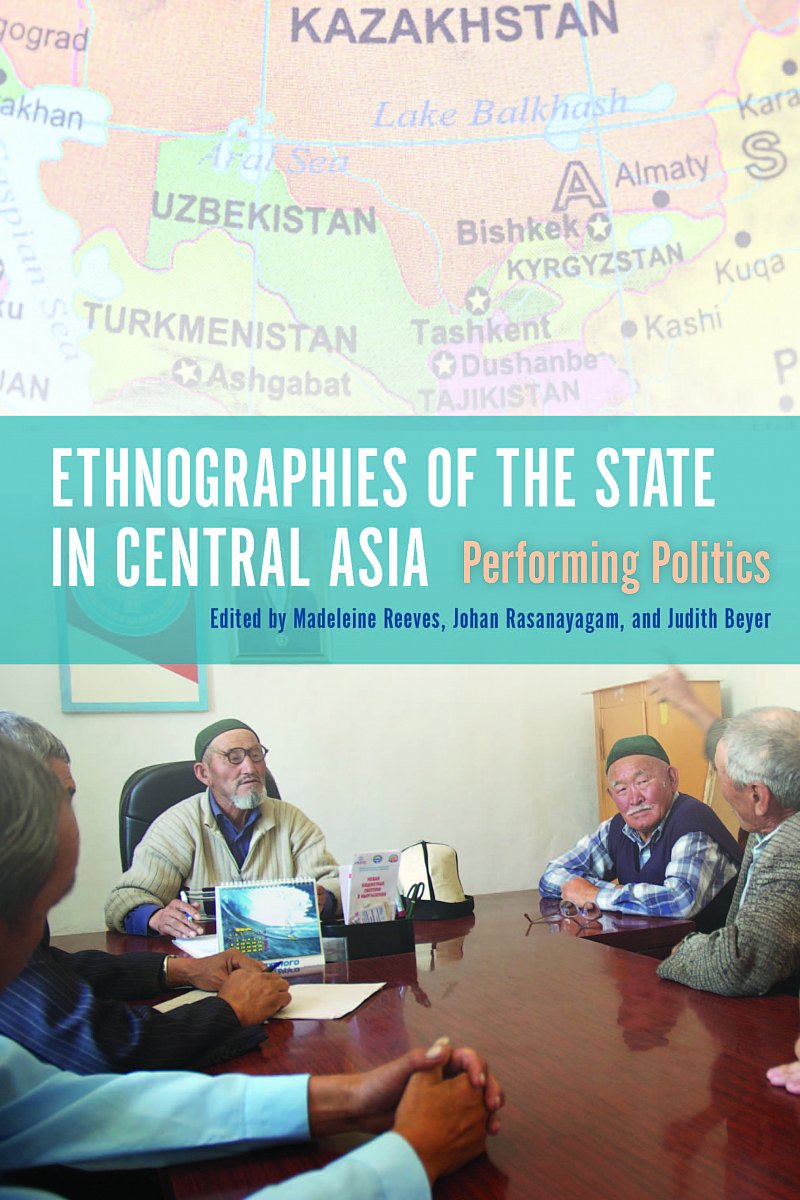
The topic is based on a co-edited volume I did with Madeleine Reeves and Johan Rasanayagam called “Ethnographies of the state in Central Asia. Performing politics.” (2014. Indiana University Press).

EthnographiesState

The seminar is organized by Antonio De Lauri.

Here’s the link to the programme: seminario stato 2015


“Russian and Polar Bears Unite! A Follow-Up.”

What is 19cm high, 20cm wide, weighs only 680grams but carries a President? Right – it’s the Russian Bear!

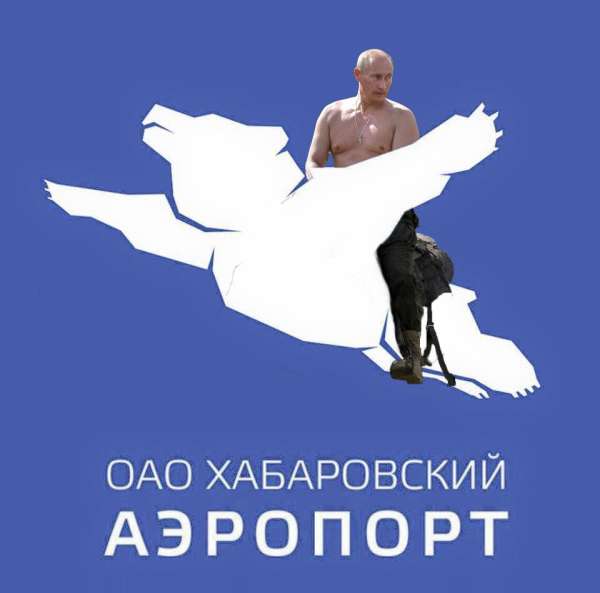
And what is flying high into the sky? Right – the Bear, too. There is nothing he can’t do – the Bear, I mean. While everyone has been concentrating on Putin, it is the bear that should interest us; that magical, charismatic hero of Russian folk tales, easily fooled by political rhetoric. It is him who is carrying the President on his back across the country (literally, if you look at the statue carefully), and who is now taking him up into the sky in the recent pictogram of Khabarovsk Airport, in Southeast Russia, close to the China border.


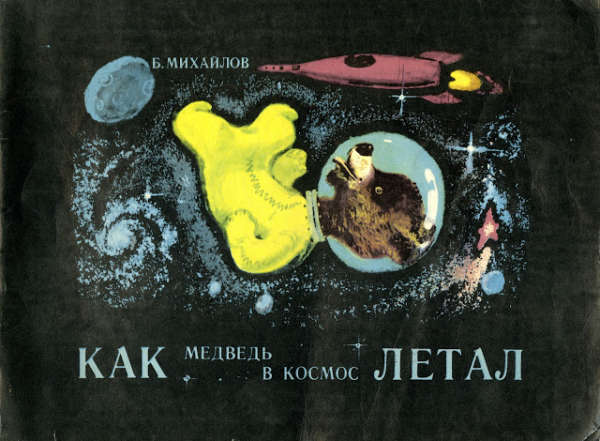
What is next? The moon? Oh no, been there, done that, too.

He seems increasingly, desperate, though. The Bear, not Putin. Some memes pictured him crashed, lying in a state-sponsored, vodka-induced coma.


BearVodka


But someone recently had a useful suggestion: Sarah Palin, ex-Governor of Alaska, who, allegedly, said “you can see Russia from my house.” She has had a longstanding, complicated relationship with bears herself, summarized by The Guardian in 2008 into the question “Sarah Palin vs The Polar Bear – who will survive? It’s 2015 now and both Sarah Palin and polar bears have become more endangered, but she is still “seriously interested” in running for President next year. She recently called up her fellow-countrymen to rise up against an overarching American state, shouting: “‘The Man,’ can only ride ya when your back is bent. So strengthen it. Then ‘The Man’ can’t ride ya.”

I think the Russian Bear should take this exhortation seriously, throw that naked President off his back, form an alliance with the Polar Bear and chase both Putin and Palin all around Little Diomede Island.


The Diomede Islands, Big and Little, in the Bering Strait.


Note: originally published on 03 February, 2015 here: http://allegralaboratory.net/russian-and-polar-bears-unite-a-follow-up. The Bear in Space-pictures are taken from Mikhailov, B. 1973. “How the Bear flew into Space”. Leningrad: Khudozhnik RSFSR. (Б. Михайлов “Как медведь в космос летал” Изд. “Художник РСФСР”. Ленинград 1973).

Statelessness – Summer Term 2015

Here is one of two seminars on “the state” I will be teaching in the coming Summer Term 2015 at the University of Konstanz.

All MA-students registered in Konstanz are welcome:


Statelessness: On the permanent state of exception

What does it mean to live without citizenship in the time of nation states? 10 million people globally find themselves in exactly this situation. As the UNHCR proclaims the end of statelessness in the context of its refugee work (the ‘iBelong-Campaign’) by 2020, more people are born into statelessness or lose their citizenship each day.

In this seminar we will work on ethnographic case studies focusing on the causes and consequences of statelessness. Legal sociological and legal anthropological texts as well as texts from legal philosophy will help us to reflect better on our own civic existence, as well as to critically question the concept of statehood as a ‘normality’ (e.g. with texts from Agamben, Arendt, Badiou). Literature on transnationalism and exceptional cases, in addition to current approaches that understand statelessness as a humane alternative to nation states, will broaden the scope of the seminar. An external speaker will report on stateless women in Central Asia, the so-called border brides.

Seminar requirements: regular participation; reading of texts; presentation of a case study.

Ethnography of the State – Summer Term 2015

Here is one of two seminars on “the state” I will be teaching in the coming Summer Term 2015 at the University of Konstanz.

All BA-students registered in Konstanz are welcome:

Ethnography of the state: Participant observation and photography

The methodology of participant observation is at the forefront of this seminar. Aided by photography, we will close in on self-selected themes within the subject of ‘state’. Once characterised as “fiction of philosophers” (Radcliffe-Brown 1940), the representation of states (i.e. what concretely the state is) has become the central focus today. Students’ field research can be concentrated on institutions, such as the courts, police, state/municipal administration, and other public institutions. It can, however, also focus on other material embodiments of the state, such as streets, architecture, monuments or borders.

The topic will first be explored with the camera, and connected to the seminar by way of a concrete research question. Over the course of the seminar we will examine specific subjects in addition to making observations, and if possible we will also use other qualitative methods such as open questions and semi-structured interviews. As an accompaniment, we will read texts on ethnographic methods together with texts on the ethnography of the state.

The seminar has two goals: firstly, to discuss the method of participant observation in order to understand its possibilities and limitations; and secondly to offer a practical introduction to the theme of the ‘state’ and reflect on how such manifestations influence our daily lives.

New equipment (small and large cameras) has been purchased for the seminar specifically for students to borrow. Students can, however, also use their own cameras.

Possible work formations: individual work or two-person teams.

Seminar requirements: regular participation in class; reading of literature; regular conducting of field exercises during the semester; presentation of preliminary results; seminar paper to be written during the semester break.

Truly rugged – the US Constitution

Two interesting new publications – in light of recent events and in continuation of my previous post on Supreme Court Decisions:

Cover of Attacking Judges by Melinda Gann Hall

Attacking Judges takes a close look at the effects of televised advertising, including harsh attacks, on state supreme court elections. Author Melinda Gann Hall investigates whether these divisive elections have damaging consequences for representative democracy. To do this, Hall focuses on two key aspects of those elections: the vote shares of justices seeking reelection and the propensity of state electorates to vote. In doing so, Attacking Judges explores vital dimensions of the conventional wisdom that campaign politics has deleterious consequences for judges, voters, and state judiciaries.

Cover of Your Rugged Constitution by Bruce Allyn and Esther Blair Findlay

Now in reissue, this truly rugged and much-admired classic is sure to inform, and also delight readers with its retro 1950s ethos. Your Rugged Constitution proceeds through the text of theConstitution with descriptions that are put in clear, easy-to-understand language, accompanied by commentary and lively drawings so you can easily grasp all the ideas and concepts.

CfP “The concept of crisis and the permanent state of exception”

I have a workshop on “The concept of crisis and the permanent state of exception” at the GAA Biannual Conference 2015 30.9. – 3.10.2015 at Marburg University. Here is the full text

Crisis is a temporal concept, indicating a turning point (from the Greek krisis). Its use suggests that it alternates with stable states of being-in-the-world that are predictable and calm. Whereas the anthropological literature of the 1950s and 1960s analysed crisis and conflict in congruence with models of harmony, anthropological research in the last decades has emphasised war, violence and trauma as “existential experiences.” In this body of literature, attention has shifted away from understanding “mounting crisis” as a phase in a sequence of events aimed to restore social equilibrium (Turner 1972). Rather, recent approaches discuss the “ontological alienation” of persons whose bonds “to the everyday world have become stretched, distorted, and even torn; sometimes irreparably so” (Lester 2013). Zygmunt Bauman and Carlo Bodoni (2014) have recently classified “the present crisis” as a crisis of agency and of territorial sovereignty. So is crisis a con-cept of particular Western thinking and acting – an expression of modernity? Eric Wolf (1999) approached crisis differently, arguing that crises are part and parcel of social life everywhere and that the distinction between normality and crisis is to a large extent ficti-tious.

Drawing on classical and recent anthropological analyses of crisis for our own research, this workshop seeks to explore the equivalents of the concept from emic points of view. How do our informants conceptualise and word their often precarious ways of living? When do they experience moments of “judgment,” “separation” and “choice” (all syno-nyms of crisis) in their personal lives? And how do their personal or collective “crises” relate to a more permanent state of exception that increasingly presents itself as the dominant paradigm of government in contemporary politics (Agamben 2003)?

Abstracts should be submitted both as a long version (1,200 characters includ-ing spaces max.) and a short version (300 characters including spaces max.). Email me at my university address in Konstanz if you are interested in contributing. Deadline is February 15, 2015.

Watching Iraq talk about Human Rights. Excursion to the 20th Universal Periodic Review in Geneva

I am preparing for a two-day excursion with my Master students to the 20th Universal Periodic Review of the United Nations. The event will take place in the Palais des Nations in Geneva. In advance, we had to register via email, and in order to be allowed to participate, we will need to collect our “badges” on Monday morning at the gate of the palace.

We will be witnessing the Review of Iraq on Monday and the Review of Slovenia on Tuesday. We will hopefully also arrange for a tour around the building — in which the former Völkerbund was housed — and I am personally interested in observing the Distribution of the report on Kazakhstan.

My students’ task is to learn participant observation in an International Organization. That is, to employ anthropological research methods originally designed in and for colonized societies, in a setting that is not only “Western”, but also transnational, bureaucratic, complex, and …. boring? Maybe not. We shall see …

In order to prepare, we have read a couple of anthropological texts, most importantly those by Jane Cowan and Julie Billaud, who carried out long-term field research in the UPR two years ago. But also documentation itself such as

the English version of the National Report on Iraq

the Compilation of UN Information on Iraq

a Summary of Stakeholders’ Information on Iraq

and several sheets of advanced questions prepared by various member states of the UN. The UK, for example, would like to know the following:

“The situation for ethnic and religious groups including Muslims, Christians, Yezidis, Turkmen and others remains deeply concerning. What is being done to protect vulnerable groups from continued attacks and persecution; and also to enable them to return to their homes in areas where they have been displaced – particularly where their neighbours have allegedly been complicit in the persecution?”

I am very much looking forward to hearing how “Iraq” is going to answer that one …