In this new journal article, published open access in Public Anthropologist, I draw on empircal material obtained in a rather unconventional anthropological way: through digital listening.
Since 2020, I have been actively listening to the “Activist Lawyer“-podcast. It took me a while to understand its impactful contribution – not only for content related to human rights-, migration-, or asylum-related expertise, but also as a forum in which speaking about one’s own life became possible and safe for lawyers whom one usually does not hear about (unless one becomes their client).
Within legal anthropology, studying lawyers’ lifeworlds is usually understood as a form of ‘studying up’ (Laura Nader). In the podcast, however, the guests of solicitor Sarah Henry open up about their personal lives, their own struggles and how they cope with the fact that it is their own government or ‘the state’ that views them and their work as an obstacle to removing migrants from the country.
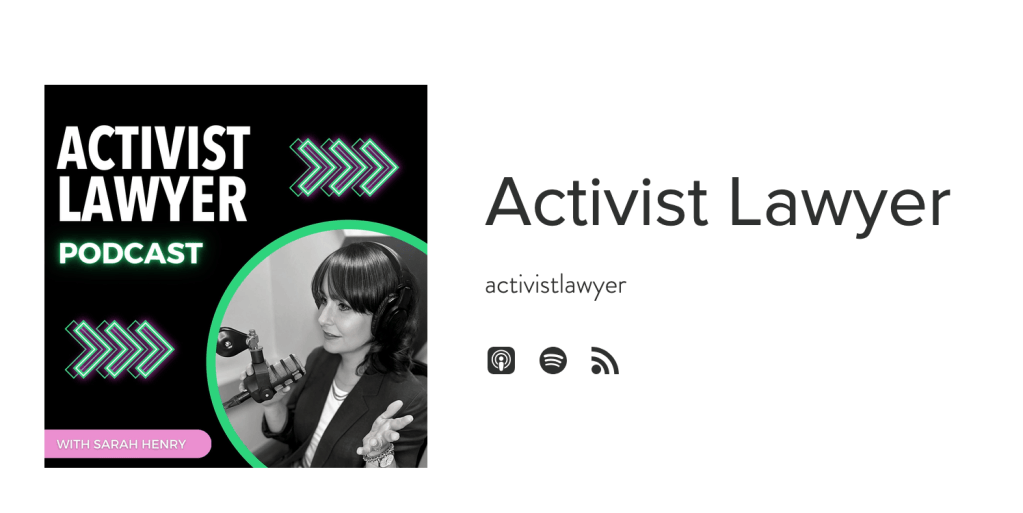
In my article, I trace some of the featured lawyers’ own stories about how they became ‘activist lawyers’ by engaging in what I call ‘digital listening’: a way of ‘studying sideways’ (Nader) that allows anthropologists like me to not center ourselves in conversations with experts.
This article deals with a form of what I call ‘expert activism’ that only exists because ‘activist lawyers’ continue to face harsh criticism for their human rights-centred work from their own government/s. How they have turned a slur (‘activist’) into a self-identifying category that shapes what I call their ‘legal subjectivity’, is the topic of this article.

